Lifestyle and Behavioral Health
Why Your Daily Choices Are the Most Powerful Medicine You Have
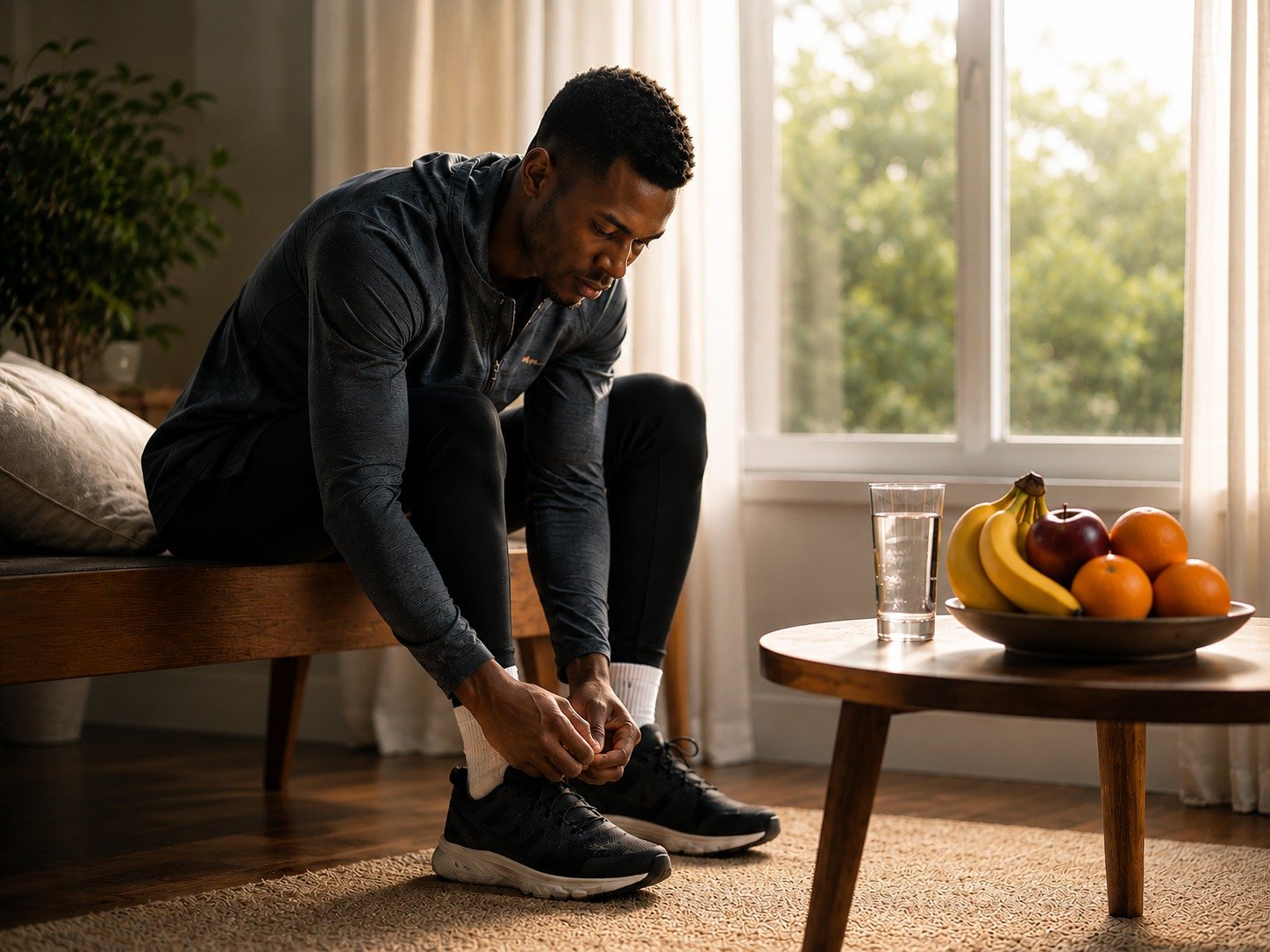
There is something happening inside your body right now.
Not tomorrow. Not when you are older. Right now, today, your body is responding to the choices you are making.
Every meal either nourishes something or neglects it. Every night of sleep either repairs something or leaves the damage sitting there. Every day you sit still, something inside you quietly changes. Every day you move, something else changes.
Most people believe their health is mostly decided by luck. Good genes or bad genes. But science has spent decades following millions of people, and the answer it keeps finding is the same. Your daily choices matter far more than your genes.
Quick Navigation
- Your Body Is Listening to Everything You Do
- A Story That Will Change How You See Your Life
- What Lifestyle Actually Means
- How Habits Build a Path Inside Your Brain
- Sleep Is Not Rest. It Is Repair.
- Movement Is Not Exercise. It Is Life.
- What Worry Does Inside Your Body
- Why Being Lonely Can Make You Sick
- The Daily Choices That Protect You Most
- How to Build a Habit That Lasts
- The Mistakes That Keep People Stuck
- Key Takeaways
- Frequently Asked Questions
- Related Pillars
- Related Articles
- Medical References
Your Body Is Listening to Everything You Do
Most people believe their health is mostly down to luck. Good genes or bad genes. Good family history or bad family history.
But science has spent decades following millions of people. And it keeps finding the same answer. Your daily choices matter far more than your genes.
The World Health Organization looked at the biggest killers in the world. Heart disease. Stroke. Type 2 diabetes. What they found was striking.
At least 80 percent of those conditions could be stopped before they ever start. Not treated after they arrive. Stopped before they come. Through the ordinary daily choices of ordinary people.
Think about that. Eight out of every ten people who die too early from those diseases did not have to. Not because they lacked medicine. But because nobody ever explained clearly enough what their daily life was doing to their body.
That is the reason this pillar exists.
A Story That Will Change How You See Your Life
Picture two people. Same street. Same age. Same amount of money. Both starting from the same place at 30 years old.
The first wakes up already tired most mornings. Grabs something sweet on the way to work. Sits for most of the day. Feels stressed but pushes through it without doing anything about it. Drinks most evenings to unwind. Sleeps about five or six hours. Their friendships have slowly drifted away over the years.
The second wakes up at the same time every morning. Eats a proper breakfast. Walks at lunch. Has found something that genuinely helps with stress. Goes to bed at the same time every night. Sleeps seven to eight hours. Has a few people they genuinely talk to.
Now picture both at 60. Would their hearts be working equally well? Would their memory be equally sharp? Would they face the same risks of cancer, diabetes, and heart disease?
Almost certainly not.
A study that followed more than 116,000 real people over many years, published in the American Journal of Public Health, found that people who kept up several healthy daily habits lived much longer. And they spent far fewer of those years feeling ill or unable to do the things they loved.
The body keeps records. Not on paper. Inside your blood vessels. Inside your cells. Inside your brain.
What Lifestyle Actually Means
The word lifestyle gets used a lot. But in health science it has a very specific meaning. Lifestyle means the things you do repeatedly. Not the meal you ate once. Not the walk you took last month. The things you do day after day. Week after week. Year after year.
Think of it like weather and climate. One sunny day does not make a tropical climate. One storm does not mean a country is cold. But the pattern repeated over thousands of days does.
Your health is like that. One good meal or one bad one changes very little. The pattern repeated over years changes everything.
The World Health Organization has named lifestyle as the main driver behind the diseases that kill the most people on earth. Heart disease. Cancer. Diabetes. Long-term lung disease. Together these cause about 74 percent of all deaths around the world every single year.
And the single biggest thing that decides whether a person gets them is not bad luck. It is how they live.
This is not said to make anyone feel guilty. It is said because it is the most hopeful thing in all of medicine. Unlike your genes, the way you live can change. At any age. Starting right now.
How Habits Build a Path Inside Your Brain
A habit is not just something you do often. It is a physical road inside your brain. Every time you repeat a behavior, your brain builds a tiny pathway. A connection between the brain cells involved in that action.
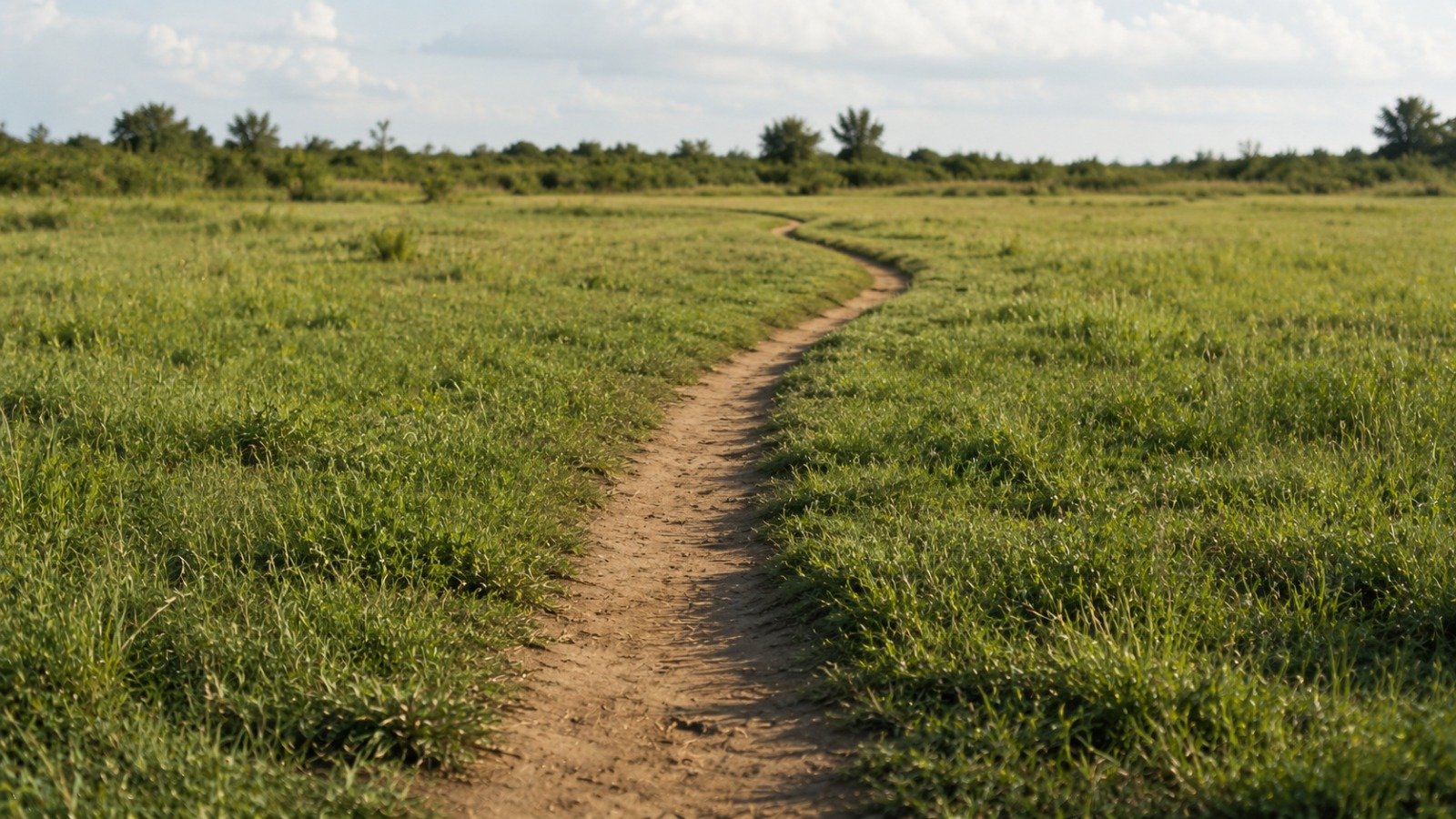
Think of a field of long, thick grass. The first time you walk across it, it is slow and difficult. The grass pushes back. Every step takes effort.
But the next time you walk the same way, it is slightly easier. The grass bends a little more. The path begins to appear. After weeks of walking the same route every day, the path is clear. The grass is completely flat. You can walk it almost without looking.
That is exactly what happens inside your brain with a habit. The more you repeat it, the easier the path becomes. Until one day it happens almost by itself.
And here is the thing most people do not know. Your brain does not decide whether the path is good for you. It just builds it. It gets better and better at whatever you practice. Whether that thing helps you or harms you.
Researchers at University College London spent months watching real people build new habits. Their work was published in the European Journal of Social Psychology. On average it took 66 days for a new habit to feel automatic. Not the famous 21 days that people often quote. 66 days.
For some habits it happened in less than three weeks. For others it took up to eight months. The one thing that mattered most was not talent. It was not even how motivated you felt. It was simply showing up every day. Even on the days it felt hard.
This matters more than most people know. If you start a new habit and it still feels like hard work six weeks in, that does not mean you are doing it wrong. It means the path is still being built. Keep walking it. The ease is coming.
Sleep Is Not Rest. It Is Repair.
Most people think of sleep as the body doing nothing. Lights out. Nothing happening. Just rest. That belief is quietly damaging millions of lives.
Because while your body is completely still, something amazing is happening. Your brain is cleaning itself.
Think of it like a kitchen at the end of a long day of cooking. There is mess everywhere. Pots, pans, grease, crumbs. Every night while you sleep, the cleaning crew comes in. They scrub everything clean. They throw out the waste. They prepare the kitchen for tomorrow.
One of the things they throw out is a sticky protein called amyloid beta. You do not need to remember the name. Just understand what it does. When this protein builds up in the brain over many years, it starts blocking the way brain cells talk to each other. Like a drain that slowly fills with grease until the water barely moves. Over time this is one of the main causes of Alzheimer's disease, the condition that slowly takes away a person's memory until they can no longer recognize even the people they love most.
Your brain removes this protein while you sleep. Not while you exercise. Not while you eat healthy food. Only while you sleep.
Sleep experts around the world, including the American Academy of Sleep Medicine, say adults need seven to nine hours a night. But most adults sleep far less than that.
Think of sleep like regular maintenance on a car. You can skip it for a while. The car still moves. But underneath, parts are wearing down faster than they should. Parts that should last 20 years start breaking at 10. Sleeping fewer than seven hours, night after night, does the same thing to your body. The damage is invisible for years. Then one day it is not.
Sleep is not a luxury. It is the most powerful repair system your body has. And it only works when you let it.
Movement Is Not Exercise. It Is Life.
Most people think movement means going to the gym. But going to the gym twice a week and sitting for everything else is like watering a plant twice a week and keeping it in a dark cupboard the rest of the time. The watering matters. But the darkness undoes most of it.
Movement as a lifestyle is something far simpler. It is using your body the way it was built to be used. Walking to the shops instead of driving. Taking the stairs. Standing up from your desk every hour. Stretching in the morning. Playing with children. Carrying bags. Dancing. Gardening.
None of these things sound like exercise. That is exactly the point.
The CDC confirms that adults who move for about 150 minutes a week have a 33 percent lower risk of dying from any cause compared to those who barely move at all.
33 percent. That is not a small number. That is a transformation in how long you live and how well you live. And 150 minutes per week is just 21 minutes a day. A walk. A cycle. A swim. No gym required. No expensive equipment. Just the decision to move. Every day.
What Worry Does Inside Your Body
Stress is not just something you feel in your mind. It is something your body experiences physically.
When your brain senses danger, whether real or imagined, it sets off an alarm inside your body. Think of it like a fire alarm going off in a building. Instantly, everything changes. Your heart beats faster. Your blood pressure rises. Your muscles tighten, ready to run or fight. A flood of chemicals pours into your blood.
The most important of these is cortisol. Cortisol is your body's main alarm chemical. Think of it as the message your body sends to every cell saying this is an emergency, stay ready.
In short bursts this alarm is truly useful. It sharpens your focus. It gives you energy to deal with whatever is in front of you. But here is the problem millions of people face today. The alarm is meant to ring briefly and then go quiet. For most people living under constant pressure, it never fully goes quiet. Work deadlines. Money worries. Hard relationships. Endless news. The alarm stays on. Day after day.
And when that alarm stays on too long, it starts to damage the very things it was meant to protect. It begins to harm a part of the brain called the hippocampus. Think of the hippocampus as your brain's filing cabinet. It stores your memories and helps you learn new things. Long-term stress slowly shrinks it. Drawers that should open easily become stiff.
Long-term stress also weakens your defense against illness. It makes your body store fat around your organs. It keeps your blood pressure higher than it should be. It makes sleep harder. And it ages your cells faster than they should age.
The American Heart Association now treats long-term stress as a real risk for heart disease. Not just a feeling. A real risk. The same way smoking is.
Managing stress is not optional if health is the goal. It is one of the most important things you can do.
Why Being Lonely Can Make You Sick
This is the lifestyle factor almost nobody talks about. And it may be one of the most powerful ones of all.
Researchers gathered data from 308,000 people across 148 different studies. Their findings were published in PLOS Medicine. People who had strong friendships and real social ties were 50 percent more likely to still be alive at the end of the study than those who were alone and cut off.
50 percent. To understand how significant that is, consider this. Being cut off from others and being close to others is as different for how long you live as smoking and not smoking.
Loneliness is not just a sad feeling. Think of it like a security alarm inside your body that never turns off. Your body is built to live in community. When it senses you are alone and cut off, it reads that as danger. It triggers the same alarm systems it uses to respond to a physical threat. Cortisol rises. Inflammation increases. Sleep is disrupted. Your immune system works less well.
The CDC reports that people who are lonely and cut off face around a 50 percent higher risk of dementia, a 29 percent higher risk of heart disease, and a 32 percent higher risk of stroke.
Social connection is not a nice extra thing to have if you happen to like people. It is a biological necessity. Like sleep. Like food. Like movement.

The Daily Choices That Protect You Most
Research has followed people who live longest in the best health for decades. The same habits appear in those people again and again. They are not impressive. They are not complicated. They are simply consistent.
Smoking is the most avoidable cause of early death on earth. It causes 12 different types of cancer. It quietly destroys the heart and the lungs over years. Stopping at any age makes a real difference. Your body begins repairing itself within days.
The World Health Organization recommends at least 150 minutes of gentle movement per week. This is not intense exercise. This is walking. Cycling. Swimming. Dancing. Moving your body in any way that gets your heart beating a little faster.
Vegetables. Fruits. Beans and lentils. Whole grains. Good quality protein. Healthy fats from olive oil, nuts, and fish. The World Health Organization describes what a healthy diet looks like in practice.
Every night. Consistently. The American Academy of Sleep Medicine is clear. Seven hours is the minimum. Not the target. The minimum.
Alcohol is officially classified as something that causes cancer in people. This is not a controversial opinion. The International Agency for Research on Cancer has placed it in their highest-risk category. Drinking less reduces your risk. Not drinking at all reduces it more.
Not waiting for it to pass. Actually doing something about it. Moving your body. Talking to someone. Getting professional support when the weight is too heavy.
Showing up for friendships. Being part of something. Belonging somewhere.
Research published in JAMA Network Open found that people with a strong sense of purpose in life lived longer than those without one. Not by a little. By a clear, measurable amount. Purpose is not a luxury. It is good for your health.
How to Build a Habit That Lasts
Knowing what to do is the easy part. Almost everyone knows they should sleep more, move more, eat better, and manage stress. But knowing and doing are different things. Here is what the science says actually works.
The brain does not care whether the habit is big or tiny. It just needs repetition. Two minutes of stretching counts. A five-minute walk counts. One glass of water when you wake up counts. In the beginning the goal is not to feel the result. The goal is to walk the path. The result comes after the path is built.
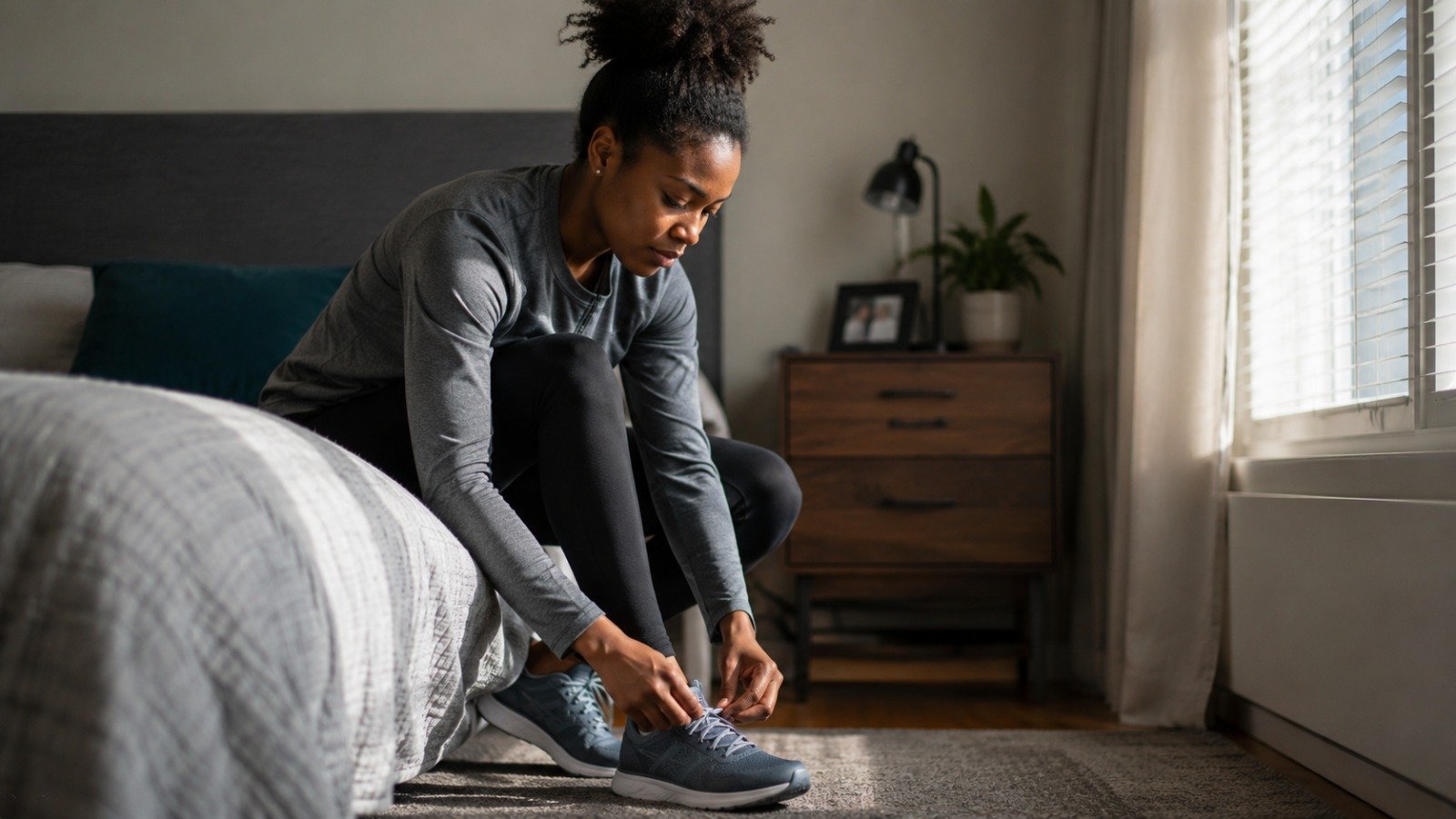
After I make my morning coffee, I will put my shoes on and walk for five minutes. After dinner, I will step outside for a short walk. The existing habit is the trigger. The new habit follows it like a shadow.
Put your walking shoes at the front door. Keep a water bottle on your desk. Put fruit on the kitchen counter where you can see it. Your environment shapes your behavior more powerfully than your willpower does. Design your surroundings for the habits you want.
This is not failure. This is the path through the grass being walked for the first few weeks. It is supposed to feel effortful at the beginning. Stay with it.
Get a calendar. Make a mark each day you do the habit. Do not break the chain. The streak becomes motivating in itself. Breaking it becomes genuinely uncomfortable. Both of those things work in your favor.
The Mistakes That Keep People Stuck
This is the most common reason people fail to change anything at all. Pick one habit. Just one. Do it every day until it feels automatic. Then add another. Trying to transform your sleep, your diet, your exercise, and your stress levels at the same time almost always ends the same way. Two weeks of effort. Then collapse. Then guilt. Then nothing changes.
Motivation is like the weather. You cannot control it. It comes and goes. It disappears exactly when you need it most, under pressure and stress. The goal is not to feel motivated. The goal is to build the habit until motivation is no longer necessary.
The perfect conditions will never arrive. Life will always be busy. Something will always be in the way. Start with whatever you have. Five minutes. Three times a week. Something.
Everyone misses days. Every single person who has ever successfully built a healthy habit has missed days. A missed day is just one missed day. The habit is not broken. Go back to it tomorrow. Without drama. Without punishment. Just go back.
Key Takeaways
- At least 80 percent of premature heart disease, stroke, and type 2 diabetes could be prevented through healthy daily habits, according to the World Health Organization.
- It takes an average of 66 days for a new habit to become automatic, according to research in the European Journal of Social Psychology.
- Sleep is when your brain removes waste products linked to Alzheimer's disease. Nothing else does this. Only sleep.
- Adults who move for 150 minutes per week are 33 percent less likely to die early than those who barely move, according to the CDC.
- Chronic stress damages the brain, weakens the immune system, and is a recognized risk factor for heart disease, according to the American Heart Association.
- People with strong social ties are 50 percent more likely to live longer than those who are lonely and cut off, according to PLOS Medicine.
- Having a sense of purpose is measurably linked to living longer, according to JAMA Network Open.
- Your environment shapes your behavior more powerfully than your willpower does. Design it for the habits you want.
- Start small. One habit at a time. Be consistent. The ease comes at around 66 days.
Frequently Asked Questions
Can the way I live really prevent most long-term diseases?
Yes. The World Health Organization estimates that at least 80 percent of early heart disease, stroke, and type 2 diabetes could be stopped before it starts, through healthy daily choices. This does not mean the way you live prevents every disease. Some illnesses are driven by genes you cannot control. But the diseases that kill the most people too early can mostly be avoided through the choices you make every day.
How long does it really take to build a habit?
Researchers at University College London tracked real people forming real habits over many months. Their findings were published in the European Journal of Social Psychology. The average was 66 days. Some habits formed in under three weeks. Others took eight months. The one thing that predicted whether a habit stuck was not talent or motivation. It was consistency. Showing up every day, even on the hard days.
Is it too late to change if you are already older?
No. Study after study shows that changing how you live brings real benefits at any age. Stopping smoking at 60 begins repairing the heart and lungs within years. Starting daily walks at 70 measurably improves memory, muscle strength, and how long you live. Your body never stops responding to better inputs. Beginning today is always better than waiting.
What is the single most important lifestyle change most people could make?
For the majority of adults, the answer is sleep. Most adults are sleeping less than their body needs. Poor sleep makes everything else harder. It makes you crave worse food. It reduces your motivation to move. It keeps your stress hormones higher. It weakens your immune system. Fix sleep first. Everything else becomes easier when you do.
How do I handle stress when I cannot remove the cause of it?
Some things cannot be removed. A difficult job. Money worries. Caring for someone you love who is ill. When you cannot remove the source of stress, the goal is to build your resilience to it. The most effective tools are daily movement, consistent sleep, honest conversation with people you trust, time outside, and breathing practices. If the stress is severe or long-running, professional support through a counselor or therapist is the most effective option available. The American Heart Association includes stress management as a genuine component of heart disease prevention.
What is the best habit to start with?
Start with a short daily walk. It is free. It requires nothing but shoes. It produces an immediate lift in mood. It builds the discipline of showing up every day. And once that habit is automatic, adding the next one becomes far easier.
Ikechukwu Raymond
Founder of Golden Health Science. He built this platform to take the world's best peer-reviewed health science and explain it in plain language. Simply, honestly, and free, for every person on earth.
Related Pillars
Lifestyle touches every other pillar. These connect most closely to your daily habits.
Movement and Physical Performance
Why moving every day protects almost every system in your body.
Sleep and Recovery Health
The nightly repair system that makes every other habit work.
Mental and Cognitive Health
How stress, mood, and connection shape your brain and body.
MEDICAL REFERENCES
- World Health Organization. (2023). Noncommunicable Diseases: Key Facts. who.int
- Lally P et al. (2010). How Are Habits Formed: Modelling Habit Formation in the Real World. European Journal of Social Psychology. 40(6):998-1009. onlinelibrary.wiley.com
- Holt-Lunstad J et al. (2010). Social Relationships and Mortality Risk: A Meta-Analytic Review. PLOS Medicine. 7(7):e1000316. journals.plos.org
- Centers for Disease Control and Prevention. (2023). Benefits of Physical Activity. cdc.gov
- American Heart Association. (2023). Stress and Heart Health. heart.org
- Centers for Disease Control and Prevention. (2023). Loneliness and Social Isolation Linked to Serious Health Conditions. cdc.gov
- Alimujiang A et al. (2019). Association Between Life Purpose and Mortality Among US Adults Older Than 50 Years. JAMA Network Open. 2(5):e194270. jamanetwork.com
- World Health Organization. (2020). WHO Guidelines on Physical Activity and Sedentary Behaviour. who.int
- American Journal of Public Health. (2016). Healthy Lifestyle Behaviors and All-Cause Mortality. ajph.aphapublications.org
- International Agency for Research on Cancer. (2023). IARC Monographs on the Identification of Carcinogenic Hazards to Humans. iarc.who.int
- American Academy of Sleep Medicine. (2015). Seven or More Hours of Sleep Per Night: A Health Necessity for Adults. aasm.org