
Three levels, one leverage point
Almost all attention goes to managing disease after it arrives. The chance to change the outcome sits in the two levels before that.
Pillar 10 of 12
The medicine that works best is the kind you never notice working.
Nobody can point to the heart attack they did not have. That is the whole difficulty.
Choose how you want to read
Screening tests are for people who feel well. If a symptom has already appeared, contact a doctor rather than waiting for your next invitation. Call your local emergency number now for chest pain, pressure or squeezing; sudden weakness or numbness in the face, arm or leg, especially on one side; a face that suddenly drops on one side; sudden trouble speaking, seeing, or a sudden change in balance or in how you can move; a sudden severe headache unlike your usual ones; or sudden severe trouble breathing. Call even if a possible stroke symptom disappears after a few minutes. Note the time when the symptoms began. Call for an ambulance. Do not drive yourself.
The main lesson
The conditions that shorten the most lives build for years without producing a symptom. That is why they are found by tests rather than by feelings, and why the invitation that arrives when nothing hurts is the one worth keeping.
Almost all attention goes to managing disease after it arrives. The chance to change the outcome sits in the two levels before that.
A test taken while you feel fine. Once a symptom appears it is no longer screening, and waiting for the next letter is the wrong move.
Clean water, safe roads, clean air, vaccination coverage and income shape a population’s health more than any single decision inside it.
Two ways to read this
Prevention is fixing the leak before the ceiling comes down. Some of it is what you do on ordinary days. Some of it is a test that looks for trouble you cannot feel yet. And a large part of it is decided far above you, in the water supply, the air, the roads and the vaccines a country pays for, which shape your health more than any single habit does.
Prevention is classified in three tiers. Primary prevention reduces how many new cases occur by removing exposure before disease begins: tobacco control, immunization, diet, activity and clean air. Secondary prevention detects established disease during its preclinical phase, the window in which the pathology exists but symptoms do not, which is the window screening searches. Tertiary prevention limits disability and recurrence once disease is clinically apparent. Screening carries its own costs, including false positives and overdiagnosis, the detection of disease that would never have caused harm within a person’s lifetime. That is why programs are offered selectively, to defined age and risk groups, rather than to everyone.
One form of medicine gets very little attention.
It makes no dramatic headlines. It uses no exciting new machines. It needs no hospital and no costly procedure. Yet few kinds of care do more to keep people alive and well.
This form of medicine is called prevention. And here is the fact that matters most about it. Many illnesses and early deaths can be delayed or prevented, although prevention can never remove every risk.
The World Health Organization says something important about early heart disease, stroke and type 2 diabetes. They come from a small set of causes, and those causes can be changed. Early here means happening sooner than it should, before a person has lived a full, healthy life.
So this is not about treating these diseases after they arrive. It is about stopping them before they start.
Those belong to a group doctors call noncommunicable diseases. That long name just means a disease you cannot catch from another person. They are long-term illnesses that build up over years.
In 2021, around 18 million people died before the age of 70 from these long-term diseases. That group also takes in cancer and long-term lung disease.
Many of those early deaths were linked to risks that can be reduced, including tobacco use, harmful alcohol use, unhealthy diets, too little physical activity, and air pollution.
Every year, millions of people go through heavy treatments for diseases whose risk can sometimes be reduced or whose damage can sometimes be limited through earlier detection and care. They have heart surgery. They have dialysis, a treatment that cleans the blood when the kidneys can no longer do it.
They have chemotherapy, strong medicine used to treat cancer. Some have an amputation, which means losing a limb through surgery. Prevention and earlier care could avoid some of this suffering. Not all of it.
And prevention does not just save lives. It also protects how well people live. Think of the difference between dying at 55 from a heart attack and staying active until 85.
No single factor explains that difference. Genes, age, living conditions, healthcare, chance, and choices made over many years can all matter. Having the right information at the right time can improve the odds.
This article is about giving you that information.
Marco and Ana are not real patients. They were written for this guide. Nothing that follows is a case history, a diagnosis, or a prediction about any real person.
Meet Marco and Ana. They are both 52, live on the same street, and use the same local clinic.
Marco has never asked which preventive checks apply to him, mostly because nobody has ever raised it and it has not occurred to him that there would be a list. He does not know his blood pressure. That is the force of blood pushing against the walls of your blood vessels. He does not know his cholesterol, a fatty substance in the blood.
The bowel cancer screening kit arrived in the post and went into the drawer with the batteries and the spare keys. He did not decide against it. It was an unpleasant thing to do at his own kitchen table on a weekday, and there was always going to be a better weekend for it. He has been meaning to call the clinic for two years, and the clinic is open in the hours he is at work. He feels fine, which makes all of that easy to keep doing.
Then one Tuesday morning he has a heart attack. He survives it, but spends a week in the hospital. There he learns that his blood pressure had been too high for years.
His cholesterol was high. His blood sugar was in the range just before type 2 diabetes. None of it had caused any obvious symptoms. None of it had been caught, because he had never been checked.
What he keeps returning to is being told how long it had been going on. Nothing about the Monday before had felt any different from the Monday before that.
Ana follows the schedule her local health service recommends, which started less as a decision than as something she inherited. Her mother’s cancer was found late, and Ana has never since been able to hear the word screening on its own. Her blood pressure came back slightly high four years ago. With professional guidance, she changed her diet and started walking every day. Later readings came down without medicine.
Her cholesterol and blood sugar were checked. She did the bowel cancer test when it was offered, at her own kitchen table, on a weekday, and she did not enjoy it any more than anyone does. All clear. She does not think of herself as a careful person. She books the appointment the way she books the car in, because both are things she has learned cost more when they are left.
The difference between Marco and Ana is not only luck. Genes, age, and the life a person leads all shape their risk. Neither of them chose their starting point. But Ana’s checks helped her find and handle risks that Marco never knew he had.
Some of what separated them was not a choice at all. A clinic open only during the hours you are at work is a real barrier, and calling that a personal failing would be both unkind and inaccurate.
That did not guarantee her outcome. It improved her chances. A car that gets serviced is less likely to break down at the worst moment. No service can promise it never will.
Bodies are not machines. But keeping an eye on them helps in the same way. One of them kept watch. The other did not.
The disease that ends a life early often builds quietly for years. It can be the slow end of a story nobody was reading.
Prevention in medicine means three things: stopping disease before it starts, finding it early, and reducing the harm it does once it is here.
Think of it like looking after a building. You can wait until the roof leaks, the walls crack, and the foundations shift before you call anyone. By then the repairs are costly, messy, and often only fix part of the damage.
Or you can check the building often. Fix the small problems while they are still small, and keep it standing for decades. Prevention is the regular check and the small fix.
When prevention works, it is often cheaper and less painful than emergency treatment. But every preventive step has limits, and some tests can also cause harm.
Many health systems offer checks to adults in midlife, often from around age 40. They look for early signs of heart and blood-vessel disease, diabetes, and kidney disease.
The useful step is not booking one all-purpose check-up. It is asking your health service which checks, screenings, and vaccines suit you. That depends on your age, your sex, your health history, and your risk.
The evidence here is surprising. A Cochrane review, a careful summary of many studies, gathered 17 trials covering more than 250,000 people and looked at general all-purpose health checks. It found little or no effect on the risk of dying, whether from any cause, from cancer, or from heart and blood-vessel disease.
One caveat belongs with that. Most of those trials are old, the newest having started in 1999, and medicine has changed since. But the finding still points somewhere useful. It is the well-chosen checks, aimed at the right people, that make the difference, rather than the all-purpose annual once-over.
Not all prevention is the same. There are three levels.
Primary · before it starts
Not smoking, food, movement, sleep, handling stress, and vaccines. This level reaches the most people, and it is where daily choices matter most.
Secondary · before you feel it
Screenings and check-ups taken while you feel well. They find high blood pressure, high cholesterol, early cancer and blood sugar starting to climb.
Tertiary · after it arrives
Heart-recovery programs after a heart attack, careful diabetes care, physical therapy after a stroke. Almost all public attention goes here.
All three matter. Most attention goes to the third. The chance to change the outcome sits in the first two.
Think of it as building a strong fence before the animal can escape. It covers the daily choices: not smoking, eating well, moving often, sleeping enough, and handling stress.
It also includes vaccines. These teach your immune system to fight one disease before it can make you ill. This level reaches the most people. It is often where daily choices matter most.
Think of it as spotting a small leak in the roof before it brings the whole ceiling down. It uses health screenings and check-ups. These are tests done when you feel well, not when you feel ill.
They find high blood pressure, high cholesterol, early cancer, and blood sugar starting to climb, all before you feel a thing. Many serious long-term diseases give little or no warning early on. They build up quietly, and this level is the work of looking for them before they show themselves.
Think of it as repairing the ceiling after the leak, and making sure it never fully falls in.
It includes heart-recovery programs after a heart attack. It includes careful diabetes care to stop further harm. It includes physical therapy after a stroke. All three levels matter. But most people think only about this third one, managing disease after it arrives.
The greatest chance to help yourself lies in the first two.
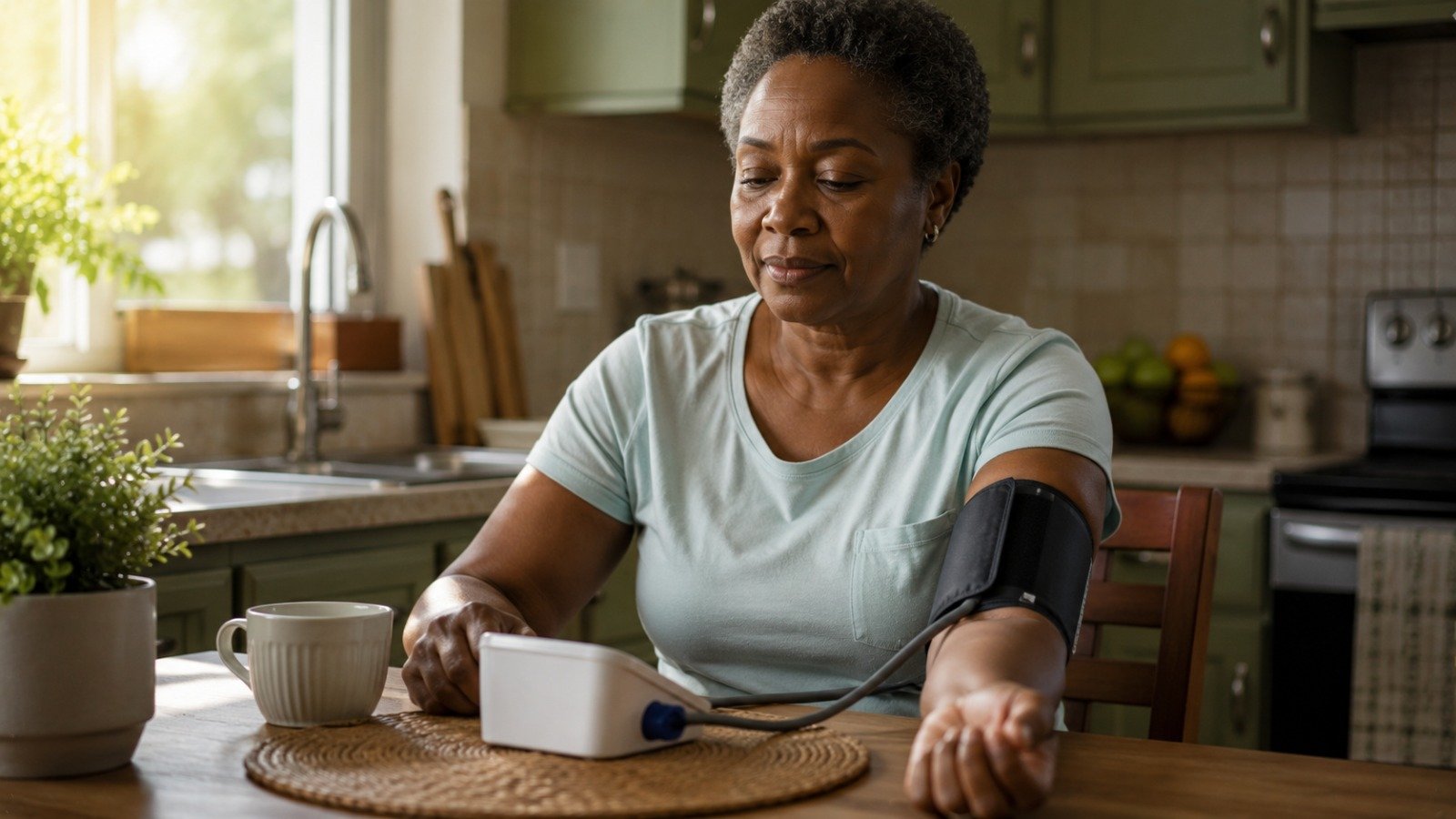
The story so far. Marco felt completely fine right up until the Tuesday morning. That is the difficulty with prevention, and it is why the tests below exist. They are built to find what a person cannot feel.
Well-chosen health screenings are valuable tools in medicine.
Think of a smoke alarm. It does not wait for the house to burn. It listens for the first hint of smoke, while there is still time.
A screening does the same for your body. At its best, it catches a problem while there is still time to act. No screening is perfect. Some miss problems, and some pick up things that would never have caused harm.
That is why only a few well-tested screenings are recommended for most adults. Each one is offered only when it is likely to do more good than harm. The most useful thing you can do is simple. Take up the screening your own health service offers you.
One idea, two depths
A test can find something that was never going to hurt you. What follows is more tests, months of worry, and sometimes treatment for a problem that would have sat there quietly for the rest of your life. The harm is real even though the finding was. That is why only a few screenings are offered, and only to the people they are likely to help.
Overdiagnosis is the detection of disease that would never have become symptomatic or caused death within a person’s lifetime. It is not the same as a false positive, which further testing corrects: an overdiagnosed case is real disease under the microscope. It also cannot be identified in any individual patient, only inferred from population data, which is why screening programs are judged on disease-specific mortality rather than on how many cases they find. Lead-time bias compounds the difficulty, because moving the moment of diagnosis earlier lengthens measured survival even when the date of death does not move at all.
The starting age, the test used, and how often it is repeated all differ. They depend on your country and your personal risk. So the ages below are common examples. They are not rules.
Ask your local doctor or health service what applies to you.
High blood pressure is sometimes called the silent killer. That name is used because it usually causes no symptoms. Think of a garden hose left turned up too high, day and night, for years. The hose itself slowly wears out from being pushed too hard.
Your blood vessels are the same. Over years, high pressure quietly damages your arteries. Those are the vessels that carry blood away from the heart. It also damages the heart itself. The brain. The kidneys.
And you feel none of it happening. Most health bodies advise every adult to have their blood pressure checked regularly. How often depends on your age, your past readings, and your risk. Follow your local guidance.
It takes minutes, with a simple cuff that puffs up around your upper arm. One high reading on its own does not always mean you have high blood pressure. A doctor or nurse usually checks it again with more readings. Some of those are taken at home, or over 24 hours.
Knowing your numbers is one of the most useful things you can know about your own health.
A cholesterol test is a blood test that measures the different fats in your blood. The one to watch is LDL cholesterol. It is sometimes called the bad kind. It can enter the walls of your arteries and build up there, gathering slowly over years.
Think of water getting into a wall. It does not fill the room, it spreads inside the plaster, out of sight, and from where you stand the wall looks fine.
Then one day a patch gives way.
That is closer to what happens in an artery than a slow, steady blockage, and it is why a cholesterol check belongs in any regular adult health check.
Type 2 diabetes builds up over years. It happens through slowly worsening insulin resistance. That means your cells take in less sugar for the same amount of insulin. Insulin is the hormone that moves sugar out of your blood. The resistance gets worse year by year. Most people in the stage just before diabetes feel nothing at all.
It is like a slow leak in a tire. Nothing looks wrong from the outside, and the car still drives. But the pressure is dropping the whole time. A simple blood test finds it.
There are two common ones. A fasting glucose test measures your blood sugar after several hours without food. An HbA1c test measures your average blood sugar over the past three months.
Catching high blood sugar this early gives you a real chance to bring it back down. That can happen before it becomes diabetes. In the United States, the American Diabetes Association gives an age. It says to check all adults for type 2 diabetes from age 35.
Other countries set their own ages, so follow your local guidance.
Bowel cancer is one of the most common cancers in the world. The bowel is the lower part of the digestive system. Caught early, bowel cancer is one of the most treatable of all cancers.
Where a bowel screening program exists, adults are invited to do a simple test at home, using a small sample of their bowel movements. Many countries begin the invitations somewhere around age 45 to 50 and repeat them every year or two, though your own health service sets the exact age and interval.
The test looks for tiny traces of blood in the sample. Blood can come from several causes, so an unusual result usually needs a closer look inside the bowel. That test is called a colonoscopy, and it can find and remove polyps, which are small growths on the inner lining. Some polyps and some cancers do not bleed, which is why the test is repeated. Once is not enough.
Here is what makes this screening worth doing. Most polyps are harmless, but some can slowly turn into cancer if left alone, rather like a small weed spreading across a garden. Taking one out early stops that growth becoming cancer, and it lowers your risk. No single test can rule out every problem, now or later.
If you are offered this test, do it. It takes minutes, and it could save your life.
Where a breast screening program exists, women are invited for a mammogram. That is an X-ray of the breast that uses a low dose. Many countries begin somewhere around age 40 to 50. They repeat it every one to three years. The starting age, and how often it is repeated, differ from country to country.
A mammogram can find a tumor, an abnormal growth, before it can be felt by hand. Breast cancer found early is usually easier to treat than cancer found after it has spread.
In the age groups where it is offered, organized mammogram screening can cut deaths from breast cancer. Like any screening, it also brings false alarms. It can find cancers that would never have caused harm.
That is why it is offered as an organized program to certain age groups. Not to everyone.
Where a cervical screening program exists, people with a cervix are invited for testing at set ages. The starting age and the test used differ between countries and professional guidelines. For example, the American Cancer Society recommends starting average-risk screening at age 25. World Health Organization guidance recommends starting at age 30 for the general population, or age 25 for women living with HIV. Follow the program where you live. How often you need screening also depends on the test, your health history, and local guidance. Having the vaccine against HPV does not usually remove the need for screening. HPV is short for human papillomavirus, the virus behind most cervical cancer.
The cervix is the lower part of the womb, where it meets the vagina. This screening does not test for cancer itself. It looks for early changes in the cells of the cervix. Left alone, those changes could turn into cancer later.
This kind of prevention starts even earlier than the others. It looks for high-risk HPV, or early cell changes. It does that years before cancer could ever form. The screen itself does not remove anything.
But if further tests confirm important changes, they can be treated before cancer starts. Many small changes never get worse, so not every finding needs treatment.
This one is missing from most lists, but it saves lives among the people it is aimed at.
Some countries offer a yearly low-dose scan to people aged 50 to 80. To qualify, a person must have smoked the equivalent of a pack a day for twenty years. They must also either still smoke, or have stopped within the last fifteen years. That is far less smoking than most people picture when they hear the word heavy.
Not every country runs a program. It is worth asking whether yours does, and whether you qualify.
Vaccines are one of the best things medicine has ever done.
Smallpox scarred and killed millions throughout history. A worldwide vaccine effort wiped it out for good in 1980. Polio is a virus that can cause lasting paralysis, meaning loss of movement. It has been pushed back a long way. The wild virus now spreads in only a small number of countries.
Yet where fewer people take up vaccines, diseases that were almost gone have started to come back.
Think of a firebreak in a forest. It is a cleared gap, cut on purpose. A fire reaching it runs out of fuel and stops.
For some diseases, vaccinating a community works the same way. When enough people are protected, the illness has fewer easy paths from person to person. This is called herd immunity.
How well this works depends on the disease, and on how much that particular vaccine cuts the spread, so it does not work the same way for every vaccine. Where it does work, having most people vaccinated adds some protection for those who cannot have the vaccine themselves, and for people whose bodies do not respond strongly to one.
The World Health Organization estimates that vaccines prevent 3.5 to 5 million deaths every year. For adults, common vaccines include the yearly flu vaccine. There are also COVID-19 boosters as advised. And the shingles vaccine for older adults.
Shingles is a painful condition. It happens when the chickenpox virus, asleep in the body since childhood, wakes up again. Ask your doctor or pharmacist which vaccines are right for your age and health.
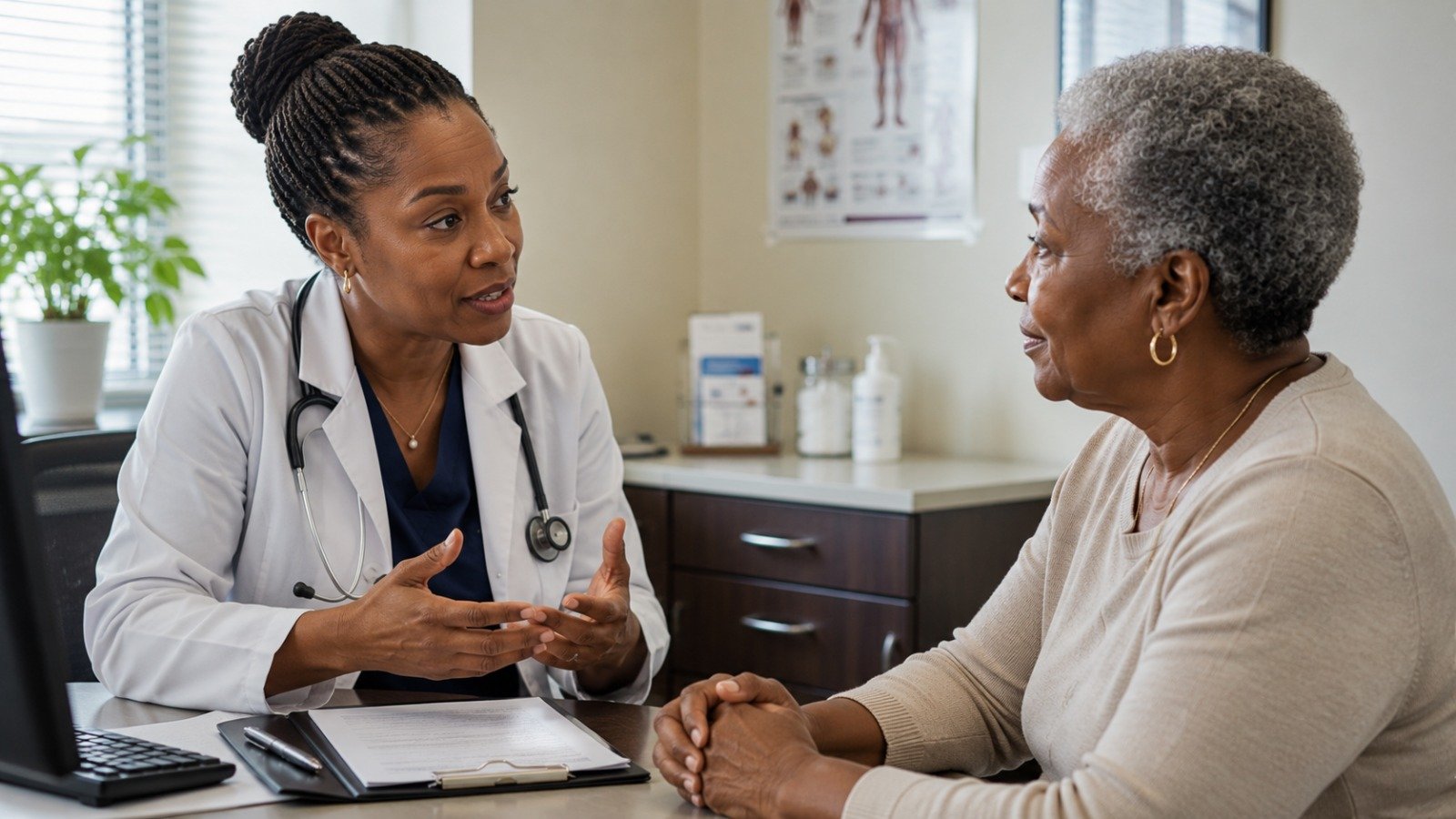
The story so far. Marco’s blood pressure did not rise on the morning of his heart attack. It had been climbing for years. Understanding that slow build is what makes the difference between Ana’s path and his.
Learning how long-term disease develops is one of the most useful things you can do. It gives you more control. A long-term disease builds up slowly over time. It does not appear all at once.
And because it builds so slowly, there is often a long window. Acting early can lower the risk. It can sometimes slow the damage, or even undo part of it. But it cannot promise that disease will never come.
Think of a tide coming in over flat sand. Watch any single wave and nothing seems to change. Look away for an hour and the beach you were standing on is gone.
Long-term disease can move at that speed. Each day’s change may be too small to see. The process can speed up, slow down, or sometimes improve. But by the time symptoms appear, a great deal of ground may already be gone.
Heart and blood-vessel disease begins in the artery wall. Cholesterol travels in the blood inside tiny packages. Those can slip into the wall and get trapped there. The body answers with inflammation. That is what the body does when it tries to repair damage. Over time a plaque builds up.
A plaque is a patch of fatty material inside the blood vessel wall. Some plaques slowly narrow the artery. But a heart attack or stroke often happens another way.
A plaque breaks open or wears away. A blood clot forms on top of it. And the flow is suddenly blocked. Sometimes that happens at a spot that was not badly narrowed before.
This build-up begins in some people in their twenties and thirties. It moves silently for decades, without a single obvious symptom. Then one day it is silent no longer.
Type 2 diabetes can also develop slowly. Insulin resistance builds over years.
Once blood sugar stays high, it can slowly damage blood vessels, nerves, kidneys, and other organs.
Knowing this changes everything. If the process starts decades before the crisis, the window to act is enormous. The choices you make today can push all of this in a better direction. Slowing the build-up of plaque. Easing insulin resistance. Treading that path more lightly.
They make a good outcome more likely, even though they cannot make it certain.
The evidence on prevention points in a consistent direction. Across decades of research, the same few habits come up again and again. They can lower the risk of many long-term diseases, although they cannot prevent every case.
One idea, two depths
Damage builds inside the wall of a blood vessel for decades before anything hurts. Your body is not hiding it from you. There is simply nothing to feel, because the artery has no pain nerves in its wall, and for most of that time the blood is still getting through.
Atherosclerosis begins with injury to the endothelium, the single layer of cells lining an artery. LDL particles enter the wall, are modified there, and are taken up by immune cells that become foam cells. The plaque that forms grows outward before it grows inward, so the channel the blood travels through stays open for years, which is why symptoms appear so late. Many heart attacks come from the rupture of a plaque that was never narrow enough to cause chest pain on exertion. That is how “the tests looked fine” and “a heart attack on Tuesday” can both be true.
Smoking is one of the leading causes of early death that can be avoided. It causes at least 12 kinds of cancer. It is the leading preventable cause of heart and blood-vessel disease.
And it causes serious long-term lung disease that makes breathing harder and harder. Stopping at any age brings real benefits you can measure.
For many people, carrying excess body fat raises the risk of several serious conditions: heart disease, type 2 diabetes, several cancers, joint disease and early death. It also raises the risk of sleep apnea, where breathing repeatedly stops during sleep. Risk depends on where fat is carried, and on fitness, blood pressure, blood sugar and many other things besides.
Weight is not a judgment about character or worth. It is one part of health, not the whole picture.
The World Health Organization advises at least 150 to 300 minutes of moderate activity a week. Or 75 to 150 minutes of hard activity. Plus some work that builds your muscles. That is a target to aim at. It is not a cut-off point. Movement below it still counts.
Some activity is better than none. Too little movement is an important risk factor for early death and long-term disease worldwide. For many people, it is a risk that can be reduced.
Build your plate on vegetables, fruit, whole grains, beans, and good protein. Keep ultra-processed food low. That pattern lowers your risk of heart disease, type 2 diabetes, and several cancers. A major global study published in The Lancet estimated the toll. Poor eating was linked to about 11 million deaths in 2017.
Two things led that list. Eating too much salt, and eating too few whole grains. Each one was linked to around three million deaths. Too little fruit came next.
Alcohol is rated a Group 1 cause of cancer by the International Agency for Research on Cancer. Group 1 is the agency’s top group for how strong the evidence is. It means there is enough evidence that alcohol can cause cancer in people.
It describes how sure scientists are, not how large the risk is. Alcohol is linked to at least seven kinds of cancer. In general, the more a person drinks, the higher the risk.
Cutting down or stopping lowers the risk. How much depends on which cancer.
Of all the causes of stroke that can be prevented, high blood pressure is the biggest. It is also a major cause of heart and kidney disease worldwide. Know your blood pressure. Keep it in a healthy range, through food, movement, and medicine if you need it. It is one of the most useful things you can do.
Public health is the work of protecting and improving the health of whole populations at once. A population means all the people in a community or country.
Here is the simplest way to see the difference. Ordinary medicine treats one sick person at a time, the way a doctor stitches one cut. Public health works upstream, changing the things that were making people sick in the first place.
Picture a river with people falling in. Ordinary medicine pulls them out one by one. Public health walks up the river to find out why they keep falling in, and fixes that.
Clean water, safe food, vaccination programs, safety rules at work, clean air, laws limiting smoking in public places and road safety rules are all public health in action.
Together, these measures can protect very large numbers of people at once.
Here is a striking example. Clean water, proper toilets, and sewers have stopped a vast number of infections and deaths. It is one of the greatest health gains in history.
Antibiotics are remarkable too. But clean water, sanitation, vaccination, and other preventive measures stop illness before treatment is needed. Prevention and treatment work together. A strong health system needs both.
Prevention is not open to everyone in the same way. That deserves an honest look.
People living in poverty tend to live fewer years. They get long-term diseases more often, they have less access to checks and screenings, and they breathe more polluted air and face more dangers.
They also have less time to cook, fewer safe places to walk and play, and steady stress from money worries, poor housing and unsteady work.
None of this is the fault of the people living through it. The World Health Organization calls these the social determinants of health. In plain words, that means the conditions a person is born into and lives in: their home, their work, their schooling, their money, and the air around them.
These conditions are shaped by how money and power are shared out in a society. A child born into poverty lives in a very different world. A child born into comfort lives in another.
This is not fair, and saying so is not taking sides in politics. It is just stating a fact that has been measured again and again. These health gaps are real, and most of them could be closed.
It would take better choices by governments. More money spent where it is needed. And real concern for the health of every person, not only the rich.
This site exists partly because of this. The knowledge that prevents disease should not belong only to people rich enough to pay for good doctors. It should belong to every person on earth. Simply. Honestly. Free.

The story so far. Ana did nothing complicated. She kept an appointment, changed two habits, and took a test when it was offered. What follows is that same short list, written out.
Here are preventive actions that help many people. What is possible differs with health, money, time, ability, and access to care.
Start with your blood pressure, and add your cholesterol and blood sugar when those are recommended for you. A healthcare professional may also consider your weight, height or waist measurement as part of the wider picture.
Knowing the numbers that apply to your age and risk can be a useful place to start. Ask your health service which checks you need and how often.
Bowel screening, cervical screening, breast screening, and blood pressure and cholesterol checks are the ones most widely offered to adults. Take up whichever your health service gives you.
These commonly include the yearly flu vaccine, COVID-19 boosters as advised, and the shingles vaccine for older adults. Ask your doctor what applies to you.
For a smoker, stopping does more for your health than anything else you could change. Your doctor or local health service can offer help. That help makes quitting far more likely to work.
150 minutes of moderate movement a week is about 21 minutes a day. It does not have to be split evenly. Regular movement is a well-supported way to lower the risk of several long-term diseases. Start at a level that suits your health and ability. Some movement is better than none.
Perfection is not the aim. Mostly. Let most of what you eat be close to its natural form.
From a cancer point of view, there is no completely safe level of alcohol. The more you cut back, the more your risk falls.
Long-term stress can affect sleep, mood, blood pressure, and daily habits. Treat handling it as part of looking after your health, not as a luxury.
Start here
Ask your local health service which checks, screenings, and vaccines apply to your age and risk. Blood pressure is a common place to begin. Cholesterol and blood sugar checks may also be recommended for you.
Screening tests are for people who feel well. If you already have a new or worrying symptom, do not wait for your next screening invitation. Contact a doctor.
Call your local emergency number immediately if any of these happen:
Call even if a possible stroke symptom disappears after a few minutes. It could be a transient ischemic attack, sometimes called a mini-stroke, and still needs emergency assessment. Note the time when the symptoms began. Call for an ambulance. Do not drive yourself.
A heart attack does not always cause obvious chest pain. Some people mainly have shortness of breath, nausea, sweating, unusual tiredness, or pain in the arm, back, neck, jaw, or stomach. If you think someone may be having a heart attack, call your local emergency number even if there is no chest pain.
See a doctor promptly for any of these:
Get emergency medical help for heavy bleeding, bleeding that will not stop, or bleeding with fainting, collapse, or sudden severe weakness. Black, sticky, tar-like stool may mean bleeding inside the gut and also needs emergency medical help.
Prevention on a different clock
Most prevention works quietly over time. Anaphylaxis is a severe allergic reaction that can become life-threatening within minutes. It works on a different clock. Good prevention starts before the reaction. It includes a correct diagnosis, a written action plan, and two epinephrine auto-injectors if they have been prescribed. These devices give a measured dose of epinephrine, also called adrenaline. The people around you should know where they are and how to use them. If you think anaphylaxis is starting, act at once.
A teenager with a diagnosed peanut allergy owns one epinephrine auto-injector. It expired in March. It is in a kitchen drawer at home, and he is at a friend’s house. Every part of that is a failure of prevention, and every part of it could have been fixed on an ordinary afternoon.
Good planning can happen on an ordinary afternoon, but it begins with proper medical care. After anaphylaxis, arrange medical follow-up. This should include a visit to a doctor who specializes in allergies. Work with the healthcare team on a written action plan and learn how to use your emergency medicine.
If auto-injectors are prescribed, keep two with you. Check the expiration date printed on each one and arrange a replacement before that date. Show the people around you where the injectors are and how to use them.
What it looks like
What to do, in this order
Three things people get wrong. Carry two in-date auto-injectors, not one. Triggers are not only food and medicines: insect stings, latex and exercise all cause anaphylaxis, and in some people no trigger is ever identified. And a mild reaction in the past does not predict a mild reaction next time.
Marco felt fine for years. That was true, and it was the problem. High blood pressure, high cholesterol and blood sugar creeping toward diabetes had all been building quietly, and none of them hurt.
Luck was not the whole explanation. He had three findable risks that nobody had looked for.
Ana had those same three risks checked. Two came back clear, and the one that did not was caught early enough to address.
Neither story is a promise. Screening does not catch everything, some findings never would have caused harm, and plenty of illness arrives with no warning at all.
But the difference between these two lives is not willpower or virtue. It includes a set of appointments. Where a health service offers those, they may be quick and free or covered. Where it does not, or where getting there costs you a day of pay, that is a real barrier and not a personal failing.
The Main Lessons
The World Health Organization identifies several major risks for early heart disease, stroke, type 2 diabetes, cancer, and long-term lung disease. These include tobacco use, harmful alcohol use, unhealthy diets, too little physical activity, and air pollution. Many of these risks can be reduced.
Many serious long-term diseases can build silently for years. Well-chosen screenings can find certain problems before symptoms appear, while there may still be time to act.
Many health systems offer specific midlife checks, often from around age 40. Ask which checks and screenings suit your age and risk, then take up the ones you are offered.
Vaccination prevents an estimated 3.5 to 5 million deaths every year from diseases including diphtheria, tetanus, whooping cough, influenza and measles. That figure comes from the World Health Organization.
Poor eating was linked to about 11 million deaths worldwide in 2017. That comes from a global study in The Lancet. That figure is worked out from country records and estimates. Nobody counted the deaths one by one.
The International Agency for Research on Cancer places alcohol in Group 1. That means there is enough evidence that it can cause cancer in people. This describes how certain the evidence is, not how large the risk is. Alcohol is linked to at least seven kinds of cancer.
Heart disease and type 2 diabetes often start to build decades before a doctor finds them. Acting early can slow that damage, or reduce it, even if it cannot always prevent it.
Health gaps between rich and poor are real. They can be measured, and most of them could be closed. They are shaped by money and living conditions, not by a person’s character.
Know your numbers. Do your screenings. Stay vaccinated. Do not smoke. Move daily. Eat mostly whole food. These are the foundations of personal prevention.
Golden Nugget
The successes of prevention are invisible by definition. Nobody can name the heart attack they did not have, or thank the test that found nothing. So prevention gets judged by how a person feels, which is the one method certain to fail, because feeling well is the state it exists to protect and never the proof that it worked.
Now, whatever your age. The changes that lead to heart disease and type 2 diabetes begin early. For many people, that is in early adult life. The daily choices that stop disease developing matter at every age.
Screenings and checks often become more important as you get older. The right starting ages depend on your country, your body, your health history, and your own risk. They may begin earlier if you have risk factors, which are things that make a disease more likely. Those include a family history of disease, smoking, certain health conditions, and, for some diseases, excess body fat.
There is no age at which prevention stops mattering.
For someone who smokes, stopping is usually one of the most powerful changes available. For someone who does not smoke, there is no single answer for everyone.
Regular activity, nourishing food, recommended vaccines and screenings, and knowing and managing blood pressure or cholesterol when needed can all matter. The best first step depends on your greatest risk.
It varies by country and by your own health. So ask your doctor what fits your situation. Ask which checks apply to you. A general all-purpose check is the weaker option.
Blood pressure is commonly checked during routine healthcare visits. How often cholesterol and blood sugar are checked depends on age, earlier results, health conditions, medicines, pregnancy, and other risks.
Your own risk and the guidance in your country determine how often you need each check.
No. Family history is one thing that raises your risk. It is not a promise that you will get the disease. Having a parent or sibling with heart disease or type 2 diabetes does raise your own risk.
How you live and how well important risks are treated can change the odds. Take someone with a strong family history. She does not smoke. She exercises, eats well, and keeps her blood pressure and cholesterol in check.
Those steps can lower her risk, although nobody can calculate the difference from habits alone. Family history tells you where to pay closest attention. It does not decide the outcome.
Because some serious long-term conditions can cause no symptoms while they are developing. High blood pressure and high cholesterol are often silent. Rising blood sugar may also go unnoticed for years.
Feeling fine is not proof that every measurable risk is normal. That is why recommended checks and screenings exist. They look for specific problems in people likely to benefit. They cannot find every disease, and feeling well is not a reason to test for everything.
No. Preventive medicine is a specialist field, but the ideas behind it belong to everyone. Many daily actions need no specialist at all: not smoking, staying active, eating well, sleeping enough and managing stress. Other steps, including screenings, vaccines and treatment of high blood pressure, need help from a health service.
What is within reach differs from person to person. Start with the safest useful step available to you.
The honest answer is that your own health service sets them. And the ages differ a good deal between countries. Ask them, or check their website. It will list exactly what you can have, and when.
Here is a rough sense of what is common. Blood pressure from early adulthood. Cholesterol and blood sugar from around your forties. Or earlier, if you have things that raise your risk. Cervical screening for women from somewhere between the mid-twenties and thirty.
Breast screening for women from somewhere around forty to fifty. Bowel screening from around forty-five to fifty. Treat those as examples of the usual range, not as your personal schedule.
Where an organized program exists, it may be free or covered by the health system. Check the arrangements where you live.
They do have real downsides. That is why programs are planned with care, instead of testing everyone for everything. A test can return a false alarm. That leads to worry, and to further tests that were never needed.
It can also find something that would never have harmed you. Treating that does more damage than leaving it alone. That is why the recommended screenings are limited. Only the ones where the good they do clearly outweighs the harm.
It is also why more testing is not automatically better.
For most healthy people, no. These scans are heavily advertised. Health services rarely recommend them. They find a great many harmless things. Those then have to be checked out. That means more scans. Sometimes a biopsy, where a small piece of tissue is taken and tested. And a great deal of worry. There is little evidence that any of it helps people live longer.
The ordinary, risk-based screenings recommended by health authorities have clearer evidence behind them. They may be free, covered, or relatively inexpensive depending on the country. Start with the checks recommended for you.
Set an example instead of giving a lecture. People rarely change because someone told them the numbers. They change because something became easy. Or because someone they trust did it first. Book your own check and mention it afterwards.
Cook the meal rather than describing it. Invite someone on the walk instead of recommending walking. With grown-up family, an offer usually works better than an argument.
Because health is shaped by circumstances, not willpower alone. Where you live shapes a great deal: whether there is a safe place to walk, whether fresh food is near and affordable, and whether you can reach a doctor without losing pay.
Someone working two jobs with no transport has a genuinely harder task. Someone with time and a car has it easier. Naming that is not an excuse. It helps you find the changes actually open to you. And it explains why health gaps between groups last so long.
Before you go
This article is for education only. It is not medical advice. It does not replace care from a qualified healthcare provider. Screening programs, recommended ages, and available vaccines differ from country to country. Always speak to your local doctor or health service about what is right for you.
World Health Organization. (2025). Noncommunicable Diseases: Key Facts. who.int
World Health Organization. (2026). Immunization Coverage. who.int
World Health Organization. (2025). Social Determinants of Health. who.int
World Health Organization. (2020). WHO Guidelines on Physical Activity and Sedentary Behavior. who.int
GBD 2017 Diet Collaborators. (2019). Health Effects of Dietary Risks in 195 Countries. The Lancet. 393(10184):1958-1972. doi.org
International Agency for Research on Cancer. (2024). IARC Handbooks of Cancer Prevention, Volume 20A: Reduction or Cessation of Alcohol Consumption. iarc.who.int
International Agency for Research on Cancer. IARC Monographs Questions and Answers: what the classification groups mean. monographs.iarc.who.int
Krogsbøll, L.T., Jørgensen, K.J., & Gøtzsche, P.C. (2019). General health checks in adults for reducing morbidity and mortality from disease. Cochrane Database of Systematic Reviews, 1:CD009009. cochranelibrary.com
World Health Organization Regional Office for Europe. (2020). Screening programs: a short guide. Increase effectiveness, maximize benefits and minimize harm. iris.who.int
American Diabetes Association. (2026). Diagnosis and Classification of Diabetes: Standards of Care in Diabetes 2026. Diabetes Care. 49(Supplement 1). diabetesjournals.org
World Health Organization. (2026). Cancer. who.int
World Health Organization. (2026). Cervical Cancer: Key Facts. who.int
American Cancer Society. (2025). Cervical Cancer Screening Guidelines. cancer.org
Centers for Disease Control and Prevention. (2024). Signs and Symptoms of Stroke. cdc.gov
American Heart Association. (2024). Warning Signs of a Heart Attack. heart.org
National Health Service. Anaphylaxis. nhs.uk
Australasian Society of Clinical Immunology and Allergy. First Aid for Anaphylaxis. allergy.org.au
St John Ambulance. How to Put Someone in the Recovery Position. sja.org.uk
Medicines and Healthcare products Regulatory Agency. Safe Use of Adrenaline Auto-Injectors. gov.uk
Golden Health Quest
Quest 1 of 3
This is an educational game. It does not assess your health and it cannot tell you which checks apply to you.
Habit Builder
This is a learning game, not a personal prescription. Some of the options below are what this guide warns about rather than recommends.
0 of 3 selected
One Thing This Week
A prevention plan that lists everything gets done in no particular week. Pick the one thing you have been postponing and attach it to a day.
Choose both halves to write your one thing.
A learning tool, not a prescription. A symptom that is already there belongs with a doctor now, not with a plan for next week.
One Realistic Step
Choose an amount of time to receive one practical step.
Choose a step that fits your circumstances, your health service and any condition you live with.
Was this guide useful? Share it, keep a copy or return to the evidence.