
One habit at a time
Changing everything at once is the most common reason people change nothing at all.
Pillar 01 of 12
Why your daily choices shape your health more than you think.
Your body is responding to the way you live, today and every day.
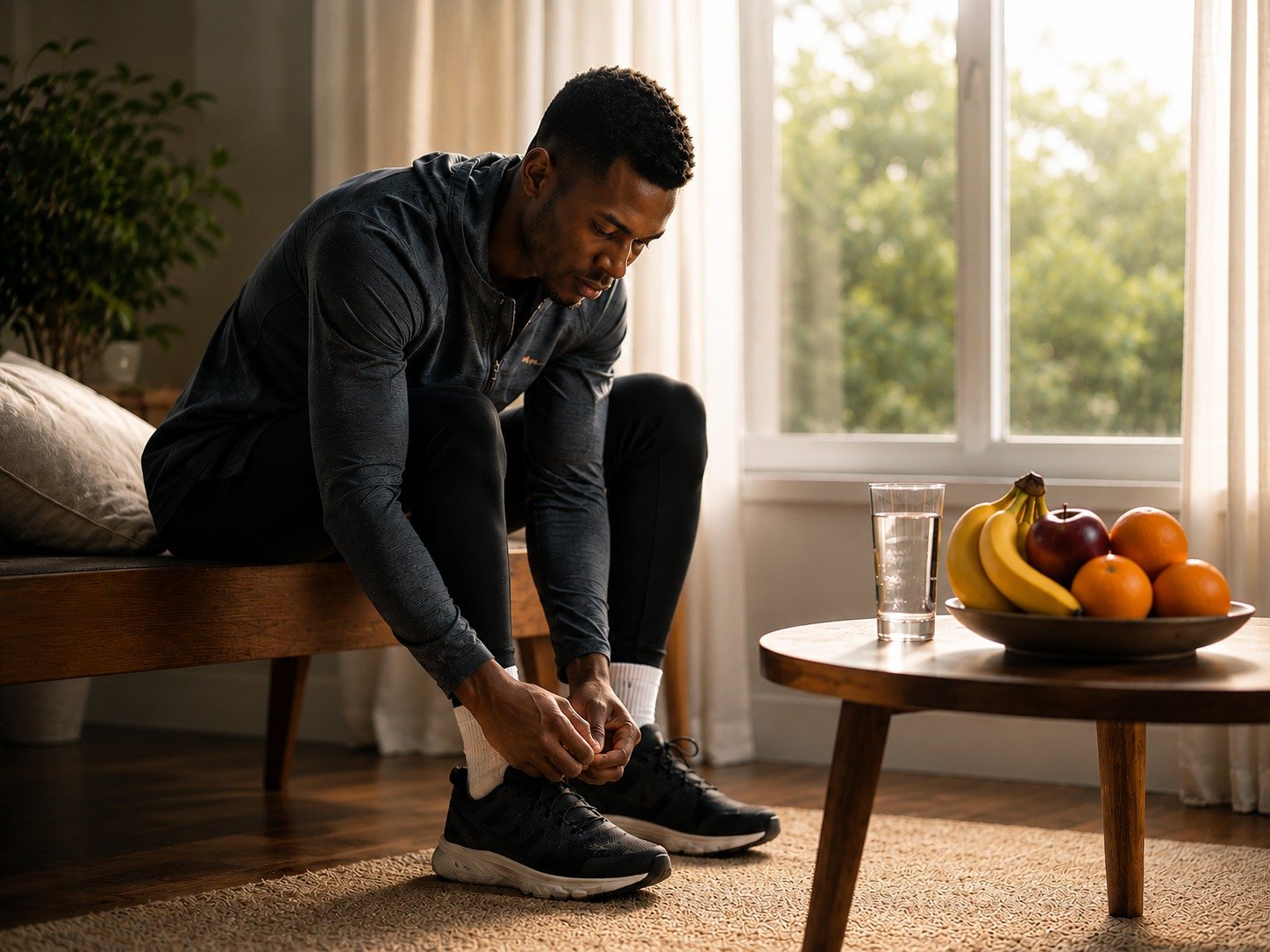
Choose how you want to read
The main lesson
Heart disease, stroke and type 2 diabetes share a small set of causes that can be changed. Around 18 million people died before the age of 70 from these conditions in 2021. Willpower alone does not decide who ends up in that number, but the habits you return to shift the odds more than almost anything else within your control.
Changing everything at once is the most common reason people change nothing at all.
The middle figure for a habit feeling automatic was 66 days, not 21. The spread was wide.
Researchers looked at what happens when someone misses a day. The habit held.
One idea, two levels
Walking across long grass is hard the first time. Walk the same way often enough and a path appears, and then you can follow it almost without looking. Repeating something makes it easier to repeat.
Each time you repeat an action, the brain cells behind it connect a little better and fire a little more easily, and repeated often enough the whole network reshapes around it. It does not wear down one path at a time. It changes across many networks at once, less like a single track and more like a whole field learning where people walk. Two things follow from that. The brain does not judge whether the path leads somewhere good, and a habit becoming automatic is not the same as a habit becoming permanent.
A meal either feeds you well or it does not. A full night of sleep gives your body the time it needs to repair itself, and a short night leaves some of that work undone. Hours of sitting still change what happens inside your muscles and blood vessels, and so does getting up to move.
Many people assume health is mostly luck, settled by the genes they were born with. Researchers have now followed millions of people for decades, and they keep arriving at the same answer. Genes do matter, and there is still real argument about how much. What is not in doubt is that your daily habits matter enormously, and unlike your genes, they are yours to change.
The World Health Organization looked at what kills the most people worldwide. The list is led by heart disease, stroke, and type 2 diabetes, a condition in which the body stops handling blood sugar properly. What stands out is how much these illnesses have in common.
They share a small handful of main causes: tobacco, unhealthy food, too little movement, and too much alcohol. Dirty air belongs on that list as well. Nearly every one of these is something that can change.
That is why so much of this illness gets described as avoidable. The word can mislead, though, because the work of avoiding it does not happen in a hospital. It happens years earlier, in the ordinary daily choices of ordinary people.
In 2021, around 18 million people died before the age of 70 from noncommunicable diseases, the long-term illnesses like cancer, diabetes, and lasting lung disease that do not pass from person to person. Many of those deaths could have come much later than they did.
Willpower alone does not decide who ends up in that number. Poor access to care, poverty, dirty air, hard working conditions, and the genes you were born with all shape who falls ill and who does not. What your daily choices do is make good health more likely within the life you actually have.
That is the reason this article exists.
Tunde and Mariam are not real patients. They were written for this guide. Nothing that follows is a case history, a diagnosis, or a prediction about any real person.
Picture two people, Tunde and Mariam. They live on the same street, they are the same age, and they earn about the same money. At 30, they are starting from the same place.
Tunde wakes tired most mornings. There is a bakery between his door and the bus stop, and buying something there costs him no time at all, which at seven in the morning is the only currency he has. He sits for most of the working day. He feels the pressure and decides, most days, that dealing with it is something he will get to later. Most evenings he has a drink to put the day down. He sleeps five or six hours and has stopped thinking of that as a shortage. The friends he used to see every week have become people he means to call.
Mariam wakes at the same time each morning, an hour she did not choose so much as inherit. She eats a proper breakfast. She walks at lunch, mostly because the alternative is staying in the room she has been sitting in since eight. When the pressure builds she has something that genuinely helps, found by accident a few years ago and kept since. She goes to bed at the same time each night and sleeps seven to eight hours. She has three or four people she can say a true thing to.
Now picture them both at 60. Would their hearts be working equally well? Would their memories be equally sharp? Would they face the same risk of cancer, diabetes, and heart disease?
Probably not.
A study in The BMJ followed more than 110,000 women and men over many years. Those who kept up several healthy daily habits lived longer, and they spent far fewer of those years living with serious illness. Take women at age 50. Compared with women who had none of these habits, those with four or five of them could expect about 10.7 more years free of cancer, heart disease, and diabetes. For men the figure was about 7.6 years.
This study followed people and recorded how they lived. It did not assign anyone a way of living, so it shows a strong link rather than proof that the habits themselves caused the difference.
Your body keeps a record of all of it, written into your blood vessels, your cells, and your brain.
Every single day, something is being written. The question is what.
The word lifestyle gets used loosely, but in health science it has a specific meaning. Lifestyle is the set of things you do again and again. One meal does not count, and neither does one walk last month. What counts is what you do day after day, week after week, year after year.
Think of weather and climate. One sunny day is not a tropical climate. One storm is not a cold country.
The climate is the pattern, repeated over thousands of days.
Your health is the climate, not the weather. Which is why one bad week cannot undo you, and one good week cannot save you.
The World Health Organization is direct about this. How you live is one of the main causes of the diseases that kill the most people. Genes count too, and so do your surroundings, your body, and the conditions you live in. Heart disease, cancer, diabetes, and long-term lung disease together with other lasting illnesses cause about three in every four deaths worldwide each year, setting aside deaths from pandemics.
How a person lives shapes a large part of whether they develop them.
This is not said to make anyone feel guilty. It is said because it is the most hopeful thing in all of medicine. Unlike your genes, the way you live can change. At any age. Starting right now.
A habit is more than something you happen to do often. It is an action your brain has practiced so many times that it has physically changed to make the action easier.
Each time you repeat an action, the brain cells behind it connect a little better and fire a little more easily. Repeat it enough and the whole network reshapes around it.
Think of a field of long, thick grass. The first time you walk across it, it is slow and difficult. The grass pushes back. Every step takes effort.
But the next time you walk the same way, it is slightly easier. The grass bends a little more. The path begins to appear.
After weeks of walking the same route, the path is clear. The grass is flat. You can walk it almost without looking.
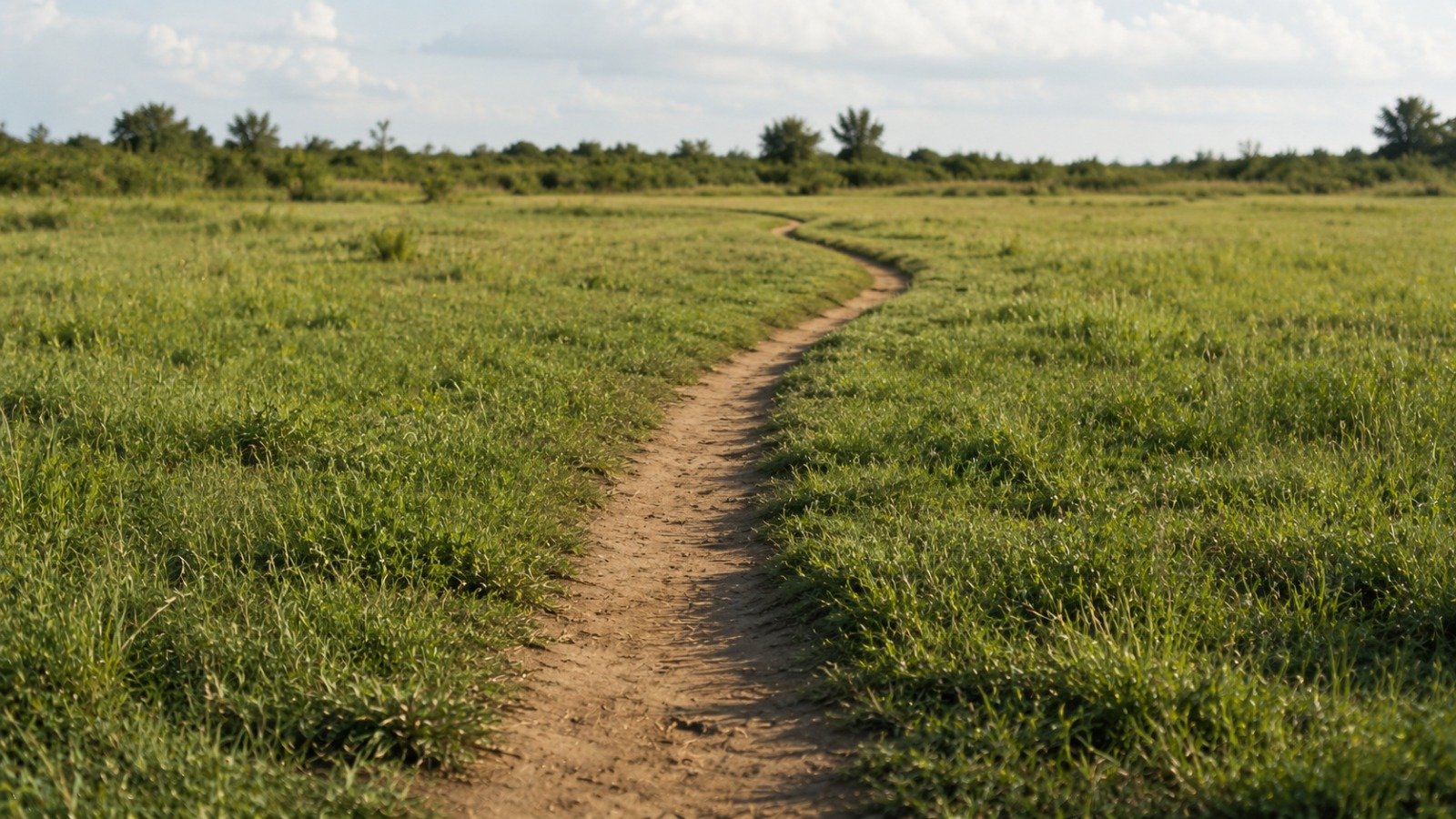
Your brain works in much the same way, though it does not wear down one path at a time. It changes across many networks at once, less like a single track and more like a whole field learning where people walk. The more you repeat a habit, the easier the way becomes, until one day it happens almost by itself.
Here is the part that matters most. Your brain does not judge whether the path leads somewhere good. It simply builds it, growing better and better at whatever you practice, whether that thing helps you or harms you.
Researchers at University College London followed real people building new habits over twelve weeks, and published their work in the European Journal of Social Psychology. A new habit took 66 days to feel automatic for the person in the middle of the group, far longer than the 21 days people so often quote. For some it happened in about 18 days, and for others the figure came out as high as 254.
That 254 needs explaining. The study itself ran only twelve weeks, so the longest times were worked out on paper rather than watched happening. The study also began with 96 people, 82 of whom gave enough data to use, and the 66-day figure comes from the 39 whose results followed the expected curve closely.
Treat 66 days as a rough guide, then. It sits in the middle of a very wide spread, and your own pace could fall anywhere within it.
What the researchers did see clearly is simple enough. Repeat something often and it becomes automatic. They also looked at what happens when someone misses a day, and the habit held. One missed day did not undo the work.
This matters more than most people realize. If you start a new habit and it still feels like hard work six weeks in, that does not mean you are doing it wrong. It means the path is still being built. Keep walking it, because the ease is coming.
The first time
Slow and difficult. Every step takes effort.
Repeating it
Slightly easier each time. The grass bends a little more.
Weeks in
The grass is flat. You can walk it almost without looking.
Either way
It builds whatever you practice, whether that thing helps you or harms you.
The story so far. Tunde and Mariam are not different people underneath. Their brains build paths the same way. The difference is which path each of them has worn down by repetition. The next few sections show where those paths lead.
Sleep can look like the body doing nothing at all. Lights out, and everything stops. But sleep is far more than rest, and the work your body does overnight is exactly what you lose when you cut it short.
While you lie there asleep, your brain steps up its clearing of waste.
Think of a street market at closing time. All day the stalls stand packed. Nothing large gets through.
Then the traders leave. The stalls come down. Only now can a truck get in and clear what the day left behind.
Your brain does something like that at night. The spaces between the cells widen. Fluid moves through more freely, and waste goes out with it.
Scientists call this the glymphatic system. It is the brain’s own drainage network, washing fluid through the narrow spaces around brain cells and carrying the waste away with it.
One of the things it clears out is a sticky protein called amyloid beta. The name matters less than what the protein does. When it piles up in the brain over many years, it gets in the way of healthy brain function, and that build-up is closely linked to Alzheimer’s disease, the condition that slowly takes a person’s memory until they may no longer recognize the people they love most. How much of the disease the protein actually drives is something scientists are still working out.
Your brain clears this protein while you sleep. A small 2026 trial in Nature Communications caught it happening in people. Thirty-nine adults were measured twice, once after a normal night and once after a night without sleep. After the night of sleep, more amyloid beta and more tau, a second waste protein linked to Alzheimer’s, had moved out of the brain and into the blood.
What that adds up to over a lifetime is still being worked out, but the direction is clear enough. Exercise helps your brain, and so does good food. Neither one replaces what sleep does here.
Sleep experts agree on the number. The American Academy of Sleep Medicine puts it at seven or more hours a night for adults, and many adults regularly get less.
Think of walking every day in shoes that do not fit. Nothing stops you and you get where you are going, but your feet are paying for it, and the bill arrives years later. Sleeping fewer than seven hours night after night works on your body the same way. The damage stays invisible for a long time, and then one day it does not.
Clearing waste is only one of the night shift’s jobs. While you sleep, your brain also sorts through the day and settles what is worth keeping, so that what you learned yesterday is filed away and strengthened. This is why a night of study followed by a night of sleep beats a night of study alone.
Your feelings get worked through as well. Research in Current Biology found that after a night of sleep, the alarm part of the brain reacted less strongly to whatever had upset people the day before. People who stayed awake did not get that drop. The memory itself stays, but some of the sting comes out of it, which is part of why a hard day feels smaller after a full night and heavier after a broken one.
Sleep is a repair system, a filing system, and a way of settling the mind. It is one of the strongest tools your body has, and it only works when you let it.
Most people think movement means going to the gym. But if you go to the gym twice a week and sit for everything else, you are watering a plant twice a week and leaving it in a dark cupboard the rest of the time. The watering still matters. The darkness takes away a good deal of what it does.
Movement as a lifestyle is something far simpler. It is using your body the way it was built to be used. Walking to the shops instead of driving. Taking the stairs. Standing up from your desk every hour. Stretching in the morning. Playing with children. Carrying bags. Dancing. Gardening.
None of these things sound like exercise. That is exactly the point.
This is not only a nice idea. A large review in the Annals of Internal Medicine found that long hours of sitting carried higher risk even among people who exercised. Later work in The Lancet pooled results from more than a million people and softened that picture. Regular exercise takes away much of the risk that comes with sitting, and sitting less takes away more still. The workout helps, in other words, and so does breaking up the eight hours around it.
Follow adults for years and the same pattern appears. People who move are less likely to die early, though how much less depends on who was studied and on how movement was counted. The CDC puts it plainly: getting enough physical activity could prevent about one early death in ten.
That figure deserves a careful reading. It describes whole populations and comes from following people over years, so it is not a promise made to any one person. The direction, though, has been consistent across study after study.
The recommended range is 150 to 300 minutes of moderate activity a week, or 75 to 150 minutes of vigorous activity, meaning hard enough that you can manage only a few words before needing a breath. You can spread that across the week however suits you, in blocks of any length, whether you walk, cycle, or swim. It needs no gym and no expensive equipment. Health authorities also advise strengthening your muscles on at least two days a week, through lifting, carrying, climbing stairs, or anything else that leaves the muscle tired. And some movement is always better than none.
Stress is not just something you feel in your mind. It is something your body experiences physically.
When your brain senses danger, whether real or imagined, it sets off an alarm inside your body. Think of it like a fire alarm going off in a building. Instantly, everything changes. Your heart beats faster. Your blood pressure, the force of blood pushing against your artery walls, rises. Your muscles tighten, ready to run or fight. A flood of chemicals pours into your blood.
First comes adrenaline. It raises your heart rate within seconds and readies you to act. Alongside it comes noradrenaline, a close partner that sharpens attention and tightens blood vessels. Together these two drive the immediate fight or flight response.
Cortisol follows more slowly. It is the hormone of the longer stress response. It is the message your body sends when it expects to stay ready for a while.
In short bursts this alarm is genuinely useful. It sharpens your focus and gives you the energy to deal with whatever is in front of you. The trouble is that the alarm is built to ring briefly and then go quiet, and for millions of people living under constant pressure it never fully does. Work deadlines, money worries, difficult relationships, and a stream of bad news keep it ringing day after day.
One idea, two levels
The stress response is built to switch on fast and then switch off again. Used briefly it helps you. Left running, it wears down the same systems it was there to protect.
Adrenaline and noradrenaline act within seconds, raising heart rate and tightening blood vessels. Cortisol follows more slowly and sustains the response. The whole design assumes the threat passes and the signal stops. When it does not stop, long-running stress has been associated with weaker defenses against illness, fat stored deep in the abdomen, blood pressure that stays up, disturbed sleep and cells that age faster than they should. Note how carefully the American Heart Association puts the heart claim: long-running stress may push blood pressure up, and with it the risk to your heart. That is not the same as saying stress alone causes heart disease, and researchers are still measuring how much it adds.
Leave that alarm ringing too long and it starts to damage the very things it was meant to protect. One of them is a part of the brain called the hippocampus, which acts as your brain’s filing cabinet, storing memories and helping you learn new things. Studies link long-running stress to changes in the hippocampus and to memory and learning that do not work as well. Drawers that should open easily become stiff.
It does not stop there. Long stress weakens your defenses against illness, encourages your body to store fat deep in the belly around the organs, holds your blood pressure up, and steals your sleep. It has also been linked to cells that age faster than they should.
The American Heart Association is careful in how it puts this. Long-running stress may push blood pressure up, and with it the risk to your heart. Stress is more than a feeling, though researchers are still measuring how much it adds.
You cannot be healthy and ignore stress. Doing something about it is one of the best things you can do for your body.
The story so far. Remember that Tunde pushes through stress without doing anything about it, while Mariam has found something that helps. Thirty years of that difference does not stay in the mind. It shows up in the blood vessels, and it shows up in something even less expected.
This is the part of how you live that gets talked about least, and its effect is larger than it sounds.
Researchers gathered data on 308,000 people across 148 separate studies and published their findings in PLOS Medicine. People with strong friendships and real social ties were 50 percent more likely to be alive at the end of the follow-up period than people who were alone and cut off.
That number is worth reading slowly, because it is easy to misread. It means they were more likely to still be alive at the end. It does not mean they lived half again as long. These studies also followed people rather than assigning anyone a social life, so what they show is a strong link rather than proof of cause.
Even read carefully, the size of it is striking. When researchers compared the strength of this link against other well-known dangers, it came out in the same range as some of them, smoking included. That is a comparison of how strong the links are, not a claim that loneliness and smoking are the same kind of thing.
One idea, two levels
Loneliness is not only a sad feeling. Your body is built to live among other people, and when it senses that you are alone and cut off, it reads that as danger and sets off the same alarm described in the last section. Cortisol rises. Inflammation increases, which is the body’s repair response, useful in short bursts and harmful when it never switches off. Sleep is disrupted. Your immune system, the body’s defense against infection, answers more slowly when a germ arrives.
The US Surgeon General pulled this evidence together in 2023. Two different things are being measured here, and they are worth telling apart. Loneliness is the pain of missing real connection, while social isolation is having few people around you at all. You can have one without the other, which is why a person can feel lonely in a crowded house.
In older adults, loneliness and isolation together have been linked to around a 50 percent higher risk of dementia, a lasting loss of memory and clear thinking. People with poor social ties are also around 29 percent more likely to develop heart disease and around 32 percent more likely to have a stroke, which happens when blood flow to part of the brain is cut off. All of this comes from studies that followed people over time, so it shows a strong link. Proving cause would need a different kind of study.
Social connection is not a nice extra thing to have if you happen to like people. Your body treats it as a need, in the same family as sleep, food, and movement.

The story so far. Neither Tunde nor Mariam made one decision that settled things. Neither needs a perfect life to change direction. What follows is the short list of habits that carried most of the difference between them. Any of them can be started this week.
For decades, researchers have followed the people who live longest in the best health, and the same habits keep appearing. They are not impressive or complicated. They are simply consistent.
Smoking is the most avoidable cause of early death there is. The CDC counts at least 12 cancers it causes, and it damages the heart and lungs slowly over years.
Stop at any age and your health improves, with the repair beginning within days. How much comes back differs from person to person, but the direction never does.
The World Health Organization recommends 150 to 300 minutes of moderate movement a week. Moderate means your breathing gets faster and you could still talk but not sing. This is walking briskly. Cycling. Swimming. Dancing. Moving your body in any way that gets your heart beating a little faster.
Vegetables. Fruits. Beans and lentils. Whole grains. Good quality protein. Healthy fats from olive oil, nuts, and fish. The World Health Organization describes what a healthy diet looks like on the plate.
Every night. Consistently. The American Academy of Sleep Medicine recommends that adults regularly sleep seven or more hours a night. Seven to nine is the range most often quoted elsewhere. Needs differ from person to person, and many adults do best on about seven to nine.
Alcohol causes cancer in people, and that is no longer a matter of debate. The International Agency for Research on Cancer places it in Group 1, the category used when scientists are certain that something causes cancer.
That grouping does not tell you how risky a single glass is. It tells you only how sure scientists are that the risk is real.
Drink less and you carry less risk. How much less, and how quickly, depends on the cancer, on how much you drank before, and on how long ago you stopped.
Some people cannot safely stop on their own. The signs are needing a drink in the morning, shaking or sweating or feeling sick when you have not drunk for a while, and drinking to make those feelings stop.
If that is you, do not stop all at once. Stopping suddenly can cause seizures, and it can kill. Ask a doctor. They can help you cut down safely.
And if someone who has stopped drinking becomes confused, shakes and sweats heavily, sees things that are not there, or has a seizure, call your local emergency number now.
Waiting for stress to pass is not a plan. Doing something about it is, whether that means moving your body, talking to someone you trust, or getting professional support when the weight is too heavy to carry alone.
Showing up for friendships. Being part of something. Belonging somewhere.
Research published in JAMA Network Open followed 6,985 adults over 50. Those with a strong sense of purpose in life lived longer than those without one, and the gap was clear and measurable. This study followed people rather than handing anyone a purpose, so once again it shows a link rather than proof.
Study after study finds the same thing, though. People with a sense of purpose tend to live longer and to spend fewer of those years ill. It is not a luxury.
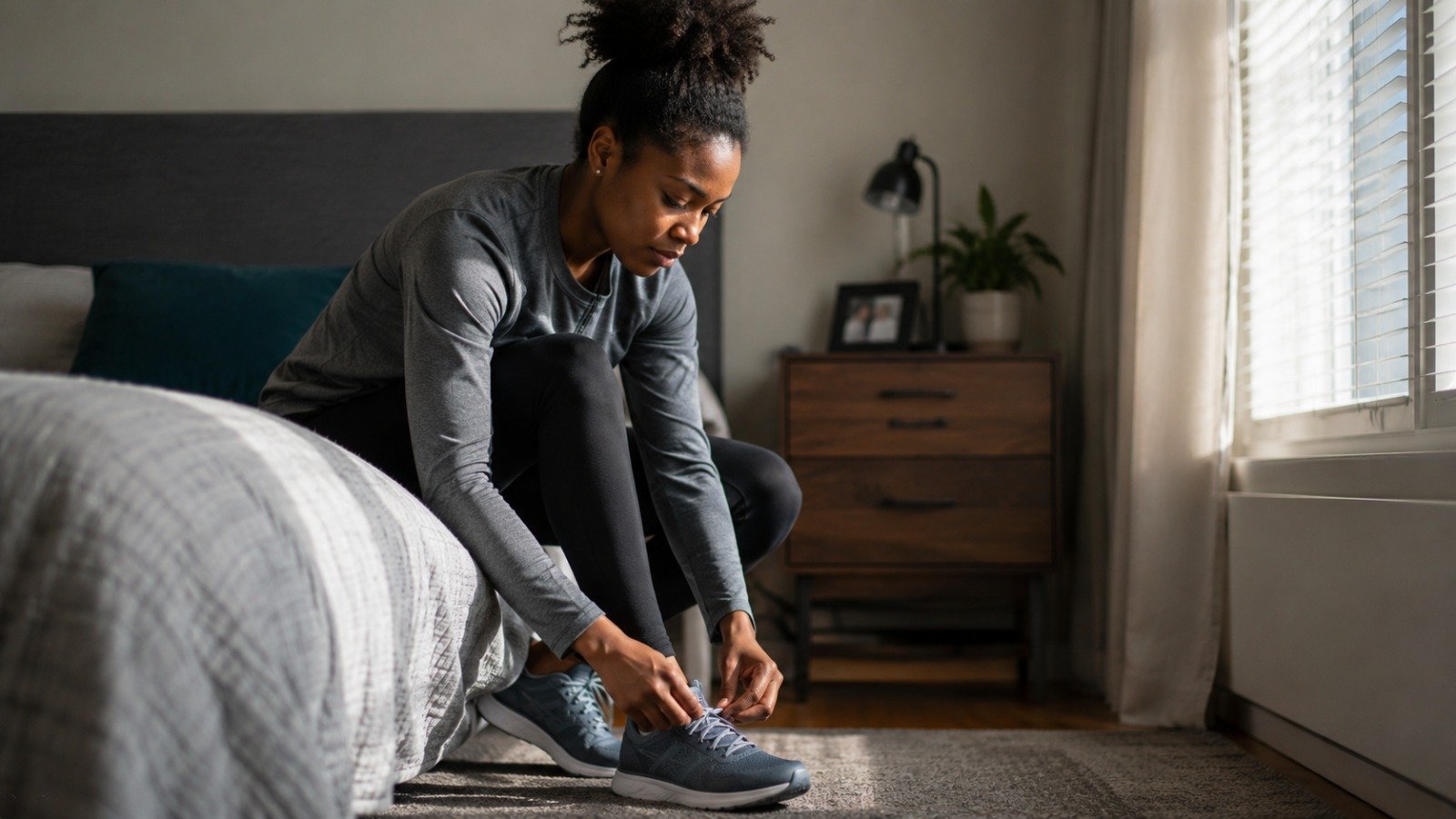
Knowing what to do is the easy part. Almost everyone knows they should sleep more, move more, eat better, and manage stress. But knowing and doing are different things. Here is what the science says actually works.
The brain does not care whether the habit is big or tiny. It only needs repetition. Two minutes of stretching counts, and so does a five-minute walk or a single glass of water when you wake up. In the beginning the goal is not to feel the result. The goal is to walk the path, and the result comes once the path is built.
After I brush my teeth in the morning, I will move for five minutes, in whatever way my body does it. After dinner, I will step outside for a short walk. The existing habit is the trigger. The new habit follows it like a shadow.
Put your walking shoes at the front door. Keep a water bottle on your desk. Leave fruit on the kitchen counter where you will see it. What you see shapes what you do, and it does so more reliably than willpower, so build the room around the habit you want.
This is not failure. This is the path through the grass being walked for the first few weeks. It is supposed to feel effortful at the beginning. Stay with it.
Get a calendar and make a mark on every day you do the habit, then try not to break the chain. The streak becomes motivating in itself, and breaking it becomes genuinely uncomfortable. Both of those work in your favor.
This is the most common reason people fail to change anything at all. Someone decides to transform sleep, diet, exercise, and stress all at once, and it usually ends the same way: two weeks of hard effort, then collapse, then guilt, and nothing changes. Pick one habit instead. Do it every day until it feels automatic, and only then add another.
Motivation comes and goes, and you cannot switch it on. It tends to disappear exactly when you need it most, under pressure and stress. The goal is not to feel motivated. The goal is to build the habit until motivation is no longer needed.
The perfect conditions will never arrive. Life will always be busy, and something will always be in the way. Start with whatever you have, even if that is five minutes three times a week.
Everyone misses days, and missed days are part of how habits get built rather than a sign that the habit has failed. A missed day is just one missed day, and the habit is not broken. Go back to it tomorrow, without drama and without punishment.
Start here
Pick one habit. Make it so small it seems pointless. Attach it to something you already do every day. Then simply show up, even on the hard days. For most people the ease arrives somewhere around two months in.
Call your local emergency number now, and do not drive yourself, for any of these.
See a doctor soon, rather than urgently, for weight loss you cannot explain, blood in your stool or urine, a new lump or one that is growing, a cough or a hoarse voice lasting three weeks, a mole that changes, or breathlessness that is new when you walk. Do not put these down to your habits and wait. Get them looked at.
Three questions were asked at the start. Would their hearts be working equally well at 60? Their memory equally sharp? Would they face the same risks?
The honest answer is that nobody can say what will happen to either of them. Two real lives are never this tidy, and plenty of things neither of them chose will matter as well.
What the research can say is which way the odds lean. Based on what we know about sleep, movement, food, stress, drink, and company, Mariam is more likely to arrive at 60 with a heart that copes well, a mind that is sharp, and fewer years of illness ahead of her.
More likely is not the same as certain. Tunde may be fine, and Mariam may not be.
And here is the part worth holding on to. Tunde is 30, not 60. Nothing in this article needs him to become Mariam. It needs him to pick one thing and start.
The Main Lessons
Heart disease, stroke, and type 2 diabetes share a small set of causes that can be changed. The World Health Organization names tobacco, poor diet, physical inactivity, alcohol and air pollution among them.
The middle figure for a habit becoming automatic was 66 days. The range ran from about 18 days to 254. That comes from research in the European Journal of Social Psychology.
The brain’s overnight clearing system helps move waste proteins linked to Alzheimer’s disease out of the brain. That comes from a 2026 human trial in Nature Communications. How this relates to Alzheimer’s disease over a lifetime is still being studied.
Adults who meet activity guidelines have a clearly lower rate of early death than inactive adults. The CDC estimates that enough activity could prevent about one early death in ten. Long sitting carries risk, according to the Annals of Internal Medicine, though later work suggests regular exercise offsets much of it.
Long-term stress has been associated with changes in the brain and with weaker immune defense. It may also contribute to high blood pressure and heart risk, according to the American Heart Association.
People with stronger social relationships were 50 percent more likely to be alive at the end of the follow-up period. That comes from a review in PLOS Medicine. Better odds of surviving, not a longer life by half.
Having a sense of purpose is measurably linked to living longer, according to JAMA Network Open.
Build the room around the habit you want. Shoes by the door, water on the desk, fruit on the counter. Surroundings beat willpower.
Start small. One habit at a time. Keep showing up. The effort usually eases around the two-month mark.
Golden Nugget
The brain strengthens whatever it repeats, and it cannot tell a helpful path from a harmful one. That is why the work is not deciding to change. It is choosing what to repeat until the choosing is no longer necessary.
Partly, and it matters a great deal. The World Health Organization says early heart disease, stroke, and type 2 diabetes share a small set of causes that can be changed. This does not mean the way you live prevents every disease. Some illnesses are driven by genes you cannot control. And for the diseases that kill the most people too early, the choices you make every day shift the odds more than almost anything else within your reach.
Researchers at University College London tracked real people forming real habits over twelve weeks. Their findings were published in the European Journal of Social Psychology. The middle figure was 66 days, and the range ran from about 18 days to 254. It enrolled 96 people, and the 66-day figure comes from 39 of them. Treat it as a guide, and let your own pace be your own. The one thing that predicted whether a habit stuck was not talent or motivation. It was consistency. Showing up every day, even on the hard days.
No. Study after study shows that changing how you live brings real benefits at any age. Stopping smoking at 60 begins repairing the heart and lungs within days, with the largest gains over the years that follow. Starting to walk regularly in your seventies is linked to better muscle strength, better thinking, and longer life. Your body never stops responding to better inputs. Beginning today is always better than waiting.
No single answer fits everyone, but if you smoke, start there.
Stopping smoking is one of the most important things you can do for your health. It lowers your risk of cancer, heart disease, stroke, and lung disease, and the benefits begin soon after you stop and keep growing over the years that follow.
If you do not smoke and you are short on sleep, start with sleep. Poor sleep makes everything else harder. It pushes you toward worse food. It weakens your motivation to move. It raises stress and makes it harder for your body to defend itself against illness.
Fixing your sleep can make the other changes easier. But for a person who smokes, stopping smoking is the bigger health priority.
Some things cannot be removed. A difficult job. Money worries. Caring for someone you love who is ill. When you cannot remove the source of stress, the goal is to make yourself better able to cope with it. A few tools have the best evidence behind them. Daily movement. Consistent sleep. Honest conversation with people you trust. Time outside, and breathing practices. Professional support through a counselor or therapist can be especially valuable. That is most true when stress is severe, persistent, or getting in the way of daily life. The American Heart Association includes stress management among the things worth attending to for heart health.
If sleep is already reasonable, start with a short daily walk. It is free. It needs nothing but shoes. Even a short walk lifts most people’s mood. It builds the discipline of showing up every day. And once that habit is automatic, adding the next one becomes far easier.
Usually one. That is what tends to work, though you are free to test it against your own life.
Every new habit costs attention, and attention runs out. Four habits at once means four things competing for the same limited supply.
If you have tried several and watched them all fade, try one instead. Let it become automatic, then add the next.
Then you are normal, and the path in your brain is still there. Stopping does not erase the work you did. It only means the path grew quiet. When you start again, you are not back at the beginning. You are walking a path that already exists, and many people find it easier to pick up than it was to build. The people who succeed are rarely the ones who never stopped. They are the ones who started again without treating the gap as failure.
No, and this belief stops more people than any other. Apart from tobacco and alcohol, almost none of the evidence in this article is about giving things up. It is about what you do on most days. For most people, a meal they love on a Sunday sits comfortably inside a healthy pattern, because what matters is the shape of your ordinary week rather than the exceptions inside it.
Some conditions do make single meals matter medically, among them diabetes, food allergies, and kidney disease. If that applies to you, follow the guidance you have been given.
Shrink it rather than skipping it.
A ten-minute walk on a hard day keeps the path open, while skipping it entirely lets the grass grow back. In your worst weeks, do the smallest version you can still count as doing it. Low effort you keep beats high effort you abandon.
Illness and injury are a different matter. Then you rest, and that is the right call.
No, and this matters. Daily habits work alongside medicine, never instead of it. Some people do reduce or stop a medication over time. That is a decision a doctor makes with you, based on your own test results. Stopping a prescription on your own can be dangerous. Change how you live, keep taking what you are prescribed, and let your doctor tell you when something can safely change.
Before you go
This article is for education only. It is not medical advice and does not replace care from a qualified healthcare provider. Always speak to your doctor before making changes to your health routine, especially if you already have a health condition.
World Health Organization. (2026). Healthy diet. WHO Fact Sheet. https://www.who.int/news-room/fact-sheets/detail/healthy-diet
World Health Organization. (2025). Noncommunicable Diseases: Key Facts. https://www.who.int/news-room/fact-sheets/detail/noncommunicable-diseases
Lally P et al. (2010). How Are Habits Formed: Modeling Habit Formation in the Real World. European Journal of Social Psychology. 40(6):998-1009. https://doi.org/10.1002/ejsp.674
Holt-Lunstad J et al. (2010). Social Relationships and Mortality Risk: A Meta-Analytic Review. PLOS Medicine. 7(7):e1000316. https://doi.org/10.1371/journal.pmed.1000316
Ekelund U et al. (2016). Does physical activity attenuate, or even eliminate, the detrimental association of sitting time with mortality? The Lancet. 388(10051):1302-1310. https://www.thelancet.com/journals/lancet/article/PIIS0140-6736(16)30370-1/abstract
Centers for Disease Control and Prevention. (2025). Physical Activity. https://www.cdc.gov/physical-activity/php/about/index.html
American Heart Association. (2024). Stress and Heart Health. https://www.heart.org/en/healthy-living/healthy-lifestyle/stress-management/stress-and-heart-health
Office of the U.S. Surgeon General. (2023). Our Epidemic of Loneliness and Isolation: The Healing Effects of Social Connection and Community. https://www.hhs.gov/sites/default/files/surgeon-general-social-connection-advisory.pdf
Alimujiang A et al. (2019). Association Between Life Purpose and Mortality Among US Adults Older Than 50 Years. JAMA Network Open. 2(5):e194270. https://doi.org/10.1001/jamanetworkopen.2019.4270
World Health Organization. (2020). WHO Guidelines on Physical Activity and Sedentary Behavior. https://www.who.int/publications/i/item/9789240015128
Li Y et al. (2020). Healthy Lifestyle and Life Expectancy Free of Cancer, Cardiovascular Disease, and Type 2 Diabetes: Prospective Cohort Study. The BMJ. 368:l6669. https://www.bmj.com/content/368/bmj.l6669
International Agency for Research on Cancer. (2024). IARC Handbooks of Cancer Prevention, Volume 20A: Reduction or Cessation of Alcohol Consumption. https://www.iarc.who.int/faq/iarc-handbooks-of-cancer-prevention-volume-20a-reduction-or-cessation-of-alcohol-consumption/
Biswas A et al. (2015). Sedentary Time and Its Association with Risk for Disease Incidence, Mortality, and Hospitalization. Annals of Internal Medicine. 162(2):123-132. https://doi.org/10.7326/M14-1651
van der Helm E, Yao J, Dutt S, Rao V, Saletin JM, Walker MP. (2011). REM Sleep Depotentiates Amygdala Activity to Previous Emotional Experiences. Current Biology. 21(23):2029-2032. https://doi.org/10.1016/j.cub.2011.10.052
Dagum P, Elbert DL, Giovangrandi L, et al. (2026). The Glymphatic System Clears Amyloid Beta and Tau from Brain to Plasma in Humans. Nature Communications. 17:715. https://doi.org/10.1038/s41467-026-68374-8
American Academy of Sleep Medicine. (2015). Seven or More Hours of Sleep Per Night: A Health Necessity for Adults. https://aasm.org/seven-or-more-hours-of-sleep-per-night-a-health-necessity-for-adults/
Centers for Disease Control and Prevention. (2025). Smoking and Cancer. https://www.cdc.gov/tobacco/campaign/tips/diseases/cancer.html
Golden Health Quest
Quest 1 of 3
This is an educational game. It does not assess your health.
Habit Builder
This is a learning game, not a personal prescription. What works differs between people, and some of the options below are the mistakes described earlier in this guide.
0 of 3 selected
Habit Stacking
This guide suggests attaching a new habit to something you already do every day, and keeping the new habit small enough that it seems almost pointless. Build that sentence here, then put it somewhere you will see it.
Choose both halves to build your sentence.
A learning tool, not a prescription. The existing habit is the trigger; the new one follows it.
One Realistic Step
Choose an amount of time to receive one practical step.
Choose a step that fits your circumstances. No routine guarantees a particular result.
Was this guide useful? Share it, keep a copy or return to the evidence.