Why Every Meal You Eat Is Either Building Your Health or Quietly Damaging It
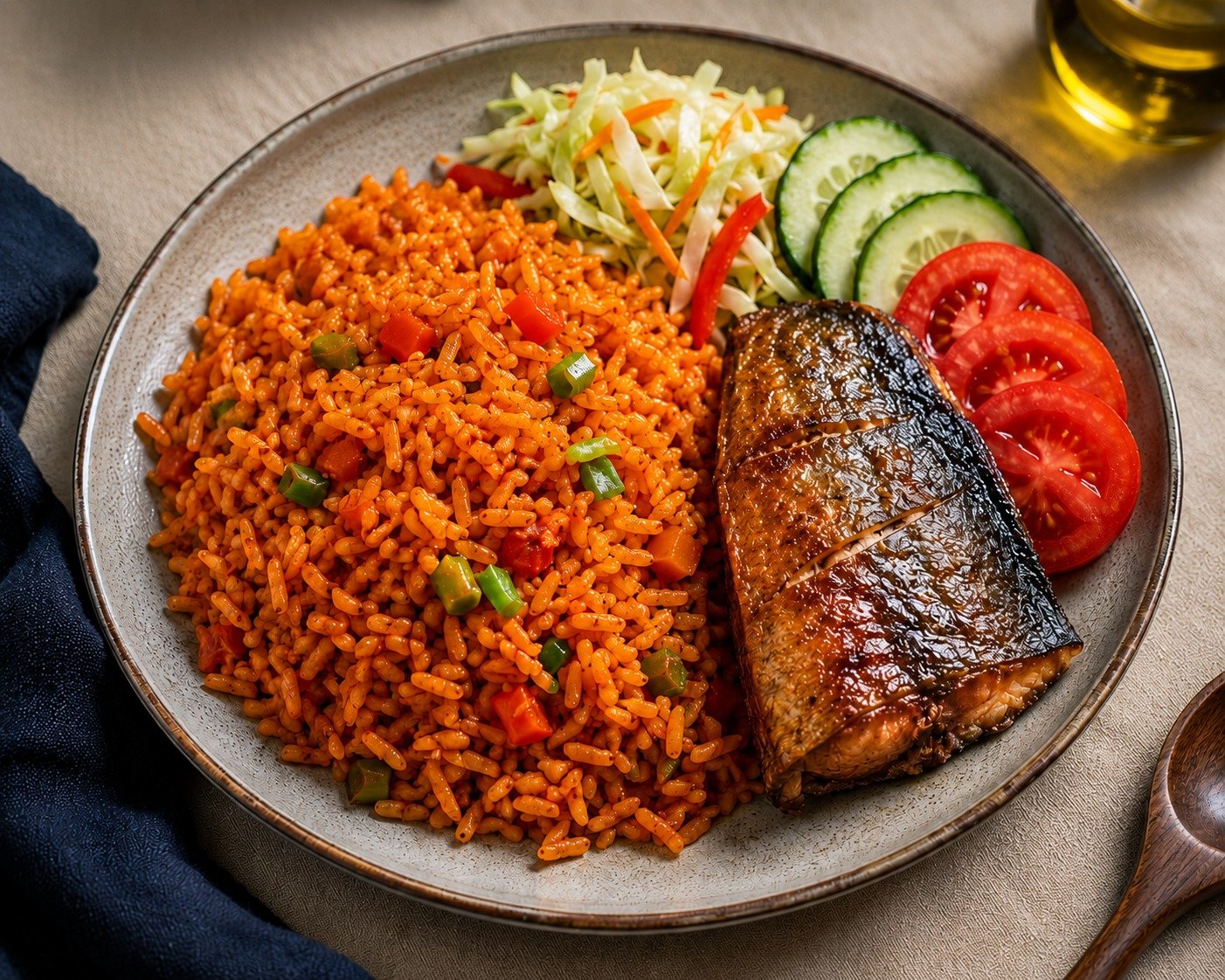
Food is not just fuel. That idea is too simple. And it leads people the wrong way.
Fuel just burns. Food does much more than that. Every single thing you eat sends a message to your body. Build this. Repair that. Store this energy. Calm this swelling, or make it worse.
Your body reads every meal like a set of orders. And it follows those orders. Every single time.
What you eat today is shaping your blood vessels. It is shaping your brain. It is shaping the tiny living things in your gut. It is shaping whether your body can fight off illness or not.
Your body reads every meal like a set of orders. And it follows those orders. Every single time.
The World Health Organization is clear on this. A healthy diet helps protect you against heart disease, stroke, diabetes, and cancer. Not by a little. By a lot. And a poor diet does the opposite. Also by a lot.
This is why food sits at the base of nearly every part of your health. Not because food is the only thing that matters. But because you eat three or four times a day. Every day of your life.
Picture two people. Same age. Same busy morning.
The first wakes up already feeling behind. He grabs a bowl of sweet cereal and a glass of orange juice on the way out. By mid-morning, his energy has crashed. He cannot focus. He is hungry again, and craving something sweet. He eats a biscuit. The cycle starts again. By the end of work he is worn out, as if he had run a race, after a day sitting at a desk.
The second eats two scrambled eggs with spinach and half an avocado, with a small handful of nuts. By mid-morning, she is still thinking clearly. She is not hungry yet. Her energy is steady. She does not crave anything. She reaches lunchtime feeling like herself.
Both ate about the same number of calories. But their bodies acted in completely different ways. Because the message the first breakfast sent was very different from the message the second one sent.
The cereal turned into sugar almost at once. Blood sugar shot up fast. The body poured out a hormone called insulin to deal with it. Insulin is the messenger that tells your cells to take sugar out of your blood. The sugar was cleared so fast that blood sugar then dropped sharply. That drop is what caused the crash. The tiredness. The hunger. The craving.
The second breakfast broke down slowly. Blood sugar rose gently. The body released just the right amount of insulin. Everything stayed even. The cells got a steady supply of energy all morning.
Same calories. Completely different result inside the body. This is the heart of nutrition science. It is not just how much you eat. It is what that food does inside you.
Nutrition is not dieting. It is not going without. It is not counting calories. Nutrition is the science of how food affects the living body. And it covers two kinds of things your body needs.
The first kind is called macronutrients. These are the nutrients your body needs in large amounts. They give you energy. They give you the raw material to build and repair everything, from muscles to hormones to the cells that fight illness. There are three of them. Protein. Carbohydrates, often just called carbs. Fat.
The second kind is called micronutrients. These are nutrients your body needs in small amounts. They do not give you energy directly. But they are needed for almost every job your body does to keep you alive and well. They are the vitamins and minerals.
A truly nourishing diet gives you the right amount of both. And here is something most people do not know. You can eat plenty of food and still be starved of what your body needs. This happens when most of your food is ultra-processed. Ultra-processed food is food that has been changed so much in a factory that most of its goodness, the vitamins, minerals, and fiber, has been stripped out. It fills your stomach. It gives you energy in a basic sense. But it leaves your body without the tools it needs to work properly.
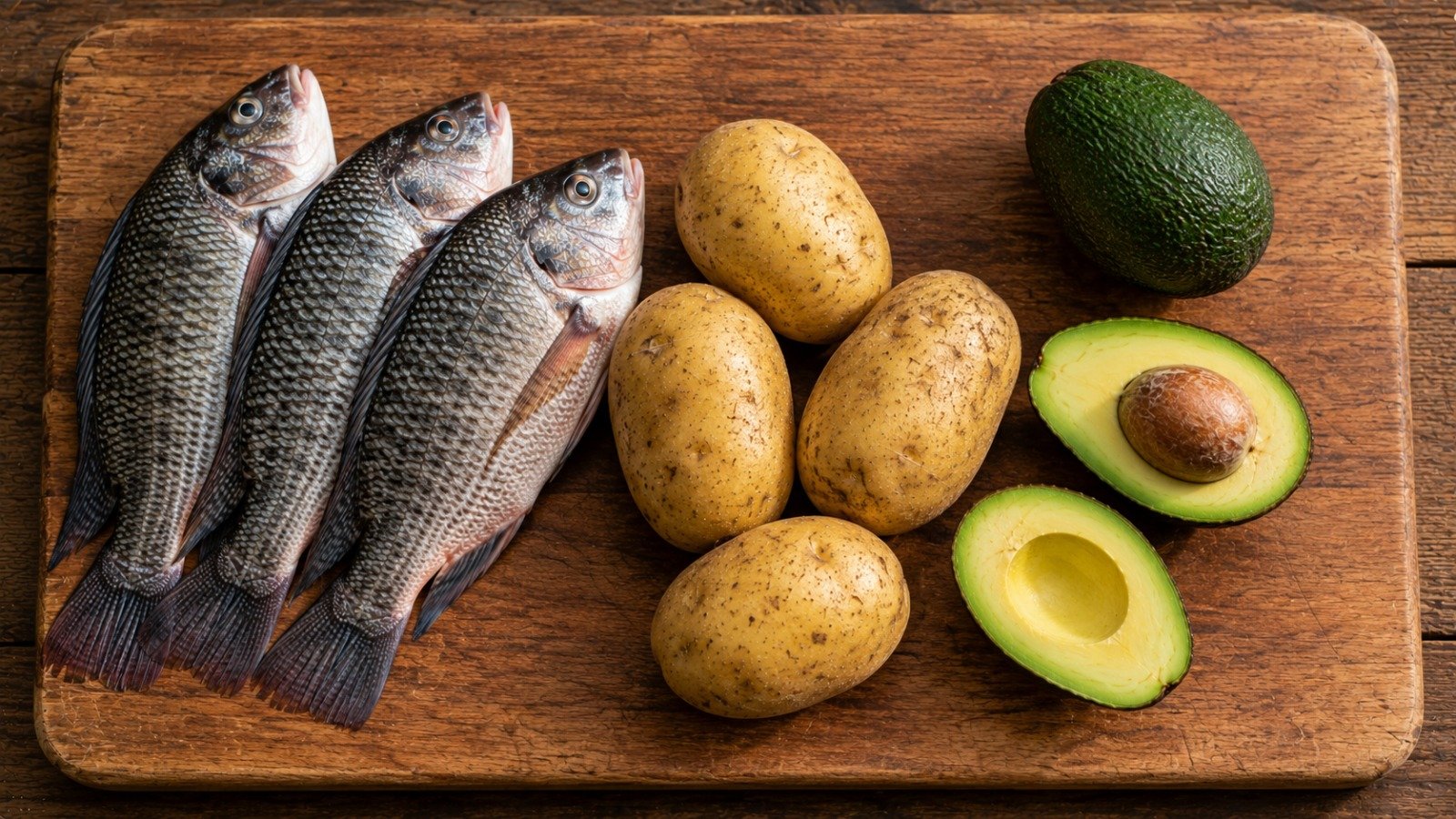
Protein is the most important of the three for feeling full, keeping your muscle, keeping your hormones steady, and aging well. Think of protein as your body's building material. Every cell in your body is built from it. Your muscles. Your bones. Your skin. Your hormones, which are the chemical messengers that control things like mood, energy, and growth. The tiny tools your body uses to drive every chemical job. The cells that fight illness. All of them are built from protein.
Without enough of it, the body starts taking from itself. It breaks down your own muscle to find the building material it needs elsewhere. That is not something you want happening quietly inside you.
Good sources are eggs, chicken, fish, plain yogurt, lentils, chickpeas, tofu, and lean meat. Aim for a palm-sized amount at every meal. Oily fish like salmon, mackerel, and sardines are especially good. They give you protein plus omega-3. Omega-3 is a special fat your body cannot make on its own, so you have to eat it. It calms swelling in the body, helps the brain, and protects the heart.
Carbohydrates are not the problem. Refined carbohydrates are the problem. Refined just means the goodness has been stripped out. The difference between a bowl of oats and a bowl of sugary cereal is huge. Not just in taste. In what they do inside your body.
A bowl of oats reaches your stomach with its fiber still in it. Fiber is the part of plant food your body cannot fully break down. Think of fiber as a slow traffic signal. It slows down how fast sugar from your food enters your blood. So your blood sugar rises gently and steadily. Your energy stays even. Hunger comes back slowly.
Sugary cereal has had its fiber taken out in the factory. The sugar floods in fast. Blood sugar shoots up. Insulin surges. The crash follows.
A major review of the evidence by the World Health Organization, published in The Lancet, found that high-fiber carbs are linked to much lower rates of heart disease, type 2 diabetes, and bowel cancer. So always choose the whole version. Whole means the grain still has its fiber and goodness in it. Brown rice instead of white. Whole-grain bread instead of white. Sweet potato instead of potato chips. The fiber is the difference.
Eating fat does not make you fat. That idea came from weak science in the 1970s. Better research since then has shown it was wrong.
Your body needs fat. It uses fat to build your hormones, the chemical messengers that control your mood, your energy, and much more. Think of fat as the raw material your hormone factory cannot run without. Your brain is about 60 percent fat. It needs fat from food to hold its shape and to keep its cells talking to each other.
Fat also lets your body take in certain vitamins, the ones called A, D, E, and K. These can only enter your blood when there is fat alongside them. So eating a salad with no oil means you take in very little of the vitamins in those vegetables.
The healthiest fats are extra virgin olive oil, avocado, nuts, seeds, and oily fish. The American Heart Association says to swap factory-made fats for these healthier ones.
Vitamins and minerals are needed in small amounts. But without them, the body slowly starts to struggle.
Vitamin D matters for fighting off illness, for strong bones, and for steady mood. Think of it as a key. It unlocks hundreds of doors in the body, letting important jobs get done. Without enough of it, those doors stay shut. Your skin makes vitamin D from sunlight. But in places with long, dark winters, there is often not enough sun for part of the year to make enough. Many health authorities suggest thinking about a daily supplement in the darker months. A supplement is simply a vitamin you take to top up what your body is missing.
Your body needs iron to make hemoglobin. Hemoglobin is the part of your red blood cells that carries oxygen around your body. Think of it as the delivery van for oxygen. Without enough iron, there are too few vans. Oxygen reaches your body more slowly. The result is tiredness, poor focus, and a weaker defense against illness. According to the World Health Organization, low iron is one of the most common nutrient shortages on earth.
Magnesium is used in more than 300 different jobs inside the body. It helps make energy, helps your muscles work, helps you sleep, and helps keep your blood pressure steady. Yet many adults get less than they need each day. Good sources are dark green vegetables, nuts, seeds, and whole grains.
Omega-3 is a special fat your body cannot make on its own. It has to come from food. It calms swelling in the body, helps the brain, and protects the heart. Aim for at least two portions of fish a week, one of them oily. If you do not eat fish, walnuts, flaxseeds, and chia seeds give you a plant version.
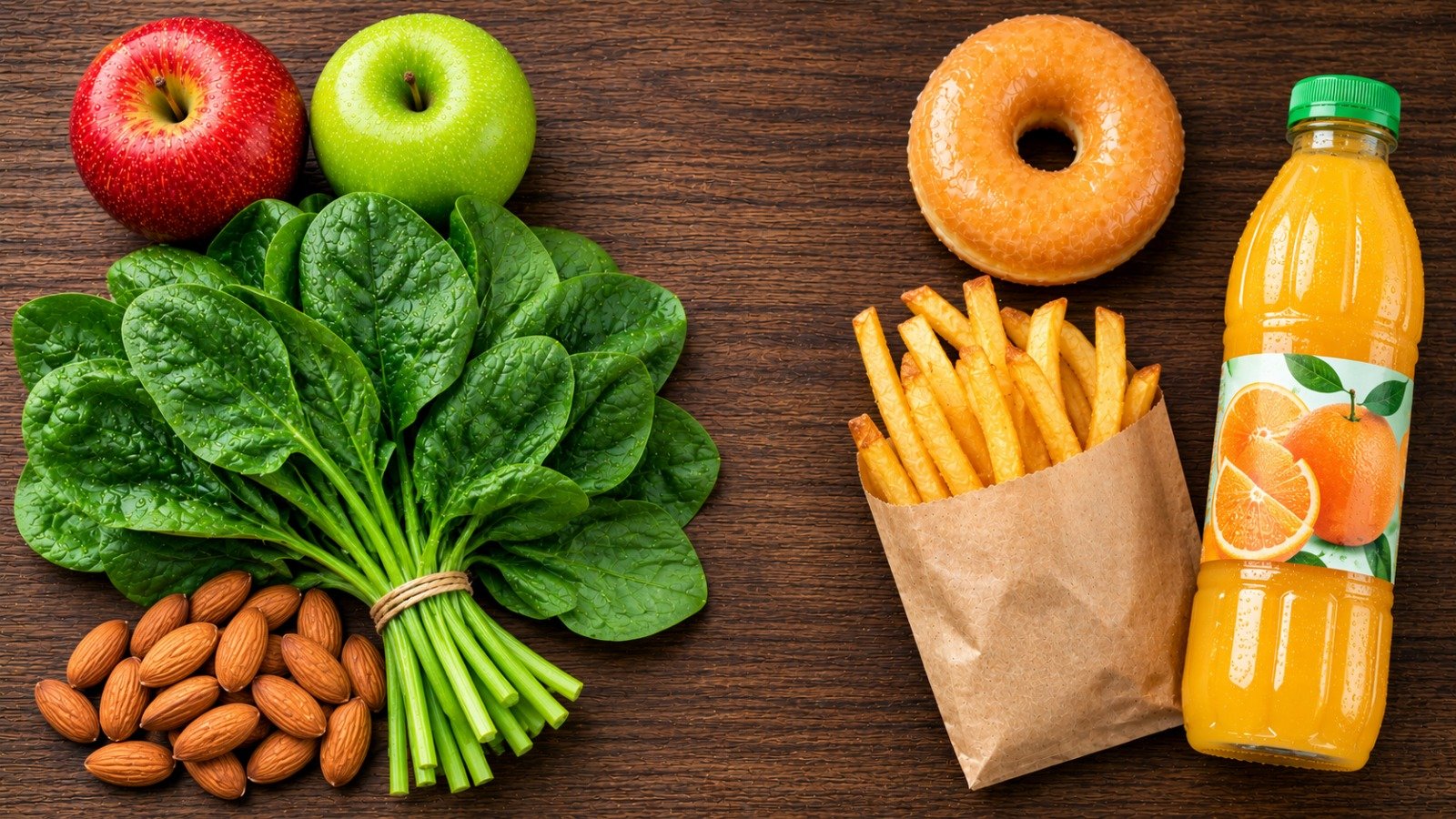
Ultra-processed food is not just food that has been cooked or packaged. That is normal, and often fine. Ultra-processed food is different. It is food built in a factory from things you would never find in a home kitchen. Chemicals to bind it, fake flavors, things to keep it from spoiling, color boosters, and lots of added sugar and salt. All combined for one purpose. To make you want more.
A landmark study published in Cell Metabolism ran a careful test. One group of people was fed ultra-processed food. Another group was fed whole food. Both groups could eat as much as they wanted. The people eating ultra-processed food ate about 500 more calories a day. Not because they were greedier. But because of what this food does to your sense of fullness.
Your body has a built-in alert that tells you when you have had enough to eat. Whole food lets that alert work properly. Ultra-processed food switches the alert off. So you keep eating, long after your body has had enough.
A large study published in The BMJ followed thousands of people over years. It found that eating 10 percent more ultra-processed food was linked to a 12 percent higher risk of cancer.
Ultra-processed food is not just less healthy than whole food. It works against your body. Cutting back on it is one of the most powerful food changes you can make.
No single food decides your health. The overall pattern of how you eat does. The eating pattern with the strongest, most consistent science behind it in the whole world is the Mediterranean way of eating.
It is not a strict diet with banned foods. It is a way of building meals. Plenty of vegetables at the center of every plate. Fruit every day. Beans and lentils several times a week. Whole grains as the base. Extra virgin olive oil as the main fat. Oily fish two to three times a week. Some eggs, chicken, and dairy. Red meat rarely. Ultra-processed food almost never.
A landmark trial called the PREDIMED study, published in the New England Journal of Medicine, followed more than 7,000 people over years. Those eating the Mediterranean way, with extra virgin olive oil or nuts, had a 30 percent lower risk of heart attack, stroke, or death from heart disease than those on a standard low-fat diet.
30 percent. That is the kind of number you usually only see from medicine. Reached through food alone.
This way of eating is also linked, again and again, to lower rates of type 2 diabetes, memory loss, low mood, and early death, across dozens of large studies worldwide.
A wider study published in The Lancet found that poor diet causes 11 million deaths a year around the world. The biggest single cause was not eating enough whole grains. The second was not eating enough fruit. The third was not eating enough vegetables.
The answer is genuinely simple. Eat more whole plants. Every day.
Blood sugar is not just something people with diabetes need to think about. It shapes how every person on earth feels every single day.
When you eat carbohydrates, your body breaks them down into a sugar called glucose. Glucose is the main fuel your body runs on. Think of glucose like the electricity in a building. It needs to flow in at a steady, controlled rate for everything to work. When it floods in too fast, it overloads the system. When it drops too low, the lights go out.
Every time you eat refined carbs or sugary food, glucose floods into your blood too fast. Your body senses the overload and releases insulin to deal with it. Insulin is the messenger that tells your cells to take in the sugar. It works fast. Often too fast. So your blood sugar then drops sharply. And when it drops, everything changes. Your energy crashes. Your focus fades. Your mood dips. Your body cries out for more sugar. And the cycle starts again.
After years of this pattern, something more serious starts to happen. Your cells slowly stop listening to insulin as well as they used to. This is called insulin resistance. Think of it like a door that once opened easily but now has to be knocked on harder and harder before anyone answers. Insulin resistance is the first step on the road to prediabetes, and then to type 2 diabetes.
The American Diabetes Association confirms that eating patterns rich in whole grains, vegetables, beans, and healthy fats greatly improve blood sugar control and lower the risk of diabetes.
The best tools for keeping blood sugar steady are simple. Eat protein at every meal. Choose whole grain carbs. Eat vegetables with every meal. Cut back on sugary drinks and added sugar. And a short walk after meals measurably lowers the blood sugar spike from that meal.
Deep inside your gut lives a whole world. About 38 trillion tiny living things. Bacteria and other tiny organisms that have lived inside you since you were born. Together they are called the gut microbiome. And what you eat decides whether this world thrives or struggles.
Think of the gut microbiome like a garden. Feed it the right things and it flourishes. Feed it the wrong things again and again and it slowly dies back.
A healthy gut microbiome does amazing things. It trains and steadies the system that fights illness. It makes more than 90 percent of your body's serotonin. Serotonin is the chemical messenger most closely tied to steady mood and a sense of wellbeing. The gut also makes things that feed and protect the wall of your gut. And it talks straight to your brain through a line of nerves and chemical signals called the gut-brain axis.
Think of the gut-brain axis as a phone line between your stomach and your mind. The calls go both ways. What happens in your gut affects how you feel in your head. And how you feel in your head affects what happens in your gut.
The American Gut Project, one of the largest gut studies ever done, found that people who ate 30 or more different plant foods a week had far more variety in their gut than people who ate fewer than 10. More variety in the gut is linked, again and again, to better defense against illness, better blood sugar control, and better mood.
30 different plant foods a week. Not 30 servings. 30 different types. Every different plant feeds a different set of helpers in your gut. The more variety you eat, the richer and stronger your inner garden becomes.
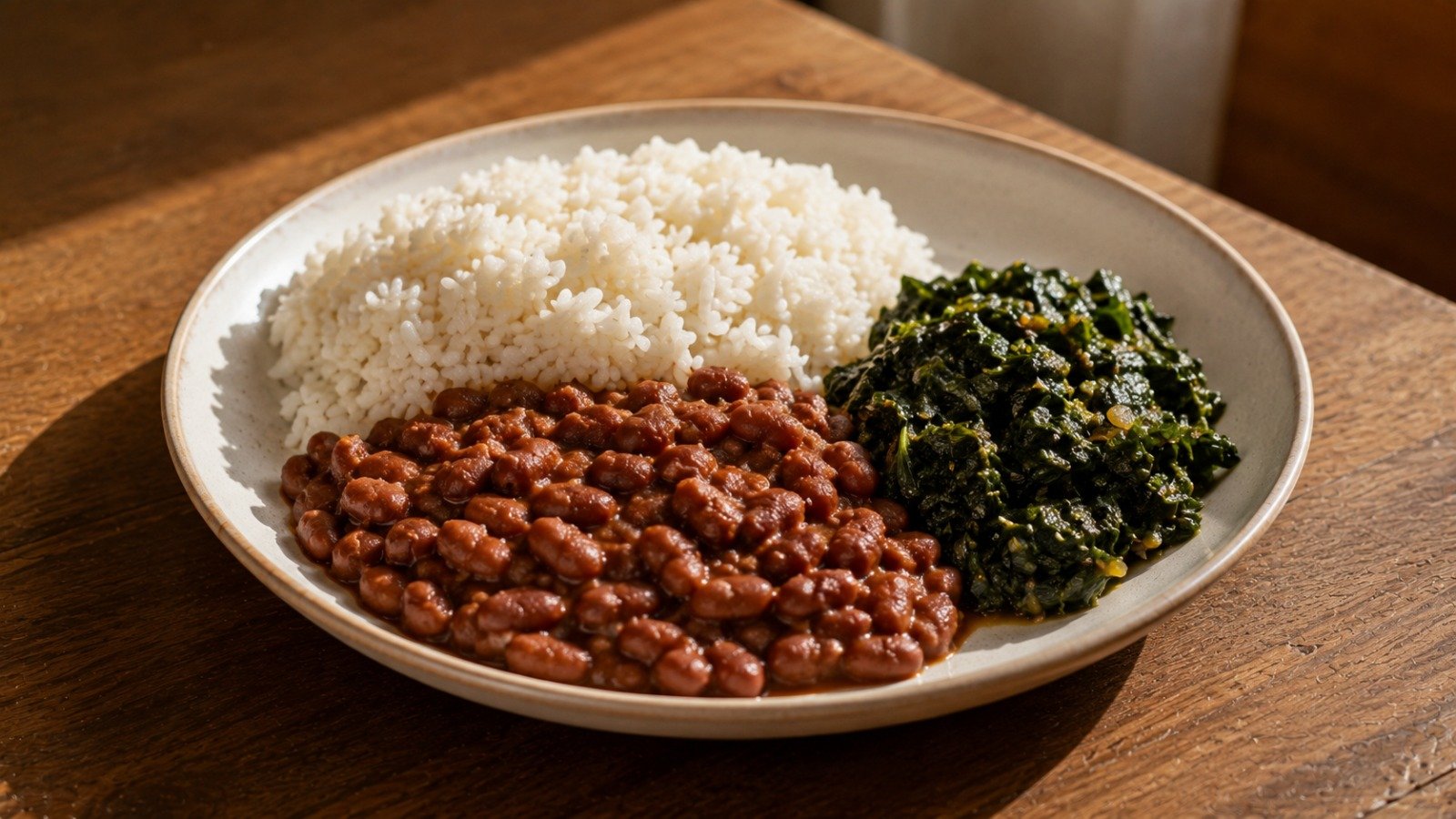
Protein keeps your blood sugar steady and your hunger in check. Vegetables give you the fiber, vitamins, and plant goodness your body needs. Together they are the base of every truly nourishing meal.
Vegetables, fruit, beans, whole grains, nuts, seeds, herbs, and spices all count. Every different type feeds a different helper in your gut. Variety is the goal.
Brown rice instead of white. Whole-grain bread instead of white. Oats instead of sugary cereal. The fiber changes everything.
Salmon, mackerel, sardines, and herring give you the omega-3 with the strongest evidence for protecting your heart and brain.
Fruit juice, fizzy drinks, and sweet coffees send your blood sugar racing up with almost no goodness in return. Swapping them for water or plain tea is one of the most powerful single changes you can make.
Home-cooked meals have far less salt, added sugar, and bad fat than packaged or restaurant food. And you control exactly what goes into your body.
It is the most studied fat in the world. It is rich in healthy fat and natural compounds that calm swelling in the body. Use it for cooking, for salads, and for drizzling over vegetables.
Whole fruit has fiber that slows the sugar down. Juice does not. A glass of orange juice raises your blood sugar almost as fast as a fizzy drink. Eat the whole fruit instead.
Low-fat versions almost always add more sugar, more refined starch, or more chemicals to replace the taste the fat gave. Full-fat plain yogurt is better for you than its low-fat factory version. Whole eggs are better than egg-white products. The original whole food is almost always better.
Your gut needs variety. Eating the same vegetables week after week feeds the same few helpers over and over. Rotate through different colors and types. Different colors carry different goodness.
A breakfast that is all carbs sets up a rocky blood sugar pattern for the whole day. Adding protein at breakfast changes everything. It steadies your energy. It cuts your cravings. It keeps you full until lunch.
No single diet is perfect for every person. But the dietary pattern with the strongest and most consistent scientific evidence is the Mediterranean pattern. Plenty of vegetables, fruit, beans, whole grains, extra virgin olive oil, and oily fish at its center. The PREDIMED trial found a 30 percent drop in heart attacks and strokes in people who ate this way.
No. Refined carbohydrates are the problem. Whole grain carbohydrates with their fiber intact are linked to much lower rates of heart disease, type 2 diabetes, and bowel cancer, according to a major review in The Lancet. The type of carbohydrate matters far more than the quantity.
Significant fatigue after a meal almost always signals a blood sugar spike followed by a crash. This happens when a meal contains a large amount of refined carbohydrate and little protein or fiber. Building meals around protein, vegetables, and whole grain carbohydrates resolves this reliably within days to weeks.
Not all fat. The American Heart Association is clear on this. Trans fats found in some processed and fried foods are harmful. Saturated fat from processed meat in large amounts raises the wrong type of cholesterol. But healthy fats from olive oil, avocado, nuts, and oily fish actively protect your heart.
Legumes, eggs, oats, seasonal vegetables, frozen vegetables, canned fish, and whole grain staples are among the most nutritious foods available. They are also among the most affordable. Ultra-processed food is often expensive relative to its nutritional value. Cooking from whole ingredients at home consistently provides better nutrition at lower cost.
Eat 30 different plant foods per week. Include fermented foods like natural yogurt, kefir, kimchi, and sauerkraut, which contain live beneficial bacteria. Include prebiotic foods like garlic, onions, leeks, oats, and bananas, which feed the beneficial bacteria already living in your gut. And reduce ultra-processed food, which consistently disrupts the microbiome.

Founder of Golden Health Science. He built this platform to take the world's best peer-reviewed health science and explain it in plain language. Simply, honestly, and free, for every person on earth.
Nutrition connects most closely to these pillars. Read on to go deeper.
The microbiome, fiber, and why plant variety matters so much.
How food, blood sugar, and steady energy are connected.
How daily habits, including how you eat, shape your whole health.
