
Protein and plants first
Together they steady blood sugar and hold hunger off longer.
Pillar 02 of 12
What every meal is telling your body.
Food is not only fuel. It is information, and your body acts on it.
Choose how you want to read
The main lesson
Two breakfasts of about the same size can ask very different things of a body. Build meals around protein and vegetables, choose the whole version of any carbohydrate, and cut back on ultra-processed food. In a feeding trial where nobody was told how much to eat, the same people ate about 500 more calories a day on the ultra-processed diet.
Together they steady blood sugar and hold hunger off longer.
Fiber is the biggest part of why. Aim for 30 different plant foods a week.
One meal is one meal. What you eat most days is what counts.
One idea, two levels
Your body has a built-in alert that tells you when you have had enough. Whole food lets that alert work. Ultra-processed food seems to override it, so it is easier to keep eating long after your body has had enough.
A crossover trial published in Cell Metabolism gave twenty adults an ultra-processed diet for two weeks and a whole-food diet for two weeks, in an order decided by chance. The two diets were matched for calories, sugar, fat, fiber and salt on offer. All the food was provided and there was no limit on how much anyone could eat. The same people ate about 500 more calories a day on the ultra-processed diet. Because each person served as their own comparison, the difference is hard to explain by willpower or personality. It was a small and short trial, and it does not tell us which features of the food are responsible.
Food is not just fuel. That idea is too simple, and it leads people the wrong way.
Fuel only burns. Food does far more than that, because everything you eat carries instructions for your body. Build this tissue. Repair that one. Store this energy for later, or use it now.
Your body reads every meal as a set of orders, and it follows them.
What you eat today is shaping your blood vessels, your brain, the tiny living things in your gut, and how well your body can fight off illness.
The World Health Organization is clear about how much this matters. A healthy diet helps protect you against heart disease, stroke, diabetes, and cancer. A poor diet works just as strongly the other way. It makes those same illnesses more likely.
This is why food sits at the base of nearly every part of your health. It is not the only thing that matters, but it matters this much because you eat three or four times a day, every day of your life.
The messages add up.
David and Amina are not real patients. They were written for this guide. Nothing that follows is a case history, a diagnosis, or a prediction about any real person.
Picture two people, David and Amina. They are the same age and both face the same busy morning.
David wakes already feeling behind. The cereal is what is in the cupboard and the juice is what is in the door of the fridge, and between them they take under a minute, which is the whole of the decision. By mid-morning something has gone out of him and he reads the same line three times. He is hungry again, which he finds slightly ridiculous, so he takes a biscuit from the tin by the printer and the morning starts over. By the end of the day he is worn out as though he had run a race, having spent it sitting at a desk.
Amina eats two scrambled eggs with spinach, half an avocado, and a small handful of nuts. It is not discipline. It is the breakfast she has eaten for years, so it asks nothing of her, and the same few things go into the basket every week without a thought. By mid-morning she is still thinking clearly and is not hungry yet. Her energy holds steady and she does not crave anything. She reaches lunchtime feeling like herself.
Both ate about the same number of calories. But the two meals asked very different things of their bodies. Because the message David’s breakfast sent was very different from the message Amina’s sent.
The cereal broke down into sugar quickly. Blood sugar rose fast. The body released a hormone called insulin to deal with it. Insulin is the messenger that tells your cells to take sugar out of your blood.
Then blood sugar drops, and the dip arrives with it: the tiredness, the hunger, and the craving.
Some people notice very little of this. How far blood sugar swings depends on the portion, on what else was on the plate, and on the body it lands in. But the pattern is common enough that most people reading this will recognize it.
Amina’s breakfast broke down more slowly. Protein, fat, and fiber, the part of plant food your body cannot break down, all slow the release of sugar into the blood. Her blood sugar was more likely to rise gently and settle gently. That tends to mean steadier energy across the morning.
The same calories placed a very different demand on the body. That is the heart of nutrition science. What matters is not only how much you eat, but what the food does once it is inside you.
Nutrition is not dieting, going without, or counting calories. It is the science of how food affects the living body, and it covers two kinds of things your body needs.
The first kind is called macronutrients, the nutrients your body needs in large amounts. They give you energy and the raw material to build and repair muscles, hormones, and the cells that fight illness. There are three of them: protein, carbohydrates, often shortened to carbs, and fat.
The second kind is called micronutrients, the nutrients your body needs in small amounts. They do not give you energy directly, but they are needed for almost every job your body does to keep you alive and well. These are the vitamins and minerals.
A truly nourishing diet gives you the right amount of both. Here is the part that catches people out: you can eat plenty of food and still be starved of what your body needs. This happens when most of what you eat is ultra-processed. Ultra-processed food is made in a factory from stripped-down ingredients, substances pulled out of other foods, and added flavorings, colorings, emulsifiers and sweeteners. They are things no home kitchen keeps in the cupboard.
These foods are not all the same, and some have vitamins and fiber added back. But if most of what you eat comes from them, the result tends to be the same: heavy on calories, salt, free sugar and the wrong fats, and light on real food. Free sugar means the sugar added to food, plus the sugar naturally present in honey, syrups and fruit juice. The sugar locked inside whole fruit does not count.
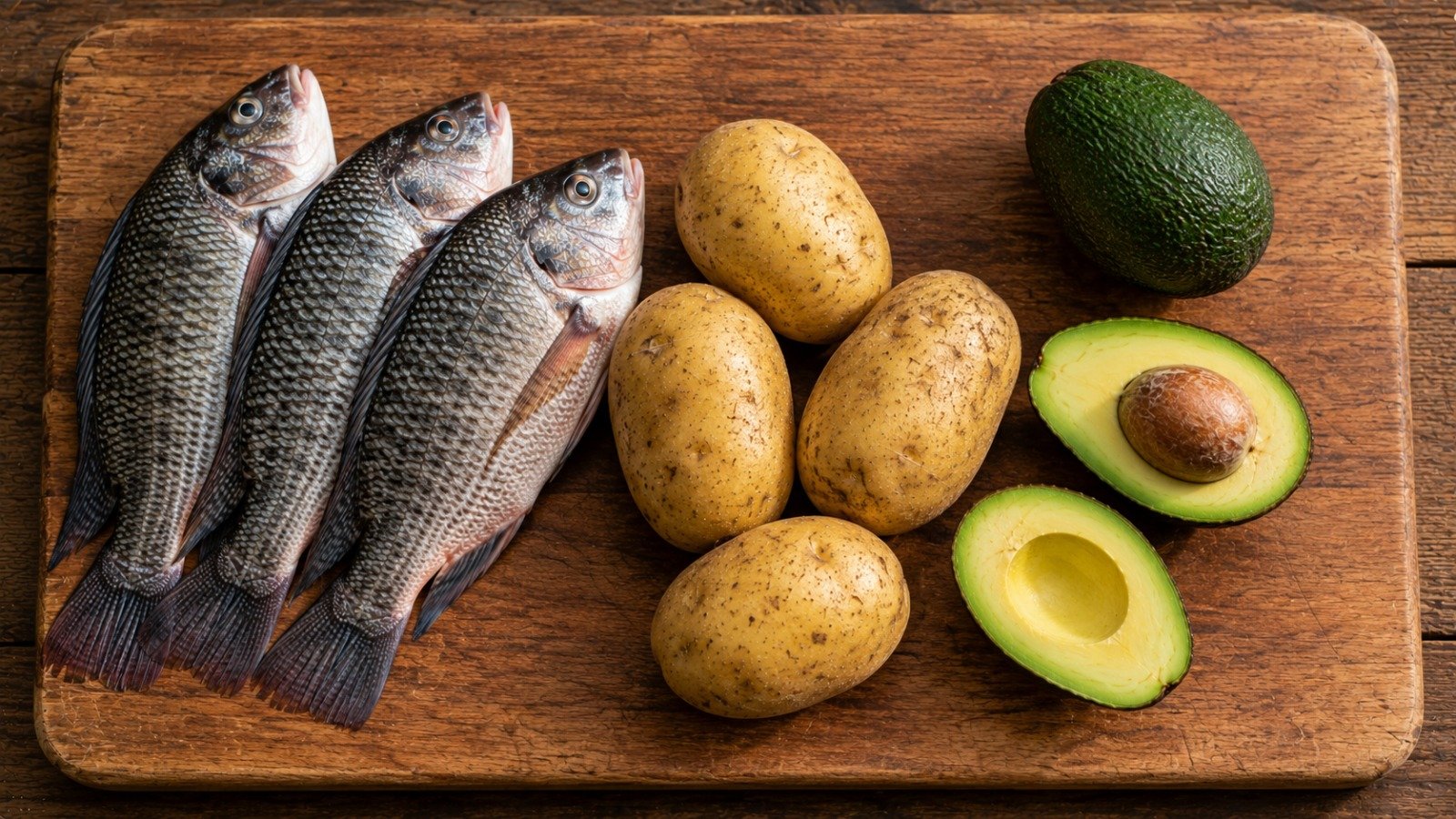
Protein is the body’s building material, and it matters especially for feeling full, keeping muscle, and aging well. Your muscles, bones and skin all depend on it, and so do the cells that fight illness and the tiny tools that drive your body’s chemical work. Many hormones are built from protein as well, though not all of them. The steroid hormones, such as the sex hormones, are made from cholesterol instead, which is a fatty substance your body makes and uses as a building block.
Without enough protein, the body starts taking from itself. It breaks down your own muscle to find the building material it needs elsewhere. That is not something you want happening quietly inside you.
Good sources are eggs, chicken, fish, plain yogurt, lentils, chickpeas, tofu, and lean meat. A palm-sized amount at each meal is a rough guide, measured by your hand rather than a scale. How much you need shifts with age, body size, pregnancy, activity and health, and older adults usually need more rather than less. Oily fish such as salmon, mackerel and sardines are especially useful, because they give you protein and omega-3 together.
Fish advice changes by country and by stage of life. The examples below explain the main United Kingdom and United States rules.
Some fish contain more mercury, a metal that can harm a developing brain and nervous system. This is why the advice becomes stricter during pregnancy and for children.
United Kingdom guidance
United States guidance
Follow the guidance for your own country. Local advice may use different serving sizes or fish lists.
Omega-3 is the name for a family of fats. One of them your body cannot make at all: alpha-linolenic acid, which has to come from food. Your body converts a little of it into the two forms found in oily fish, called EPA and DHA, but it does this poorly, which is why eating the fish itself matters. Omega-3 fats take part in the processes that regulate inflammation, the body’s repair response, and regular fish can form part of a heart-healthy way of eating.
Carbohydrates are not the problem. What matters is the type, the amount, and everything else on the plate alongside them. Refined carbohydrates carry less fiber and push blood sugar up faster than whole ones do. The difference between a bowl of oats and a bowl of sugary cereal is large, and taste is the smallest part of it. The real difference is in what each one does inside your body.
A bowl of oats reaches your stomach with its fiber still in it. Think of fiber as a slow traffic signal. It slows down how fast sugar from your food enters your blood. So your blood sugar rises gently and steadily. Your energy stays even. Hunger comes back slowly.
Many sugary cereals have had much of their fiber removed, though some have fiber added back. With little fiber to slow it, sugar arrives quickly. Blood sugar rises fast, insulin follows, and for some people a dip comes after.
One large review gathered many studies together, carried out at the request of the World Health Organization and published in The Lancet. It looked at carbohydrates that still have their fiber. The people who ate the most of them had much lower rates of heart disease, type 2 diabetes and bowel cancer.
So choose the whole version where you can. Whole means the grain still has its fiber and goodness in it: brown rice rather than white, whole-grain bread rather than white, a sweet potato rather than potato chips. Fiber is one important difference, but so is the structure of the food, how much it has been processed, the size of the portion, and whether any protein or fat comes with it.
Eating fat does not make you fat. That is worth saying plainly, because a generation was told otherwise.
Weight goes up when energy in keeps beating energy out. It makes no difference whether the extra arrives as fat, carbohydrate, protein, or alcohol. Nutrition science has moved on from the low-fat years. What matters now is which fat, and what it replaces.
Your body needs fat, and your brain is especially rich in it. Once you take the water out, more than half of what remains is fat. Some fats are called essential fatty acids, meaning your body needs them but cannot make them. They help keep the outer wall of every cell healthy and help your nerves work as they should.
Fat also lets your body take in certain vitamins, the ones called A, D, E and K, along with certain plant compounds. This is why a drizzle of olive oil on a salad helps you get more from the vegetables.
The healthiest fats are extra virgin olive oil, avocado, nuts, seeds, and oily fish. The American Heart Association says to swap factory-made fats for these unsaturated ones.
Vitamins and minerals are needed in small amounts. But without them, the body slowly starts to struggle.
Vitamin D matters for strong bones and muscles, and for the normal working of your defense against illness. It acts less like a nutrient your body burns and more like a signal that switches on jobs across the body. Your skin makes vitamin D from sunlight, and in places with long, dark winters there is often not enough sun for part of the year.
Food helps, though few foods carry much of it. Oily fish such as salmon, mackerel and sardines is the best source, and egg yolks hold a little. Many countries add it to milk, cereal or spreads, so the label is worth a look.
Whether you need a supplement depends on where you live, the season, how much sun reaches your skin, and your age, diet and health. A supplement is simply a vitamin you take to top up what your body is missing. Follow your local health guidance, or ask a qualified professional.
Your body needs iron to make hemoglobin. Hemoglobin is the part of your red blood cells that carries oxygen around your body. Think of it as the delivery van for oxygen.
Iron runs low long before anemia shows up. Anemia is a shortage of healthy red blood cells, and it leaves you tired. Let iron fall far enough and there are too few vans on the road, so the blood carries less oxygen. Tiredness follows, along with poor focus and a weaker defense against illness.
According to the World Health Organization, low iron is one of the most common nutrient shortages on earth. Young children, women who have periods, and pregnant women carry the most risk.
Iron comes in two forms, and your body treats them differently.
Heme iron comes from meat, fish, and poultry. Your body absorbs it easily. Red meat, liver, sardines, and shellfish are the richest sources.
Liver is one of the richest iron sources there is, and it is the one to leave out in pregnancy. It is very high in vitamin A, which can harm the baby. The same goes for vitamin A supplements and for fish liver oil, including cod liver oil. The NHS gives this warning directly. Choose another source from the list instead.
Non-heme iron comes from plants, including beans and lentils, dark green leaves such as spinach, tofu, pumpkin seeds, and fortified breakfast cereals. Your body absorbs far less of it from the same amount of food.
There is a simple way to help it along. Eat something containing vitamin C in the same meal and your body takes up more of the non-heme iron. That is why lentils with tomatoes, spinach with a squeeze of lemon, and beans with peppers all work well together.
Do not treat tiredness on its own as proof that you need iron, because too much iron causes harm of its own. Ask for a blood test before you start a supplement.
Your body uses magnesium in more than 300 different jobs. It helps you make energy, helps your muscles and nerves work as they should, and helps keep your blood pressure in a normal range. Being short of it can affect your health in several ways, and many adults get less than they need each day. Good sources are dark green vegetables, nuts, seeds and whole grains.
Magnesium is often recommended for sleep. If your level is genuinely low, correcting it may help. If your level is already fine, the evidence that magnesium pills improve sleep remains thin and mixed.
Oily fish is the richest source. General guidance in many countries is two portions of fish a week with at least one of them oily, though national advice varies. If you do not eat fish, walnuts, flaxseeds and chia seeds give you the plant version.
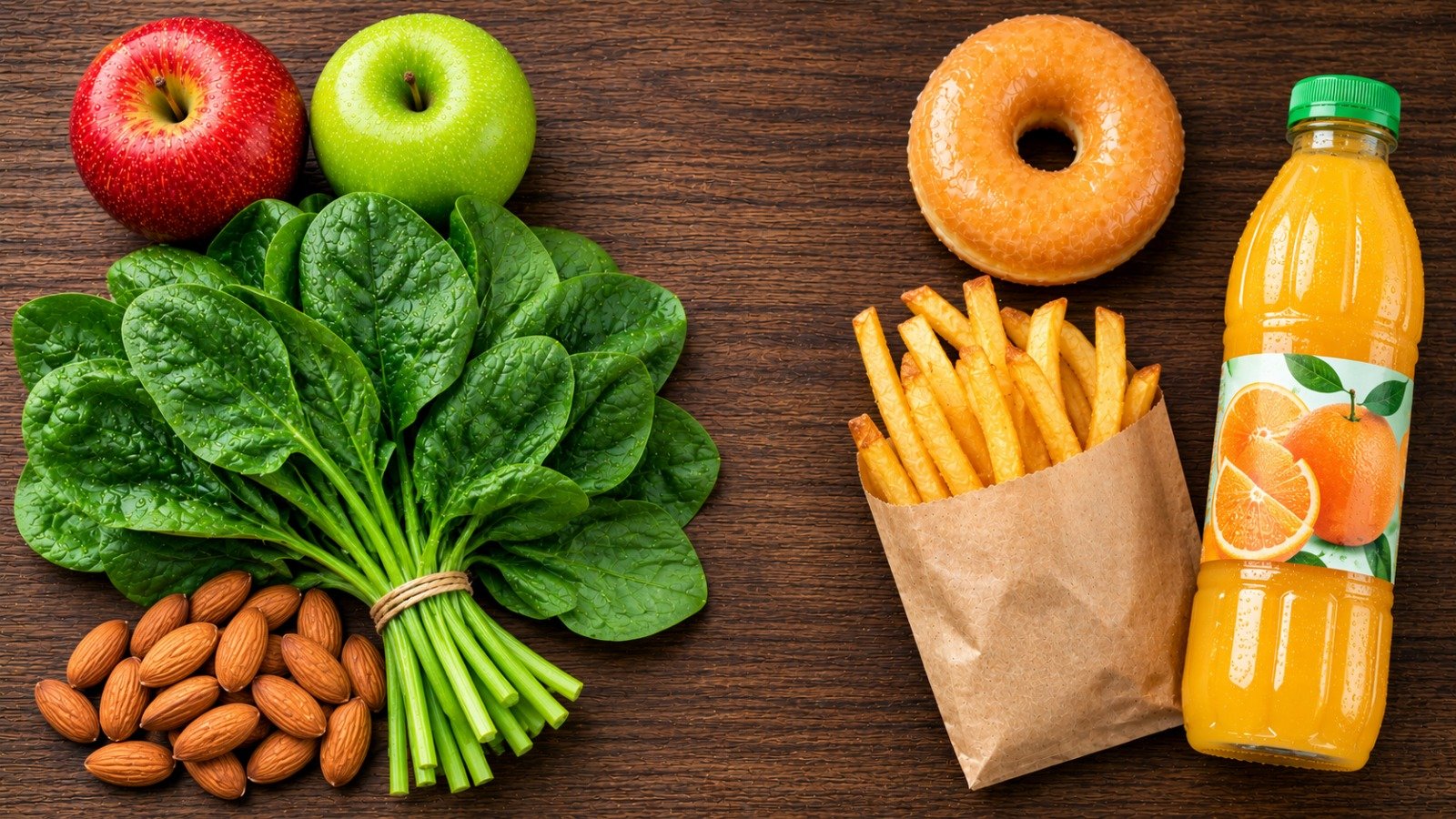
The story so far. David’s cereal and Amina’s eggs differ in more than blood sugar. One came out of a factory designed to make him want more of it. That design has a measurable effect on how much a person eats.
Ultra-processed food is not just food that has been cooked or packaged. That is normal, and often fine. Ultra-processed food is different, and much of what goes into it is designed to make the food easy to eat and hard to stop eating.
A landmark study published in Cell Metabolism ran a careful test. Twenty adults ate an ultra-processed diet for two weeks and a whole-food diet for two weeks, with the order decided by chance. All the food was provided and there was no limit on how much they could eat. The same people ate about 500 more calories a day on the ultra-processed food. Greed had nothing to do with it. The food itself changes your sense of fullness.
Your body has a built-in alert that tells you when you have had enough to eat. Whole food lets that alert work properly. Ultra-processed food seems to override that alert. So it is easier to keep eating, long after your body has had enough.
A large study published in The BMJ followed nearly 105,000 people in France over several years. The more of their food came from ultra-processed sources, the higher the cancer rate. For each extra tenth of the diet made up of ultra-processed food, the overall cancer rate went up by about 12 percent. The same pattern appeared for breast cancer, but no such link showed up for prostate or bowel cancer.
That study recorded what people chose to eat rather than assigning anyone a diet, so it shows that the two things go together. It does not prove the food caused the cancer.
One idea, two levels
It does not mean that 12 percent of people got cancer. It means that as ultra-processed food made up more of a diet, the cancer rate in the study rose alongside it. A rate rising by a tenth is not the same as a risk you would feel.
The BMJ study followed nearly 105,000 people in France. For each additional tenth of the diet made up of ultra-processed food, the overall cancer rate rose by about 12 percent in relative terms. Relative is the word that carries the weight: 12 percent more of a small underlying risk is still a small absolute increase. The same pattern appeared for breast cancer, and no such link showed up for prostate or bowel cancer. The study recorded what people chose to eat rather than assigning anyone a diet, so it shows that the two things travel together. It does not show that the food caused the cancer.
The problem with ultra-processed food, then, is not only what it lacks but what it does to you. People in the feeding trial could eat as much as they wanted of either kind of food, and they simply ate more of the ultra-processed kind.
Cutting back on it is one of the most powerful food changes you can make.
One food does not make or break your health. What you eat most days matters far more.
No eating pattern has been studied harder, or held up better, than the Mediterranean way of eating. It is built on vegetables, fruit, beans, whole grains and olive oil, with fish regularly and red meat rarely. It is not the only pattern that works, though, and the differences between them are worth knowing.
Strongest evidence
Vegetables, fruit, beans, whole grains and olive oil, with fish regularly and red meat rarely. It carries the strongest evidence of the three for heart disease and stroke.
Not a strict diet with banned foods. A way of building meals.
Built for blood pressure
Dietary Approaches to Stop Hypertension. It cuts salt right down and gives you more potassium, calcium and magnesium. The one to ask about if your doctor keeps talking about your blood pressure.
With kidney disease, or a medicine that raises potassium, ask your doctor first.
Plants at the center
Plants at the center, with meat pushed to the edges or left out entirely. It works well, though it takes more planning.
Vitamin B12, iron and omega-3 all need watching.
DASH stands for Dietary Approaches to Stop Hypertension. Hypertension means high blood pressure, and lowering it is what this pattern was built to do. It cuts salt right down. It gives you more potassium, calcium, and magnesium, from fruit, vegetables, and low-fat milk foods. If you have kidney disease, or take a medicine that raises potassium, ask your doctor before you eat more foods high in potassium. If your doctor keeps talking about your blood pressure, this is the way of eating to ask about.
Plant-forward eating puts plants at the center and pushes meat to the edges, or leaves it out entirely. It works well, though it takes more planning, because vitamin B12, iron and omega-3 all need watching. None of that is difficult, but none of it happens by accident either.
The Mediterranean pattern sits between the two, and it carries the strongest evidence of the three for heart disease and stroke. All three are built on the same base of plenty of plants, whole grains, and less salt, sugar and ultra-processed food. Choose the one that fits your kitchen and your health.
It helps to understand that the Mediterranean pattern is not a strict diet with banned foods. It is a way of building meals. Vegetables sit at the center of every plate, with fruit every day, beans and lentils several times a week, and whole grains as the base. Extra virgin olive oil is the main fat, and oily fish appears regularly, in line with local guidance. Eggs, chicken and dairy have their place, red meat appears rarely, and ultra-processed food almost never.
A landmark trial put this to the test. The PREDIMED study was published in the New England Journal of Medicine. It followed 7,447 adults. Every one of them was already at high risk of heart disease. That matters when you read the result. What is true for a high-risk group is not always true for everyone. Some ate the Mediterranean way, with extra virgin olive oil or nuts. Others followed a standard low-fat diet. The Mediterranean group had a 30 percent lower rate of heart attack, stroke, or death from heart disease.
There is one more thing you should know about this trial. The first version, published in 2013, was withdrawn, because some people had not been sorted into their groups by chance in the way the rules required. The researchers reworked the numbers and published again in 2018, and the result held.
So it remains the strongest trial of its kind, and it is also a trial that had to correct its own mistake. That is worth knowing when you decide how much weight to give it.
A 30 percent reduction is the kind of number you usually see only from medicine. Here it came from changing the pattern of what people ate.
One thing is worth understanding, because it changes how you read every health headline you will ever see. That 30 percent is a relative number. That means it only compares one group against the other group. It does not tell you how many people it actually happened to. Counted in people, the gap was a little under one person in every hundred over nearly five years. Both numbers are true. The 30 percent tells you which way the change went. The one in a hundred tells you how big it was.
This way of eating is also linked to lower rates of type 2 diabetes, memory loss, low mood and early death, with dozens of large studies worldwide pointing the same way.
A wider study in The Lancet put a number on it, linking poor diet to about 11 million deaths worldwide in 2017. That figure is an estimate, worked out mathematically from data collected about whole countries rather than counted death by death. In the same work, two problems came top together. Eating too much salt and eating too few whole grains were each linked to around three million deaths, with too little fruit next at around two million.
Notice what most of that list has in common. It is not what people ate too much of. It is what was missing. The answer really is simple: eat more whole plants, every day.
Blood sugar is not just something people with diabetes need to think about. How steadily your body handles it affects how much energy you have. Over time it also affects your metabolic health. That means how well your body handles energy, blood sugar, and fat. Many things besides blood sugar shape your energy, mood, hunger, and weight. Blood sugar is only one of them.
When you eat carbohydrates, your body breaks them down into a sugar called glucose. Glucose is one of your body’s main fuels. Most of the time, your brain leans on it heavily. Your body also runs on fat and other fuels. Think of glucose like the electricity in a building. It needs to flow in at a steady, controlled rate for everything to work. When it arrives too fast, your body has to work hard to bring it back down. When it drops too low, the lights go out.
Blood sugar rises after any meal with carbohydrate in it. That is your body doing its job. What changes is how high it climbs and how fast.
Refined carbohydrate and sugary drinks send it up quickly, while whole foods eaten alongside protein, fat or fiber take it up slowly. The same sugar can give you a very different ride.
Insulin comes next, pulling the sugar back out of the blood.
After a fast rise, many people feel the dip that follows as tiredness, fading focus, and a pull toward something sweet. Others barely notice it. Both are normal.
Over time, in some people, the cells stop listening to insulin as readily as they used to. This is called insulin resistance. Picture a door that once opened easily but now has to be knocked on harder before anyone answers. That is a simple picture of it. The real story goes deeper.
Several things shape it at once: genetics, how much body fat a person carries and where it sits, physical activity, sleep, age, some medications, and the overall pattern of the diet.
One idea, two levels
Blood sugar rises after any meal with carbohydrate in it. That is your body doing its job. What changes is how high it climbs and how fast, and carbohydrate eaten alongside protein, fat or fiber goes up more slowly.
Carbohydrate is broken down into glucose, and insulin then pulls it back out of the blood. After a fast rise, many people feel the dip that follows as tiredness, fading focus and a pull toward something sweet. Others barely notice it, and both are normal. Insulin resistance is a separate and slower story, and sugar alone does not cause it. Genetics, how much body fat a person carries and where it sits, physical activity, sleep, age, some medications and the overall pattern of the diet all shape it at once, which is why it cannot be read off a single meal or a single food.
Insulin resistance raises the risk of prediabetes. That means blood sugar higher than normal, but not yet high enough to be called diabetes. Type 2 diabetes can follow. But it does not have to. The National Institute of Diabetes and Digestive and Kidney Diseases is clear on this. Changes to daily life and proper medical care can often delay it, or prevent it.
The American Diabetes Association reports that eating patterns rich in whole grains, vegetables, beans and healthy fats support better blood sugar control, and also lower the risk of developing diabetes.
The best tools for keeping blood sugar steady are simple ones. Eat protein at every meal, choose whole grain carbohydrates, and put vegetables on the plate each time. Cut back on sugary drinks and added sugar. And a short walk after a meal measurably lowers the blood sugar spike from that meal.
The story so far. Amina’s breakfast fed something else besides Amina. The nuts, the spinach, and the fiber fed the trillions of tiny lives in her gut. What they do next reaches further than digestion.
Deep inside your gut lives a whole world of about 38 trillion tiny organisms, mostly bacteria, which have lived inside you since you were born. Together they are called the gut microbiome, and what you eat shapes whether that world thrives or struggles.
Think of a town that lives on what comes in by road. Send a wide range of goods and the town supports every kind of trade. Send the same narrow load year after year and most of those trades close.
Your gut microbes live like that town. What arrives shapes who can stay.
A healthy gut microbiome does remarkable things, starting with training and steadying the system that fights illness. Most of your body’s serotonin is also made down there. Serotonin is a chemical messenger with a part in both mood and digestion, and the microbes affect how much of it gets made. The making itself happens in enterochromaffin cells, which are special cells in the gut lining that release chemical messengers. Research in Cell, carried out in mice, found that the microbes shape how much those cells produce.
One thing that gut serotonin does not do is reach your brain. It cannot cross into the brain. So it is not the source of your mood. What it does is help run your digestion. The microbiome also makes substances that feed and protect the gut wall. Gut and brain are in constant conversation. They talk through nerves, immune signals, hormones, and substances the microbes make. This two-way link is called the gut-brain axis, the constant traffic of signals between your gut and your brain.
It runs both ways. What happens in your gut reaches your head, and what happens in your head reaches your gut.
The science here is promising. Many of the exact effects are still being worked out.
The American Gut Project is one of the largest gut studies ever done. It sorted people by how many different plant foods they ate each week. Those eating 30 or more had a wider mix of life in their gut than those eating fewer than 10. Only a small number of people were compared this way, so treat 30 as a helpful target rather than a proven number. In the wider research, a wider mix in the gut usually goes with better health, though nobody yet knows which one causes the other.
Thirty plant foods a week means thirty types, not thirty portions. A single spoon of lentils counts as one.
Every plant brings its own fibers and its own compounds, so feeding your gut thirty kinds feeds a wider range of life in there. A varied gut is one sign of a healthy one, and nobody has yet drawn the map of a perfect microbiome.
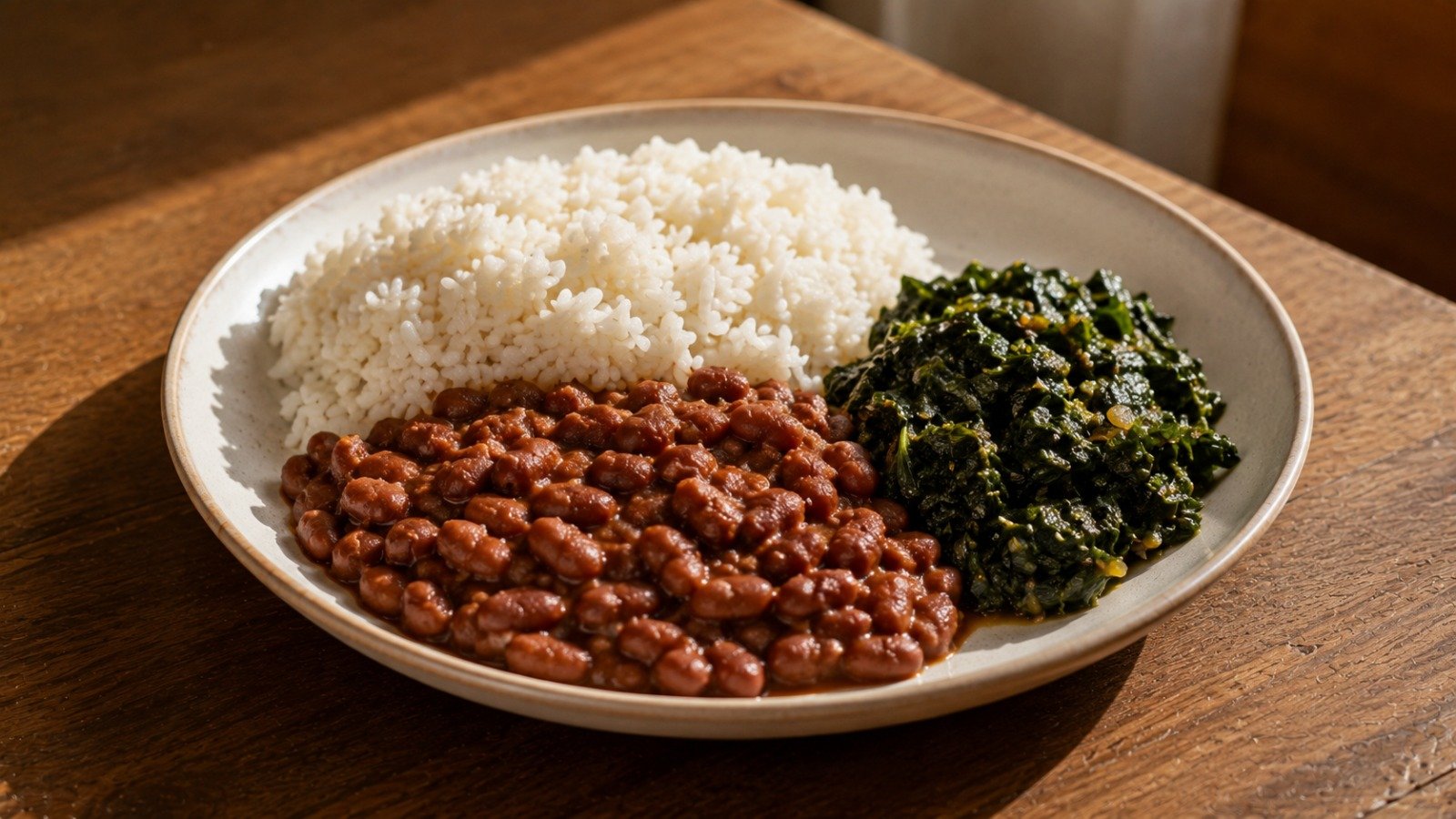
The story so far. Neither David nor Amina needs a perfect menu. David does not have to give up every food he likes. Amina did not build her morning in a day. What follows is the short version of what actually makes a difference.
Protein helps keep your blood sugar steady and your hunger in check. Vegetables give you the fiber, vitamins, and plant goodness your body needs. Together they are the base of every truly nourishing meal.
Vegetables, fruit, beans, whole grains, nuts, seeds, herbs, and spices all count. Different types bring different fibers and plant compounds. Variety is the goal.
Brown rice over white. Whole-grain bread over white. Oats over sugary cereal. Fiber is the biggest part of why.
Salmon, mackerel, sardines and herring all give you the omega-3 with the strongest evidence behind it.
Fruit juice, soda and sweet coffees all send your blood sugar racing up with almost nothing in return. Swapping them for water or plain tea is one of the best changes you can make.
Home-cooked meals usually carry far less salt, added sugar and poor-quality fat than packaged or restaurant food, and you control exactly what goes into them.
It is one of the most studied fats there is. It is rich in healthy fat and natural compounds that calm inflammation in the body. Use it for cooking, for salads, and for drizzling over vegetables.
Whole fruit keeps its fiber, which slows the sugar down and leaves you fuller. Juice has none of it, and it delivers a lot of free sugar quickly. How far your blood sugar climbs depends on the size of the glass and on the person drinking it. Eat the fruit instead.
Take the fat out and something has to replace the taste. Often it is sugar or refined starch, though not always. Turn the pack over and the ingredient list tells you in ten seconds.
Plain yogurt is good food at full fat or low fat. Whole eggs and egg whites both earn their place. Whole eggs carry more vitamins and minerals. Egg whites carry protein with fewer calories. Which one suits you depends on the rest of your plate.
Your gut needs variety. Eating the same vegetables week after week feeds the same few helpers over and over. Rotate through different colors and types. Different colors carry different goodness.
A breakfast made entirely of carbohydrate sets up a rocky blood sugar pattern for the whole day. Adding protein helps a great deal, because it steadies your energy, tends to cut cravings, and keeps most people full until lunch.
Start here
Build your next meal around protein and vegetables. Choose the whole grain version of any carbohydrate. Drink water instead of a sweet drink. Three small choices, one meal, and your body gets a completely different message.
Get emergency medical help now for any of these:
If your stool becomes black without looking sticky or tar-like, get urgent medical advice. Some foods and medicines can darken stool, but an unexpected change still needs to be checked.
See a doctor, rather than changing your diet, if you have any of these.
If you take insulin or tablets called sulfonylureas for diabetes, cutting carbs or sugary drinks can push your blood sugar too low. The NIDDK explains this risk. Tell your doctor or diabetes nurse before you change things, so your doses can be adjusted.
If you take warfarin, a blood-thinning medicine, a big change in how many green leafy vegetables you eat can change how it works. Keep the amount steady, and tell whoever manages your dose.
And if you have kidney disease, ask before you raise foods high in potassium or protein.
Minutes, not decades
Everything else in this guide works on the scale of years. Food shapes blood vessels, blood sugar and the gut slowly, and both the damage and the repair take time. Food allergy is the exception. It is the one way that eating becomes an emergency inside a few minutes, and the one place on this page where reading an article is the wrong response.
A woman eats the same salad from the same place she has eaten it for a year. The kitchen changed its dressing this week. Four minutes later her lips feel thick and her own voice sounds wrong to her. She thinks she is having a panic attack, because from the inside that is what it feels like. She is not. What she needs is epinephrine, also called adrenaline, from the injector in her bag. It needs to go into her outer thigh now. Then she needs to stay lying down until help comes, because standing up at that moment is one of the ways this ends badly.
This affects a small number of people and it affects them enormously. Most discomfort after eating is not this. But this is not the kind of reaction you wait out to see which way it goes.
Anaphylaxis is a severe allergic reaction. It can quickly make breathing hard or cause a dangerous fall in blood pressure. It may happen without a rash.
What it looks like
What to do, in this order
Three things people get wrong. Carry two in-date auto-injectors, not one. Triggers are not only food and medicines: insect stings, latex and exercise all cause anaphylaxis, and in some people no trigger is ever identified. And a mild reaction in the past does not predict a mild reaction next time.
Two breakfasts, about the same calories, and two very different mornings.
Nobody can say how either of them will be in twenty years. One breakfast is one breakfast. And these swings are not the same in everybody. Some people barely feel them at all.
What can be said is narrower, and still useful. Amina’s plate had protein, fiber and fat on it. That mix tends to slow the rise in blood sugar and hold hunger off longer. David’s had almost none of it.
Repeat that difference across most mornings of most years, and it stops being about one meal.
Here is the part worth keeping. David does not need Amina’s breakfast. He needs one thing added to his own, whether that is an egg, a spoon of yogurt, or a handful of nuts.
That is a much smaller change than giving up what he likes, and it is the kind of change people are still keeping up a year later.
The Main Lessons
Every meal gives your body a set of orders. What you eat each day is shaping your health right now.
The World Health Organization says a healthy diet helps protect you against heart disease, stroke, diabetes, and cancer.
Refined carbs push blood sugar up fast, and many people feel the dip that follows. It is one driver of daily tiredness among several.
In a Cell Metabolism trial, the same people ate an ultra-processed diet for two weeks and a whole-food diet for two weeks. The two diets were matched for calories, sugar, fat, fiber and salt. On the ultra-processed weeks they ate about 500 more calories a day. Exactly why is still being worked out.
The Mediterranean way of eating was linked to a 30 percent lower risk of heart attack and stroke. That was the PREDIMED trial. Everyone in that trial was already at high risk of heart disease.
Eating 30 different plant foods a week is linked to a more varied gut, according to the American Gut Project. That comparison involved a small number of people.
Oily fish gives you omega-3. That is the fat with the strongest evidence behind it for the heart and brain.
Fat is not the enemy. Your steroid hormones are built from it. Your brain is rich in fat, more than half of its dry weight. Fear refined carbs and ultra-processed food, not healthy fat.
Protein at every meal helps keep your blood sugar steady, helps control hunger, and protects your muscle.
What you eat every day is one of the strongest health tools you have. It works alongside medicine, never instead of it.
Golden Nugget
Nobody in that trial was told how much to eat, and the same people ate about five hundred calories more a day on the ultra-processed food. So the thing that failed was not appetite control. Food built to override the signal for fullness does not need your cooperation to be overeaten.
No single diet is perfect for every person. But the dietary pattern with the strongest and most consistent scientific evidence is the Mediterranean pattern. Plenty of vegetables, fruit, beans, whole grains, extra virgin olive oil, and oily fish at its center. The PREDIMED trial found 30 percent fewer heart attacks and strokes in people who ate this way. All of them were already at high risk of heart disease. Counted in people, that was a difference of a little under one person in every hundred over nearly five years.
No. Diets rich in whole grains and fiber are linked to lower rates of heart disease, type 2 diabetes, and bowel cancer. That comes from a major review in The Lancet. Refined versions carry less fiber and push blood sugar up faster. Both quality and total amount can matter. Amount counts for more if you live with diabetes, prediabetes, or another condition affecting blood sugar.
Sleepy after a big meal is normal. Tired after every meal is not.
Often it is the meal itself, heavy on refined carbohydrate and light on protein and fiber. Build the plate around protein and vegetables instead, and many people feel the difference within days.
But the meal is not the only cause. Low iron does this, and so do poor sleep, alcohol, some medicines, and diabetes. So does sleep apnea, which is when your breathing stops again and again while you sleep. Get a blood test if the tiredness follows every meal, if it is new, or if something else feels wrong. Guessing is the one approach that will not help.
It depends entirely on the fat. The American Heart Association is clear on this. Trans fats, found in some processed and fried foods, are harmful. Saturated fat is found in fatty meat, butter, full-fat dairy, coconut oil, palm oil, and other foods. Eaten in large amounts it raises LDL cholesterol. LDL is the kind that builds up on artery walls. What matters most is what takes the place of that saturated fat. Replace saturated fat with unsaturated fats from olive oil, avocado, nuts, and oily fish. That lowers LDL cholesterol, and lowers heart risk.
Legumes, eggs, oats, seasonal and frozen vegetables, canned fish and whole grain staples are among the most nutritious foods there are, and among the cheapest. Ultra-processed food often costs a great deal for the little goodness it returns. Cooking at home puts you in control of the ingredients, the portions, and the salt, sugar and fat, and it usually costs less as well. None of that makes a home-cooked meal healthy on its own, though. Deep-fry it and you are back where you started.
Eat 30 different plant foods per week. Include fermented foods like natural yogurt, kefir, kimchi, and sauerkraut. Some are pasteurized after fermenting, which kills the bacteria. Check the label for live or active cultures. Include prebiotic foods like garlic, onions, leeks, oats, and bananas, which feed the beneficial bacteria already living in your gut. And reduce ultra-processed food. Diets with a lot of these foods have been linked to a worse gut and worse health, though one product can differ from the next. Cutting back tends to help.
For most adults, a good starting point is a portion of protein at every meal. About the size of your palm. That covers eggs, fish, chicken, beans, lentils, or dairy. Older adults and people doing regular strength work usually need more, not less. The body becomes less efficient at using protein with age. If you have kidney disease, ask your doctor before increasing it, since the advice changes in that case.
Frozen vegetables are often just as good, and sometimes better. They are usually picked ripe and frozen within hours. That locks in nutrients which fresh produce loses while it travels and sits on a shelf. Canned is also fine, though it is worth choosing versions without added salt or sugar where you can. Cost should never be the reason a plate has no vegetables on it.
Most people eating a varied diet do not. Food delivers nutrients alongside fiber and other compounds that a tablet cannot copy. There are real exceptions. Vitamin D is hard to get from food in the darker months. The same is true if you spend most of the day indoors. Vitamin B12 needs watching if you eat mostly plants. What you need also changes with age and with pregnancy. It changes if you cut out whole food groups, if a test has shown you are short of something, if you have an illness that stops your gut taking nutrients in, and with some medicines. In pregnancy, folic acid is widely recommended before conception and in the early weeks. Vitamin D is commonly advised too. Iron supplements may be recommended for everyone during pregnancy in some countries. In other places, the decision follows blood tests or another medical assessment. Follow your local guidance and ask your doctor or midwife whether you need an iron supplement and how much to take. Treat these as questions for a professional rather than guesswork.
Snacking itself is not the problem. What you reach for is. A handful of nuts, fruit with yogurt, or leftover vegetables beats biscuits and sweet drinks, because they carry more fiber and more protein, and they fill you up for longer. If you are hungry all day, look at your meals first, since too little protein and fiber is a common cause. Sleep, stress and some medications matter too.
Build one meal from parts rather than cooking several. Put out a pot of beans or stew, a grain, a vegetable dish, and something fresh, and let each person build a plate they will actually eat. Children often eat better when they assemble the plate themselves. It does not work every time, but it is worth trying before you cook three dinners. You are not running a restaurant, and you do not need to.
Before you go
This article is for education only. It is not medical advice and does not replace care from a qualified healthcare provider or registered dietitian. Always speak to a professional before making big changes to your diet, especially if you already have a health condition.
World Health Organization. (2026). Healthy Diet: Key Facts. https://www.who.int/news-room/fact-sheets/detail/healthy-diet
Estruch R et al. (2018). Primary Prevention of Cardiovascular Disease with a Mediterranean Diet Supplemented with Extra-Virgin Olive Oil or Nuts. New England Journal of Medicine. 378:e34. https://doi.org/10.1056/NEJMoa1800389
Hall KD et al. (2019). Ultra-Processed Diets Cause Excess Calorie Intake and Weight Gain. Cell Metabolism. 30(1):67-77. https://doi.org/10.1016/j.cmet.2019.05.008
Fiolet T et al. (2018). Consumption of Ultra-Processed Foods and Cancer Risk. BMJ. 360:k322. https://doi.org/10.1136/bmj.k322
GBD 2017 Diet Collaborators. (2019). Health Effects of Dietary Risks in 195 Countries. The Lancet. 393(10184):1958-1972. https://doi.org/10.1016/S0140-6736(19)30041-8
Reynolds A et al. (2019). Carbohydrate Quality and Human Health (commissioned by the World Health Organization). The Lancet. 393(10170):434-445. https://doi.org/10.1016/S0140-6736(18)31809-9
McDonald D et al. (2018). American Gut: An Open Platform for Citizen Science Microbiome Research. mSystems. 3(3):e00031-18. https://doi.org/10.1128/mSystems.00031-18
American Diabetes Association Professional Practice Committee. (2022). Facilitating Behavior Change and Well-being to Improve Health Outcomes. Diabetes Care. 45(Supplement 1):S60-S82. https://doi.org/10.2337/dc22-S005
American Heart Association. (2026). Fats in Foods. https://www.heart.org/en/healthy-living/healthy-eating/eat-smart/fats/fats-in-foods
World Health Organization. (2025). Anemia. https://www.who.int/news-room/fact-sheets/detail/anaemia
Yano JM, Yu K, Donaldson GP, et al. (2015). Indigenous Bacteria from the Gut Microbiota Regulate Host Serotonin Biosynthesis. Cell. 161(2):264-276. https://doi.org/10.1016/j.cell.2015.02.047
National Institute of Diabetes and Digestive and Kidney Diseases. (2025). Insulin Resistance and Prediabetes. https://www.niddk.nih.gov/health-information/diabetes/overview/what-is-diabetes/prediabetes-insulin-resistance
National Health Service. (2026). Fish and Shellfish. https://www.nhs.uk/live-well/eat-well/food-types/fish-and-shellfish-nutrition/
U.S. Food and Drug Administration. (2024). Advice about Eating Fish. https://www.fda.gov/food/consumers/advice-about-eating-fish
National Health Service. (2026). Pregnancy Vitamins and Supplements. https://www.nhs.uk/pregnancy/keeping-well/pregnancy-vitamins-and-supplements/
Engeroff T, Groneberg DA, Wilke J. (2023). After Dinner Rest a While, After Supper Walk a Mile? A Systematic Review with Meta-analysis on the Acute Postprandial Glycemic Response to Exercise Before and After Meal Ingestion in Healthy Subjects and Patients with Impaired Glucose Tolerance. Sports Medicine. 53(4):849-869. https://doi.org/10.1007/s40279-022-01808-7
National Institute of Diabetes and Digestive and Kidney Diseases. (2021). Low Blood Glucose (Hypoglycemia). https://www.niddk.nih.gov/health-information/diabetes/overview/preventing-problems/low-blood-glucose-hypoglycemia
National Health Service. (2024). Anticoagulant Medicines: Considerations. https://www.nhs.uk/medicines/anticoagulants/considerations/
National Institute of Diabetes and Digestive and Kidney Diseases. (2025). Healthy Eating for Adults with Chronic Kidney Disease. https://www.niddk.nih.gov/health-information/kidney-disease/chronic-kidney-disease-ckd/healthy-eating-adults-chronic-kidney-disease
National Health Service. Anaphylaxis. https://www.nhs.uk/conditions/anaphylaxis/
Australasian Society of Clinical Immunology and Allergy. First Aid for Anaphylaxis. https://www.allergy.org.au/hp/anaphylaxis/first-aid-for-anaphylaxis
St John Ambulance. How to Put Someone in the Recovery Position. https://www.sja.org.uk/first-aid-advice/recovery-position/
National Health Service. Stomach Ache. https://www.nhs.uk/symptoms/stomach-ache/
National Institutes of Health Office of Dietary Supplements. Iron: Fact Sheet for Health Professionals. https://ods.od.nih.gov/factsheets/Iron-HealthProfessional/
Golden Health Quest
Quest 1 of 3
This is an educational game. It does not assess your health.
Plate Builder
This is a learning game, not a personal prescription. Needs differ with health conditions, medicines and circumstances, and some of the options below are the mistakes described earlier in this guide.
0 of 3 selected
Swap Builder
This guide suggests changing what a meal does rather than how much willpower it demands. Build one swap here, then put it somewhere you will see it.
Choose both halves to build your swap.
A learning tool, not a prescription. One swap you keep beats five you abandon.
One Realistic Step
Choose an amount of time to receive one practical step.
Choose a step that fits your circumstances, your health and your medicines.
Was this guide useful? Share it, keep a copy or return to the evidence.