
Genes are a starting point
Serious studies put their share anywhere from under 10 percent to about half. What none of them says is that the rest is beside the point.
Pillar 12 of 12
Not just more years, but more years worth having.
Your genes hand you a starting point. Less of what follows is fixed than most people assume.
Choose how you want to read
Call your local emergency number now for chest pain or pressure; sudden weakness or numbness in the face, arm or leg, especially on one side; a face that suddenly drops on one side; sudden confusion or trouble speaking; sudden trouble seeing; a sudden change in balance or in how you can move; a sudden severe headache unlike your usual ones; or sudden severe trouble breathing. Call even if a possible stroke symptom passes off after a few minutes.
Sudden confusion is not a memory problem. It can come from infection, medicine, dehydration or stroke, and it needs help immediately rather than at the next appointment.
Read the complete guidance, including what to arrange promptly rather than urgently
The main lesson
Lifespan is the whole distance. Healthspan is the stretch where the road is smooth. And aging well does not require being free of illness, which is a thing the World Health Organization says plainly and almost nobody repeats.
Serious studies put their share anywhere from under 10 percent to about half. What none of them says is that the rest is beside the point.
Cells that stop dividing and will not leave, protective caps wearing down, damage building faster than repair. Not one part wearing out.
Aging is gradual by definition. Anything that arrives suddenly is saying something else about itself.
Two ways to read this
Aging is not one thing wearing out. It is several processes running at the same time in the same body: cells that stop dividing but never leave, protective caps on the ends of your chromosomes wearing down, damage building up a little faster than repair can clear it. They feed into each other, which is why aging arrives as everything at once rather than as one part failing.
Biologists organize aging around a set of hallmarks: interlinked processes that accumulate with time, whose experimental acceleration shortens life and whose attenuation extends it in model organisms. They include genomic instability, telomere attrition, epigenetic alteration, loss of proteostasis, mitochondrial dysfunction, cellular senescence, stem cell exhaustion and altered intercellular communication. They are not independent, which is the point of the framework rather than a flaw in it: senescent cells drive inflammation, inflammation accelerates stem cell exhaustion, and so on around the loop. Much of the strongest evidence comes from mice and other model organisms, and whether interventions that work there translate to humans is largely still being tested.
For most of human history, the dream was simply to live longer. More years was the goal.
But science has quietly changed that goal, because living longer is not the same as living well.
A person can reach 90 while living with dementia, disability, or a need for daily care. Those years still carry dignity and value. But a longer life does not automatically mean more years of health or independence.
The goal is to protect energy, clarity, strength, connection, dignity, and independence for as many years as possible. Your genes, the instructions for your body passed down from your parents, matter. But they do not write the whole story.
Most people think their old age was decided the day they were born, written into the body their parents handed them.
The science says something different.
Longevity science is the study of how and why we age, and of how to add more healthy years to life. It has been asking one question for decades. How much of aging is fixed, and how much is open?
The answer keeps coming back the same way. Your genes matter. They are not the whole story.
Scientists have tried for years to measure how much your genes explain. The estimates vary widely, and a later section goes through them.
Here is the part that is easy to get wrong, and it matters more than any single number.
Picture a field of wheat. Some plants grow taller than others. You can ask how much of that difference comes from the seed and how much from the soil. For the whole field you can answer it.
Now pick one plant. Ask the same question about that one.
You cannot answer it. The number was never about a single plant.
Scientists call this kind of number a heritability figure. It shows how much of the difference between people lines up with differences in their genes. It works just like the wheat field. The number is about a whole group of people. No number like it can split one person’s life into parts.
What the estimates agree on is simpler. Genes are one part of the picture. Not the picture.
The rest is health conditions, medical care, the place you live, the chances you were given, the people around you, what you do day to day, and plain luck.
That is the hopeful part. Your old age is not fixed at birth. Some of what shapes it is beyond anyone’s control. But some of it is genuinely open, and what you do day by day sits inside that open part.
Rosa and Ingrid are not real patients. They were written for this guide. Nothing that follows is a case history, a diagnosis, or a prediction about any real person.
Picture two people, Rosa and Ingrid. They are both 75, retired within a year of each other, and live in the same quiet town.
Rosa retired a decade ago and stopped moving so gradually that there was never a week she could point at. Her husband died in the third year, and the walking had been his idea anyway. She eats mostly processed food, because it is easy and because cooking properly for one person has always felt to her like a performance with no audience. She rarely goes outside. She has few people she regularly talks to, which happened by attrition rather than by choice: the ones who moved away, the one who died, the ones she stopped ringing first. She takes four different medicines for conditions that have built up over the years. Her doctor tells her she is doing well for her age. She does not feel well for her age. She feels old, and fragile, and she has not said any of that out loud to anybody.
Ingrid walks every morning. She started taking daily walks with her dog and kept the habit after the dog died. Her meals are mostly vegetables, fish, and whole grains. She learned to cook this way at thirty and has kept the same simple approach ever since. She has a group of friends she sees often, though she would tell you that two of them she does not particularly like and goes anyway. She tends a garden, which is less peaceful than it looks and mostly consists of losing an argument with slugs. She reads constantly. She takes one medicine. She does not feel like her best years are behind her. She feels like herself, which is a smaller claim than it sounds and the one that matters most.
It would be easy to look at these two and say the difference is the choices they made.
That is part of it. It is not the whole of it, and saying so would be unfair to Rosa.
Biology plays a part, and so do illness, injury, money and grief. So does whether the streets nearby are safe to walk, whether there is decent food within reach, and whether anyone is around to help. So does the care she has been given, and luck.
Rosa’s four medicines may be doing exactly what they should, and keeping her going.
It is also worth saying that Ingrid did not build her life in order to age well. She built it for other reasons, and the aging came along with it, which is how this works for almost everybody.
Here is what we can fairly say. Habits like Ingrid’s improve the odds. They do not decide the outcome.
You cannot choose the old age you are given. But the choices and support available along the way can tilt the odds toward a healthier one.
Most people picture aging as a machine wearing out. Parts rust, things loosen, and nothing can be done about it.
That picture is wrong, and the reason matters.
Aging is not simply a machine wearing out. It involves many biological changes that scientists can now name and study.
Think of an old house. Some of what makes it old is simply time passing. Some of it is upkeep: whether the gutters got cleared, whether a leak was caught early, whether anyone painted the windows.
The house still ages. How well it ages is another matter.
Longevity science asks three questions. Why do we age? What speeds it up? What slows it down?
Some processes linked to aging are also influenced by activity, food, sleep, disease, medicines, and the environment. Healthy changes can improve how well your body works and lower the risk of many age-related diseases.
Two honest limits belong with all of this. Nobody yet knows whether anything people do slows down aging itself. Scientists are still studying that. And aging cannot be stopped or reversed.
But how well you live through it can genuinely be shaped.
Two words do most of the work in this field.
Lifespan is the total number of years you live, and it is simple to count.
Healthspan is the part of those years you spend in good health. You have energy, a body that works, and the ability to do what matters to you.
There is no single agreed way to measure healthspan. People can age well while living with an illness or a disability.
Think of a long journey. Lifespan is the whole distance. Healthspan is the stretch where the road is smooth and the car is running well.
The goal is not a longer journey with more of it spent broken down at the roadside.
It is a longer smooth stretch.
The World Health Organization puts the aim simply. Keep the ability to do the things that matter to you, for as long as possible.
Notice what it does not say. It does not say you must be free of disease to be aging well.
Good care counts. Surroundings that suit you count. Help when you need it counts.
The goal is health, ability, dignity, and connection through your years. That goal does not disappear when illness or disability arrives.
When scientists look inside an aging body, they keep finding the same set of changes.
They call them the hallmarks of aging. A hallmark is simply a clear sign that something is happening. So these are the main changes that show up as a body grows old.
Scientists currently list twelve of them, and they keep arguing about the list. Four are the easiest to picture, and they are the four below.
Each has a hard name and a simple idea underneath it.
One caution before we start.
Scientists use these as a map for studying aging. They are not the finished answer.
Some are linked to things like exercise, food, and sleep. Which ones actually cause aging, and how far your habits can move them, is still being worked out.
The story so far. Rosa and Ingrid are aging through the same biology. What differs is the speed. The next section shows what is changing inside them both.
Your body is built from cells, the tiny building blocks of every living thing. Some renew you by dividing into fresh copies. Others last decades and rarely divide at all.
Sometimes a cell gets damaged or badly stressed. When that happens it can shut down its dividing for good.
Scientists call these senescent cells. This simply means cells that have stopped dividing and will not start again.
Think of a worker who stops doing the job but never leaves the building.
One idea, two depths
Shutting a damaged cell down is a sensible move, because a cell that cannot divide cannot copy its damage into new ones. The trouble is what happens next. The cell does not leave. It sits there giving off chemical signals, and as more of them build up over decades those signals stir up inflammation in the healthy tissue around them. The defense becomes the problem, slowly, and only in bulk.
Cellular senescence is a stable exit from the cell cycle triggered by DNA damage, telomere attrition, oncogene activation and other stresses. It is tumor-suppressive, since a cell that cannot divide cannot propagate damaged DNA. Senescent cells stay metabolically active and secrete a mixture of cytokines, chemokines, growth factors and proteases known as the senescence-associated secretory phenotype, or SASP. In the short term the SASP helps wound healing and recruits immune cells to clear the senescent cell itself. When clearance slows and these cells accumulate, the same secretions drive chronic low-grade inflammation. Removing them extends healthspan in mice. Whether that translates to people is being tested and is not established.
Several things can trigger it: damage to the cell’s instructions, worn-down telomeres, and other kinds of stress.
Stopping division can protect the body by preventing a damaged cell from continuing to copy itself. This is one defense against cancer, although cellular senescence is not a perfect guarantee and its effects can change over time.
But these cells do not sit quietly. They give off chemical signals. As they build up over the years, those signals can stir up inflammation, your body’s response to injury or infection. They cause trouble in the healthy tissue around them.
Deep inside each of your cells are chromosomes, thread-like structures made of DNA. DNA is the material inside your cells that carries your genetic instructions.
Each thread has a protective cap on the end. That cap is a telomere.
Picture a rope with a knot tied at each end. The knot stops the rope coming apart. Pull that rope through your hands again and again, and the knot slowly wears down.
A telomere is that knot. While it holds, the thread inside stays whole.
Every time a cell divides, its telomeres get a little shorter. When they get too short, that cell can no longer divide safely.
Telomeres do tend to shorten as you age. Smoking, some illnesses, stress, sleep, and activity have all been linked to telomere length in studies.
Now the caution, and it is a real one.
Telomere length differs between your own cell types. It is shaped by your genes and your early life. Different labs measure it differently.
Longer is not automatically better. Telomere length is not a score of how well you are aging.
Inside each of your cells are tiny parts called mitochondria. These make the energy your body runs on. Each cell holds hundreds of them. Some hold thousands.
Think of them as power stations. They turn the food you eat and the air you breathe into energy for everything you do.
With age, mitochondria can change in number, quality, and function. These changes may contribute to lower energy production in some tissues and slower recovery. They are only part of a much larger picture.
Now something important, and please do not skip it.
New or noticeable tiredness should never simply be put down to age.
It can come from any of these, and many of them can be treated.
Get it checked.
One of the best ways to keep your own power stations running is to move, and especially to work your muscles against a load: lifting, carrying, climbing.
Inflammation is how your body answers an injury or an infection.
Think of a repair crew rushing to a problem. In a young body, the crew arrives. It does the work. It goes home.
As you age, a low level of inflammation tends to keep burning quietly across the body. It never fully switches off.
The crew never goes home.
Scientists call this inflammaging, the mild but long-running inflammation that tends to come with age.
It is linked to many age-related illnesses, and may help drive some of them: heart and blood-vessel disease, dementia, type 2 diabetes, cancer and sarcopenia. Dementia is a group of conditions that slowly take away memory and clear thinking, and sarcopenia is the slow loss of muscle and strength with age.
One thing it is not. It is not the single cause of any of them. Each of those has several causes.
So how much do genes really decide? Most people assume the answer is most of it. The evidence is more mixed, and more hopeful, than that.
Honest answer first. Scientists do not agree on one number.
Older twin studies asked why some people live longer than others. They put the part of that gap which lines up with differences in genes at roughly 15 to 30 percent.
One study, published in the journal Genetics, used family records from more than 400 million people. It put the figure below 10 percent.
A 2026 twin study in Science put it near half. But it set aside deaths from accidents and infections first. So it was answering a narrower question than the others.
So the number is still being argued over.
Older twin studies
Comparing twins, these put the share of the difference in how long people live that lines up with genetic differences at roughly a fifth to a third.
Family records, in Genetics
A study using family records from more than 400 million people put the figure lower than any twin study had.
A 2026 twin study, in Science
The highest of the three, but it set aside deaths from accidents and infections first, so it was answering a narrower question than the others were.
Three serious studies, three different answers, and the argument is not settled. What none of them claims is that the figure is large enough to make everything else beside the point.
Remember the field of wheat. These figures are about the differences between people in a group. They show how much of that lines up with differences in genes. They do not split your own life into a part set by your genes and a part set by your choices.
One idea, two depths
A figure like 25 percent is about a whole group of people, never about one of them. It says how much of the difference between people lines up with differences in their genes. It does not cut your own life into a genetic quarter and a chosen three quarters, and the number itself moves if you measure a different group living in different conditions.
Heritability is the proportion of variance in a trait, within one defined population, attributable to genetic variance. Three consequences follow, and all three are routinely missed. It is a population statistic and carries no information about any individual within it. It is specific to the population and environment measured, so equalizing an environmental influence raises heritability while equalizing a genetic one lowers it, which means the same trait can return different figures in different countries. And it says nothing at all about how modifiable something is: phenylketonuria is essentially fully heritable and is managed almost entirely with diet.
What is not in doubt is that genes are not the whole story. Your care, your circumstances, the place you live, the people around you, luck and your habits all matter too.
Habits are the part most open to change.
Your genes hand you a starting point. Much can still change from there.
Picture two cousins with the very same family history of heart disease. One does not smoke, stays active, and gets her blood pressure checked and treated. The other does none of that.
The first is likely to carry a lower risk, with the identical family history behind her.
Same starting point. Better odds.
Never a guarantee, in either direction.
Your genes are a starting point, not a verdict. Much of what happens next depends on your circumstances, your care, and your habits.
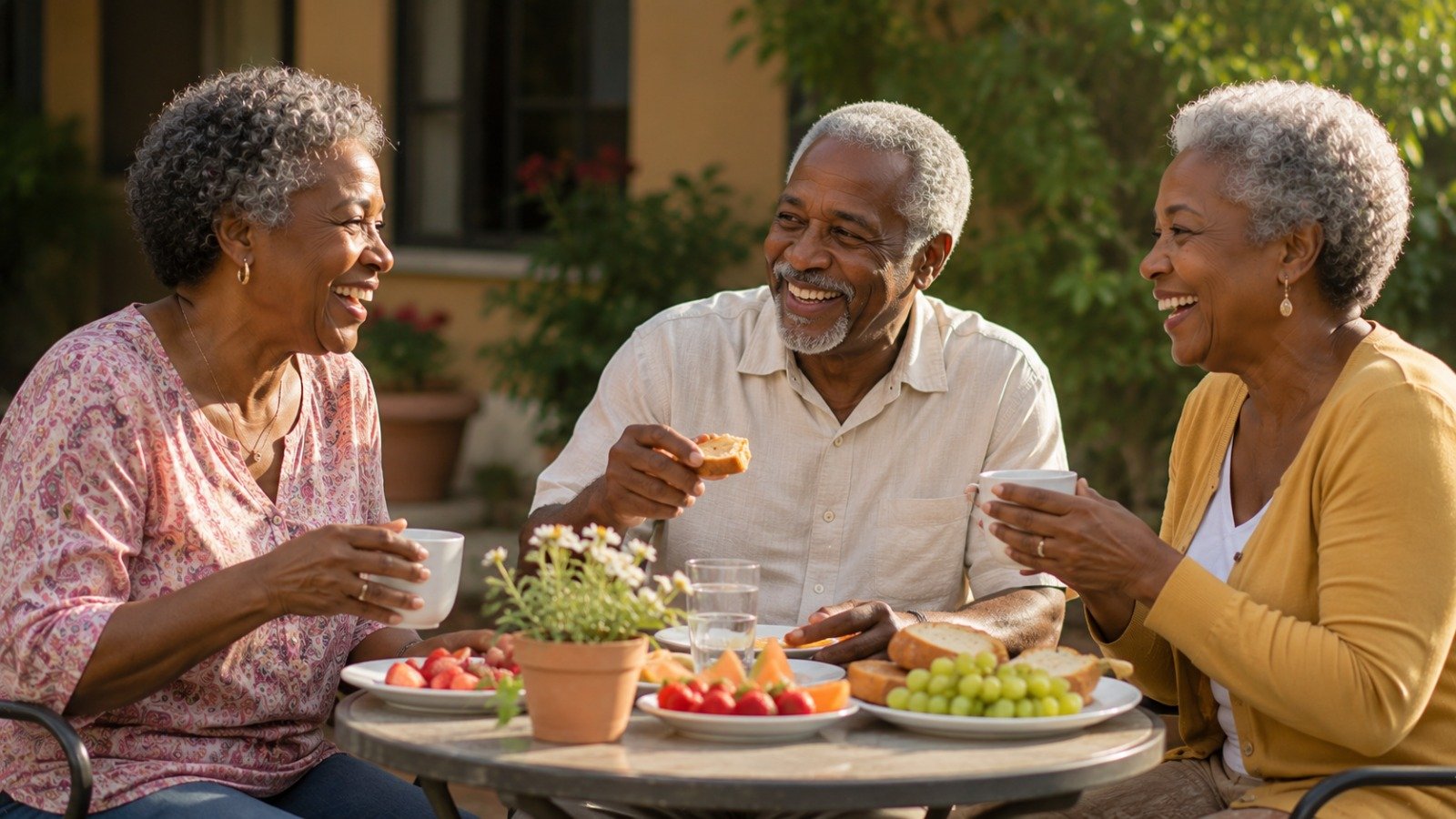
The story so far. Ingrid is not following a longevity plan. She walks, she gardens, she sees friends, she eats simply. What follows is why those ordinary things matter far more than they look like they do.
Regular movement has some of the strongest evidence behind it.
It supports mitochondrial function, helps preserve muscle, can reduce long-term inflammation, and supports your heart, brain and mood.
It is linked to a lower risk of heart disease, stroke, type 2 diabetes, several cancers, falls, depression, and early death.
The World Health Organization is blunt about the cost of not moving enough. People who do not move as much as it advises carry roughly a 20 to 30 percent higher risk of death. That is compared with people who do move enough.
A 2012 study in The Lancet put a number on it, using data from 2008. It linked not moving enough to about 5.3 million deaths worldwide that year. It was a modeling study. That means the researchers worked the number out with math, rather than counting those deaths one by one.
Two kinds of movement matter most as you get older.
The first works your muscles against a load: lifting, carrying, climbing stairs. This is what fights muscle loss directly.
The second raises your heart rate: walking, swimming, cycling. This protects your heart, your brain and your mood.
Doing both gives broader benefits than relying on only one kind. Balance work also matters, especially for older adults at risk of falling.
One of the eating patterns most consistently linked to healthy aging is the Mediterranean pattern.
That means the traditional food of the countries around the Mediterranean Sea: plenty of vegetables and fruit, beans and lentils, whole grains, olive oil and oily fish.
The PREDIMED trial, published in the New England Journal of Medicine, looked at this closely. It followed Spanish adults who were already at high risk of heart disease.
Some were given a Mediterranean diet with extra virgin olive oil, or one with extra nuts. The comparison group was told to cut down on fat.
The researchers counted three things together as one result: heart attack, stroke, or death from heart disease. The Mediterranean groups had about 30 percent fewer of these than the group told to cut down on fat. That 30 percent compares the two groups against each other. It does not say how many people it happened to.
Now read that number carefully. Thirty percent sounds bigger than it was.
In real terms the gap was small. A few events fewer per thousand people each year.
The trial also had real problems with the way people were put into groups. The first report was taken back. It was published again after the numbers were worked out afresh.
The case for eating this way is strongest for your heart. It is linked to lower risk of several other conditions too. Though how solid that link is changes from one condition to the next.
One more simple thing may help. Eat enough to support your health without regularly eating beyond your needs. Weight is only one part of health, and the right goal differs by person, especially in later life when unplanned weight loss and low muscle can be dangerous.
Sleep supports your memory, your immune system, the way your body handles blood sugar, and your brain health.
Researchers are also studying how fluid moves through the brain while you sleep, and how waste gets cleared. That includes a sticky protein called amyloid beta, which is linked to Alzheimer’s disease.
For years this was mostly mouse research. A 2026 trial published in Nature Communications was the first to track these proteins moving from the brain into the blood in people. Thirty-nine adults each had one normal night and one night without sleep, in an order decided by chance. So every person was compared against themselves. Morning blood levels of amyloid beta were higher after the night of sleep than after the night without.
It was one small trial. It used a device made by a company that several of the authors work for and hold stock options in. The result is encouraging, and it is not the last word.
What is well established is simpler. Going short on sleep for long stretches is linked to worse health in many ways.
Most adults need at least seven hours. How much you need varies, and it changes through life.
Long stretches of stress wear on the body in several ways. Stress spoils sleep, and it pushes people toward smoking, poor eating and sitting still.
A small study in the Proceedings of the National Academy of Sciences looked at 58 women in 2004. Some of them were caring for a very ill child. It found that the women who said they felt more stressed had shorter telomeres in their white blood cells. Researchers have kept studying that link since. It does not prove that managing stress slows aging. But managing stress is worth doing for how you feel and function. And for the habits it protects.
Loneliness and social isolation can affect the body as well as the mood.
Being cut off from people can raise stress, disturb sleep, and make self-care harder. How strongly it affects someone differs from person to person.
A big review in PLOS Medicine pulled together 148 studies covering more than 300,000 people, and found something striking. People with closer friends and family were around 50 percent more likely to be alive at the end of the studies. That is compared with people who had fewer close ties.
Those studies watched people. Nobody was assigned a social life. So they cannot prove that company alone made the difference. Poor health also makes it harder to see people in the first place.
Even so, human connection is not a soft extra in health.
Smoking damages your DNA and sharply raises the risk of many age-related diseases, among them cancer, heart and blood-vessel disease, and lung disease. Stopping at any age brings real benefits.
Alcohol raises cancer risk and can harm the liver, the brain, the heart and blood vessels, and sleep. Drinking less means less of those harms reach you, though how much you gain depends on which harm you mean and on your own situation.
A few places around the world are said to have unusually many people in their nineties and beyond.
They have been called Blue Zones, meaning places where people seem to reach old age in unusual numbers. The five best known are Sardinia in Italy, Okinawa in Japan, the Nicoya Peninsula in Costa Rica, Ikaria in Greece and Loma Linda in California.
They sit on different continents and hold different cultures, and the same handful of habits turns up in all of them.
One honest caution belongs here, not buried in the small print.
Scientists do not agree about how solid this is. Some say the birth records of very old people are least reliable in the sorts of places where these groups turn up. Others have written back, defending how the ages were checked.
The argument is still going on.
So read the habits below for what they are. They match everything else in this article, and they match good health advice generally. That is why they are worth your time.
But watching these places cannot prove that these habits are what made people live longer.
Their movement comes from ordinary life, not from the gym: walking, gardening, carrying, climbing.
The body is used steadily all day, not in one hard hour.
Vegetables, fruit, beans, whole grains, and nuts fill most of the plate. Meat turns up now and then, not every day.
Portions are small. Eating past full is not the habit.
A reason to get out of bed comes up again and again in what is written about these places.
In Okinawa there is a word for it, ikigai, which means a reason for being. In everyday Japanese it covers much more than living long.
Having a sense of purpose goes with feeling better, and in some studies with better health. On its own, it has not been shown to add years.
Worth having anyway.
Prayer, quiet time, naps, friends and time outdoors are all built-in ways to let the pressure out, every day.
And belonging. People are part of faith groups, of clubs, of big families. They are a real part of the place they live.
The story so far. Rosa is 75, and useful change is still possible. Older bodies can still improve strength, balance, and fitness when activity is safe and suited to the person. This is where this last section begins.
Here is the idea that matters most in this whole article.
Many choices that lower future disease risk can also improve daily function, sleep, mood, or energy. Benefits differ between people and do not always appear within a week.
Long-term protection and present well-being often support each other.
Ultra-processed foods are industrial products made mostly from refined ingredients and additives, often with little intact whole food. The category is broad, and not every product in it has the same nutritional value.
Many adults need about seven to nine hours, while needs can change with age and health. Guard your sleep the way you guard anything else that matters. If sleep remains poor or daytime sleepiness persists, seek medical advice.
Waiting for stress to pass is not a plan. Act on it instead: move, rest, breathe, see people.
Belong somewhere. Show up for the people close to you. Be known.
No amount of smoking helps you. And the less you drink, the lower your risk of the harms drinking brings.
Habits are only part of aging well. This is the part people leave out.
Screening means testing people without symptoms for a particular problem. Recommended screening aims to provide more benefit than harm, but the right choice depends on age, health, risk and personal preferences.
Low mood, lasting pain and poor sleep should not automatically be dismissed as the price of getting older. Some causes can be treated or managed even when they cannot be completely fixed.
Having a reason to get up goes with feeling better. It is not a proven way to add years.
Have one anyway. Find what yours is, and protect it.
Start here
Pick one safe, realistic thing today. A short walk if it suits your health. One real conversation. One nourishing meal. The habits that protect future health can also support life now. So this ordinary day is a good place to begin.
Call your local emergency number immediately if any of these happen:
Call even if a possible stroke symptom disappears after a few minutes. It could be a transient ischemic attack, sometimes called a mini-stroke, and still needs emergency assessment.
A heart attack does not always cause obvious chest pain. Some people mainly have shortness of breath, nausea, sweating, unusual tiredness, or pain in the arm, back, neck, jaw, or stomach.
After a fall, call your local emergency number if the person cannot get up or may have injured the head, neck, back, or hip. Do not try to lift the person yourself if a serious injury is possible.
Arrange medical advice promptly for any of these:
Sudden confusion is different from a gradual memory change. It can be caused by infection, medicine, dehydration, stroke, or another urgent medical problem. Seek immediate medical help.
It would be easy to read these two lives as a lesson about choices. That would not be fair to Rosa.
Living alone shapes what you cook. Having few people to see shapes how often you go out. Four medicines shape how a body feels on a given morning. None of that is a failure of will.
What the evidence does say is that meaningful improvement can still happen at 75. With appropriate activity, muscle strength and balance can improve. Company still counts. Sleep still matters.
Rosa is not going to become Ingrid, and she does not need to. Ingrid did not arrive at 75 through a plan either.
If Rosa wanted somewhere to start this week, the research points at two things. A short walk most days. And one arrangement to see somebody. Neither is impressive. Both are the kind of thing people are still doing years later.
The Main Lessons
Scientists disagree about how much of the difference in how long people live comes down to genes. One study used family records from more than 400 million people. It was published in the journal Genetics, and it put the figure below 10 percent. A 2026 twin study in Science put it near half, after setting aside deaths from accidents and infections. These figures describe differences across whole groups of people. They do not tell you how much of any one person’s life is fixed by genes.
The goal is not more years alone. It is health, ability, dignity, and connection through those years. The World Health Organization defines healthy aging as keeping the ability to do the things that matter to you. It says plainly that being free of disease is not a requirement for aging well.
The World Health Organization advises a certain amount of activity. People who do not reach it carry roughly a 20 to 30 percent higher risk of death. That is compared with people who do. A 2012 study in The Lancet used data from 2008 and worked its number out with math. It linked not moving enough to about 5.3 million deaths worldwide that year.
Telomeres are the caps that protect the ends of your chromosomes. They tend to shorten with age. Stress, sleep, smoking, and activity have all been linked to telomere length in studies. But telomeres are not a simple score of how well a person is aging.
Inflammaging, the low-level inflammation that comes with age, is linked to many age-related diseases, including heart disease, dementia, and cancer. It may help drive some of them.
A PLOS Medicine review pulled many studies together. People with closer friends and family were around 50 percent more likely to be alive by the end of them. Those studies only watched people as they lived. Nobody was given friends or family. So they cannot prove that close ties alone caused the difference.
Places called Blue Zones are said to share a few habits. People there move naturally all day, eat mostly plants, hold a sense of purpose, ease stress daily, and belong to strong communities. Some researchers doubt parts of the age records these places rest on. And watching these places cannot show that the habits are what made people live longer.
Many habits that protect future health can also improve function or well-being now. The timing and size of the benefit differ between people.
Meaningful benefits are possible in later life. Starting later still counts, with activities and goals suited to the person’s health and ability.
Golden Nugget
Longevity science does not tell you how long you will live. It tells you how much of the difference between people is open to change, and the honest answer is more than most assume and less than anyone selling something will claim. Aging well is not a test you pass or fail. It is a set of odds, shifted inside a life whose starting conditions you did not choose.
Genes matter. Scientists are still arguing about how much.
A large study in Genetics used family records from more than 400 million people. It put the figure below 10 percent. A 2026 twin study in Science put it near half. But only after setting aside deaths from accidents and infections.
Both numbers describe differences across a group. Neither tells you what share of your own life is fixed.
Genes are not the whole story. Your care, your circumstances, the place you live, the people around you and luck all matter, along with your habits, which are the part most open to change.
Lifespan is the total number of years you live. Healthspan is the part of those years spent in good health, able to do the things that matter to you. There is no single agreed way to measure healthspan, and people can age well while living with an illness or a disability.
The goal is not simply more years. It is more good years.
The five best-known Blue Zones are Sardinia in Italy, Okinawa in Japan, the Nicoya Peninsula in Costa Rica, Ikaria in Greece, and Loma Linda in California.
The same habits turn up across them: moving all day, eating mostly plants, close family and friends, daily ways to let stress out, and a reason to get up.
Scientists do not agree about how solid the age records are. So take the habits as good health advice, not as proof of what makes people live long.
Not completely. Aging cannot be stopped or fully reversed. But how well you live through it can change a great deal.
You may see tests sold that promise to measure your biological age. That means how old your body seems, not how many birthdays you have had.
Be careful with those. Scientists do use several ways to estimate it. They often disagree with each other. None of them is a proven measure of how old you truly are. And nobody yet knows what a change in one of them means for your health.
The goal is not to live forever. It is to keep working well for as long as you can.
No. Meaningful gains are possible in later life.
Starting suitable exercise at 70 can improve strength, balance, and fitness. It may help mood and some aspects of thinking too, although results differ.
Stopping smoking later in life still brings benefits, with different risks falling over different lengths of time.
Better food, enough sleep, medical care, and social connection still count. Starting later is worth doing.
Regular movement has some of the broadest backing of anything studied. It protects your muscle, supports your brain and heart, and lowers your risk of many age-related conditions.
But it depends on the person.
If you smoke, stopping is the bigger win. Treating high blood pressure matters. So does keeping up with vaccines and screening. So does seeing people.
If you want one general starting point, start moving regularly, in any way you find easy and enjoy.
No supplement sold as an anti-aging product has been shown to make healthy people live longer.
That is different from a supplement recommended to treat a diagnosed shortage or meet a medical need. Those can genuinely matter.
Many anti-aging claims come from laboratory or animal studies. Results in yeast, worms, or mice often do not carry over to people.
Human trials are studying several compounds. Until reliable results show meaningful benefits and acceptable risks, the honest answer is that we do not know.
Meanwhile sleep, movement, nourishing food, healthcare, and social connection have much stronger human evidence behind them. Some are free, while others depend on money, access, and support. The gap between what is sold and what is proven is very wide here.
Use your muscles regularly and eat enough protein and energy.
Muscle mass and strength often decline with age, especially during illness or inactivity. Severe or function-limiting loss is called sarcopenia. It can affect balance, independence, and the ability to rise from a chair, but it is not an unavoidable outcome for everyone.
Aim for muscle-strengthening activity on at least two days a week when safe for you. Pick movements that work the big muscles and gradually become more challenging.
No gym is required. Carrying groceries, climbing stairs, or standing up from a chair can count when they are safe and challenging enough.
Protein needs vary with body size, diet, activity, illness, and kidney function. Older adults at risk of poor nutrition should ask a qualified professional for individual advice.
No single thing, and nothing strange or expensive.
They move all day. They do not exercise for an hour. They eat mostly plants, with little processed food. They drink lightly, or not at all. They stay close to family and neighbors. They have a reason to get up.
Scientists also disagree about how reliable the age records are in these places. And that argument is not settled.
The pattern still matches everything else in this article. That is why it is worth your attention. Watching these places just cannot prove the habits caused the long lives.
Less than most people think. What protects your heart mostly protects your brain, because your brain runs on the same blood vessels.
Keeping blood pressure down, staying active, sleeping enough, never smoking and seeing people all lower your risk of dementia.
Two things are worth adding.
Look after your hearing. Hearing loss that goes untreated is one of the known risks for dementia. Treating it certainly helps you talk to people and enjoy life. Though whether it prevents dementia is still being studied.
And keep learning. Your brain keeps making new connections all your life. No activity can promise to keep dementia away, but this is worth doing.
Yes. Many people in their seventies, eighties, and beyond can improve strength, balance, and fitness with suitable training.
Even some people in their nineties have gained muscle and function in supervised studies. Results depend on health, nutrition, illness, and the program.
For fall prevention, programs that combine balance, functional movement, and strength often work better than strength training alone. Ask about a fall-prevention or balance program.
Blood pressure and blood sugar can still respond to appropriate treatment, although goals must be individualized in later life. Social connection also remains important.
The useful question is what support and professional advice you need to begin safely.
Before you go
This article is for education only. It is not medical advice and does not replace care from a qualified healthcare provider. Before starting a new exercise program or making major changes, especially in later life or with an existing condition, speak to your doctor.
Dagum P, Elbert DL, Giovangrandi L, et al. (2026). The glymphatic system clears amyloid beta and tau from brain to plasma in humans. Nature Communications. 17:715. doi.org
Ruby JG et al. (2018). Estimates of the Heritability of Human Longevity Are Substantially Inflated due to Assortative Mating. Genetics. 210(3):1109-1124. doi.org
Shenhar B et al. (2026). Heritability of Intrinsic Human Life Span Is About 50 Percent When Confounding Factors Are Addressed. Science. 391(6784):504-510. doi.org
World Health Organization. (2025). Aging and Health. who.int
Lee IM et al. (2012). Effect of Physical Inactivity on Major Non-Communicable Diseases Worldwide. The Lancet. 380(9838):219-229. doi.org
Holt-Lunstad J et al. (2010). Social Relationships and Mortality Risk: A Meta-Analytic Review. PLOS Medicine. 7(7):e1000316. journals.plos.org
Epel ES et al. (2004). Accelerated Telomere Shortening in Response to Life Stress. Proceedings of the National Academy of Sciences. 101(49):17312-17315. doi.org
Estruch R et al. (2018). Primary Prevention of Cardiovascular Disease with a Mediterranean Diet. New England Journal of Medicine. 378:e34. doi.org
López-Otín C, Blasco MA, Partridge L, Serrano M, Kroemer G. (2023). Hallmarks of Aging: An Expanding Universe. Cell. 186(2):243-278. cell.com
World Health Organization. Physical Activity: fact sheet. who.int
World Health Organization. Healthy Aging and Functional Ability. who.int
Austad SN, Pes GM. (2025). The Validity of Blue Zones Demography: A Response to Critiques. The Gerontologist. 65(12):gnaf246. pmc.ncbi.nlm.nih.gov
National Institute on Aging. Research in Context: Can We Slow Aging? nia.nih.gov
Franceschi C et al. (2018). Inflammaging: A New Immune-Metabolic Viewpoint for Age-Related Diseases. Nature Reviews Endocrinology. 14(10):576-590. doi.org
Centers for Disease Control and Prevention. Signs and Symptoms of Stroke. cdc.gov
American Heart Association. Warning Signs of a Heart Attack. heart.org
National Health Service. Falls. nhs.uk
National Institute on Aging. Cognitive Health and Older Adults. nia.nih.gov
Golden Health Quest
Quest 1 of 3
This is an educational game. It does not assess your health and it cannot tell you what any symptom means.
Habit Builder
This is a learning game, not a personal prescription. Some of the options below are what this guide warns about rather than recommends.
0 of 3 selected
One Thing This Week
Nothing in this pillar works on the scale of a week. All of it works on the scale of a decade, and a decade is only ever entered one ordinary week at a time.
Choose both halves to write your one thing.
A learning tool, not a prescription. Anything sudden belongs with a doctor now rather than with a plan for next week.
One Realistic Step
Choose an amount of time to receive one practical step.
Choose a step that fits your circumstances, your health service and any condition you live with.
Was this guide useful? Share it, keep a copy or return to the evidence.